


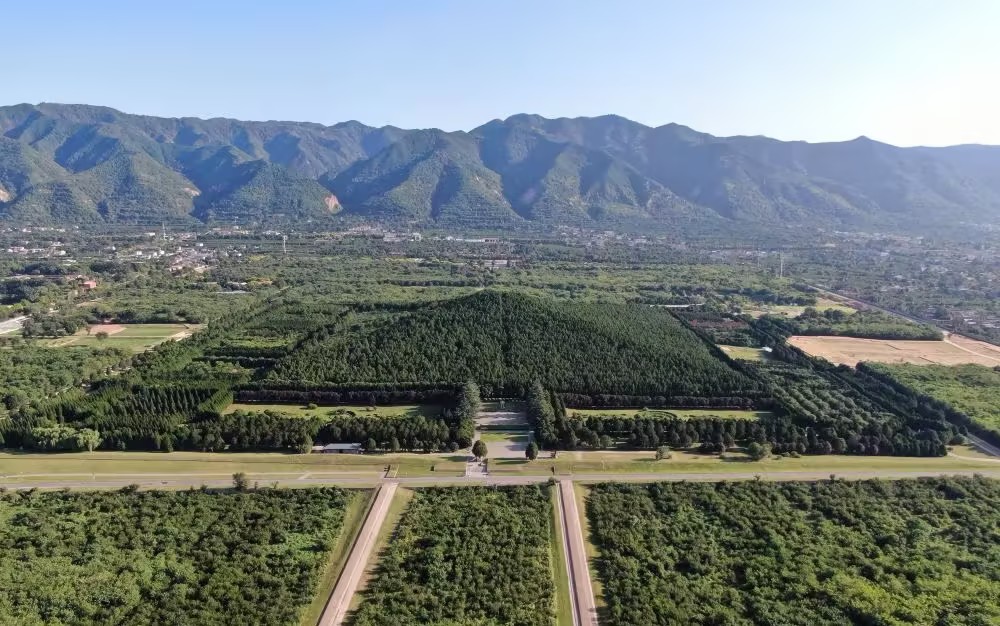
Nestled at the northern foot of Mount Li, east of Xi'an in Shaanxi Province's Lintong District, lies the vast mausoleum of China's first emperor—Qin Shi Huang (259 BCE – 210 BCE). Yet what truly brought this land to global fame was the unexpected rediscovery in 1974 of the Terracotta Army pits, unearthed during what seemed like an ordinary well-digging operation. This "underground legion," buried for over two millennia, astonished the world upon its emergence and is hailed as the "Eighth Wonder of the World" and one of the most spectacular archaeological finds of the 20th century.
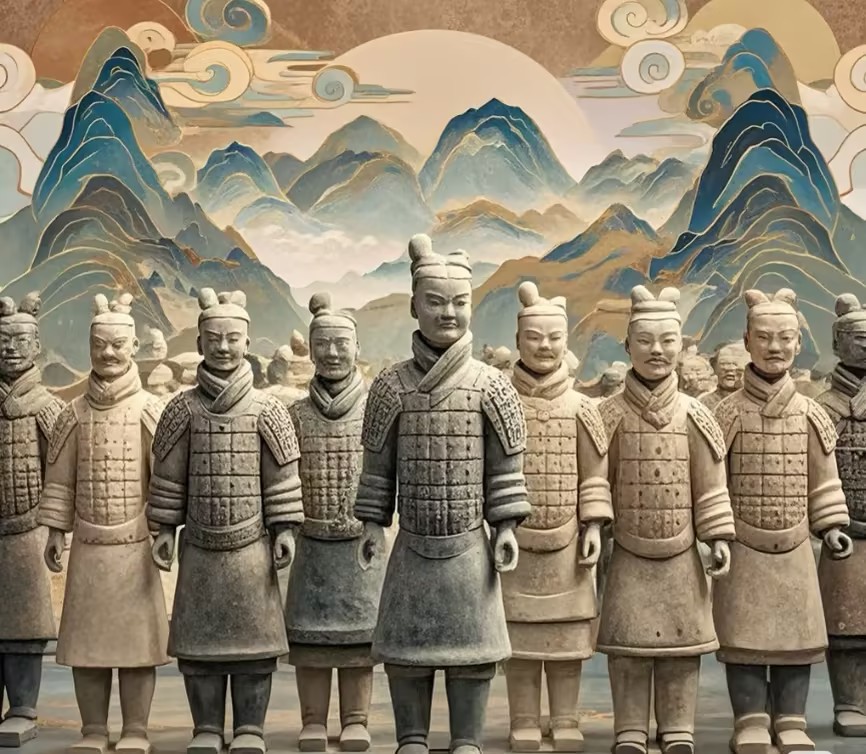
A Majestic Battle Formation, Reviving the Martial Spirit of Qin
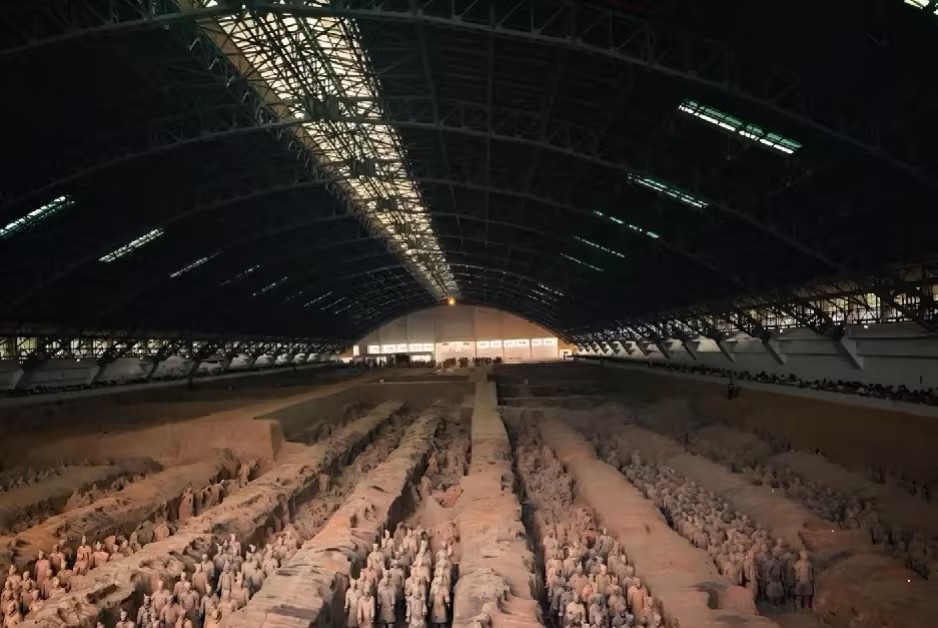
The Terracotta Army pits are among the most renowned sacrificial pits within the broader Qin Shi Huang Mausoleum complex. To date, three pits have been discovered, arranged in a pin-shaped (品) formation, covering a total area of over 20,000 square meters. Archaeological estimates suggest these pits house approximately 8,000 life-sized terracotta warriors and horses.
· Pit 1: The largest, featuring a rectangular formation of infantry and war chariots, representing the main force of the Qin army.
· Pit 2: More complex in layout, it consists of a combined-arms formation of charioteers, infantry, cavalry, and crossbowmen—demonstrating the Qin military's formidable coordinated tactics.
· Pit 3: The smallest, believed to be the command headquarters—the "war room" of the entire army.
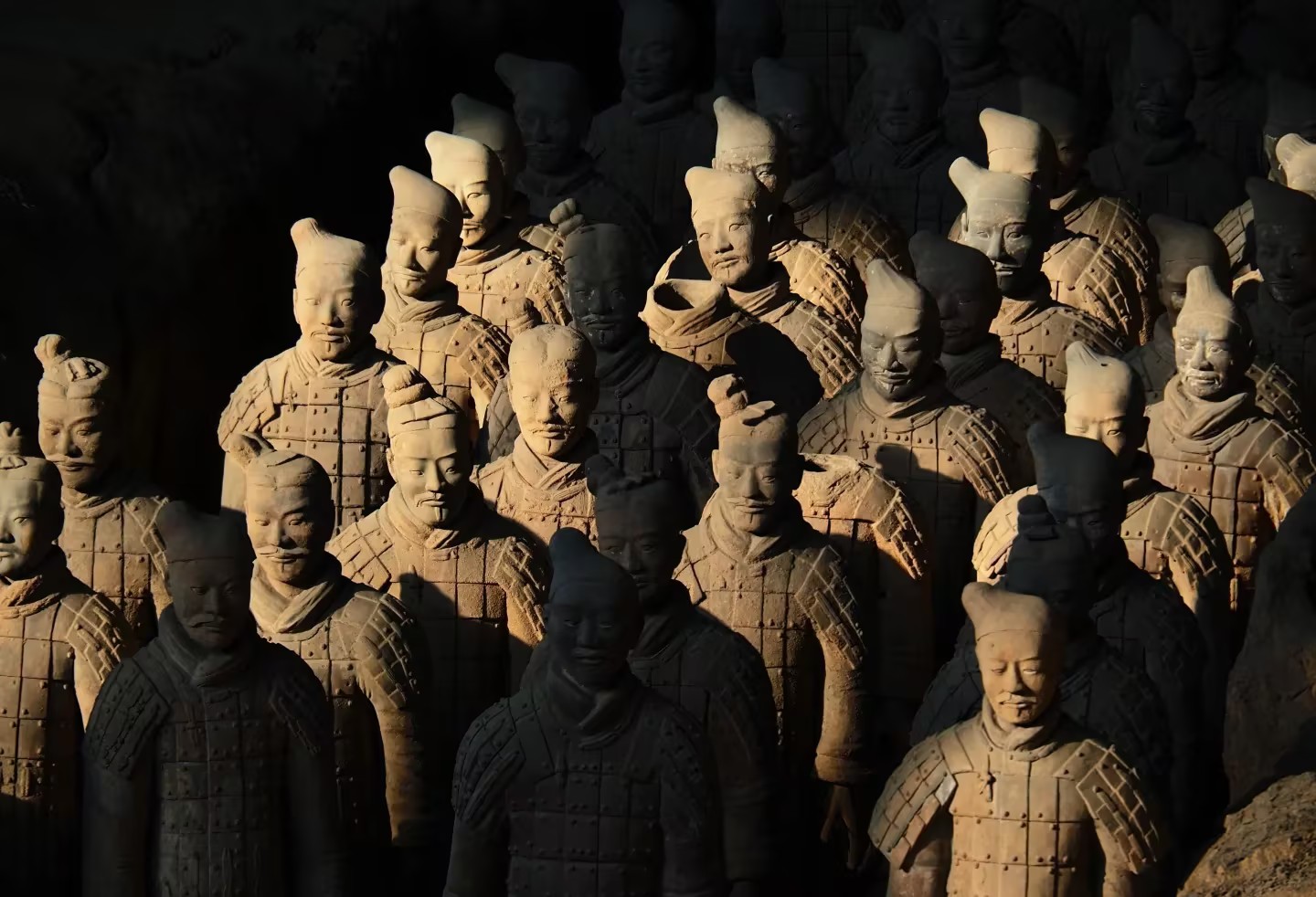
Far from being identical, each warrior exhibits distinct heights, physiques, attire, and even facial expressions, embodying a "thousand faces, thousand individuals" characteristic. From high-ranking military officers to ordinary soldiers, every figure was crafted with realism, representing the pinnacle of Qin-dynasty figurative art.
Beyond Imagination: A Repository of Ancient Wisdom and Civilization
The significance of the Terracotta Warriors extends far beyond their sheer scale. Originally painted in brilliant polychrome, most of the pigments flaked off almost instantly upon excavation due to drastic environmental changes—leaving behind the familiar grey earthen hues we see today. Even more astonishing is the discovery of a chromium-based anti-rust coating on some bronze swords—a surface treatment technology that predates similar European techniques by over two millennia, revealing extraordinary metallurgical expertise. To date, more than 40,000 bronze weapons, including swords, spears, and crossbow triggers, have been recovered, many still sharp and well-preserved.
A Mark of Civilization: From Serendipitous Find to Enduring Guardianship
The discovery of the Terracotta Army is itself a legend. In the spring of 1974, local farmers digging a well struck not water, but clay—and history. That chance encounter set off archaeological excavations and conservation efforts that have continued for over half a century. In 1987, the Mausoleum of the First Qin Emperor and the Terracotta Army pits were inscribed on the UNESCO World Heritage List for their unique historical, artistic, and scientific value. Today, the Emperor Qinshihuang's Mausoleum Site Museum has become a vital window into Chinese civilization, attracting countless domestic and international visitors each year to experience the awe-inspiring legacy of the great Qin Empire.

