


Nuanquan Ancient Town is situated in the western part of Yuxian County, Zhangjiakou, Hebei Province. Named after its natural hot springs that maintain a constant temperature year-round, the town is a remarkably well-preserved settlement of ancient fortified castles dating back to the Ming and Qing dynasties. It is also a living sanctuary of culture, boasting two forms of National Intangible Cultural Heritage: "Da Shu Hua" (Molten Iron Fireworks) and Yuxian Paper-cutting. One involves fire and the other a blade; one is passionate and explosive, the other delicate and intricate. Together, they complement each other—combining strength and grace—to vividly portray the unique folk atmosphere and artisanal spirit of this northern frontier region.
I. A Galaxy Forged in Fire: Nuanquan’s National Intangible Cultural Heritage—Da Shu Hua
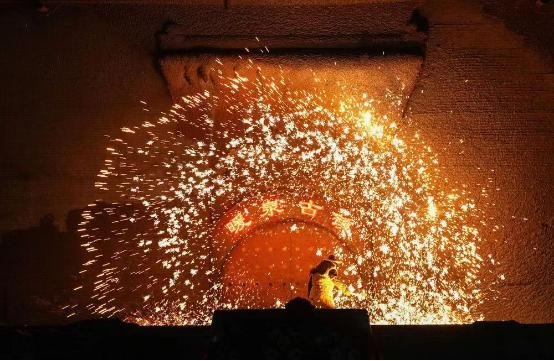
Originating during the Ming and Qing dynasties—with a history spanning over five hundred years—Da Shu Hua was inscribed on the National Intangible Cultural Heritage list in 2021. It is poetically described as "fireworks for the poor" and a "flowing galaxy." In the past, local blacksmiths could not afford commercial fireworks for festivals. Inspired by the sparks flying during ironwork, they melted pig iron into molten liquid at 1,600 degrees Celsius and used a specially treated, water-soaked willow ladle to fling it forcefully against the thick, grey-brick walls. Upon contact with the cool surface, the molten iron would instantly explode, sending a cascade of golden sparks soaring into the air like the blossoms of a lush tree—hence the name *Da Shu Hua* (literally "beating the tree of flowers"). This craft demands both courage and technical mastery; practitioners must wear sheepskin coats inside out and wet straw hats to shield themselves from the intense heat. Every swing of the ladle requires precise control of force and angle, as the slightest error could result in burns from the flying sparks. During the Lantern Festival and Spring Festival, live performances are held at Xigubao Square. As a ladle of molten iron is poured out, a "golden rain" of thousands of sparks descends; set against the backdrop of the ancient castle walls, the spectacle is far more magnificent and awe-inspiring than artificial lights or fireworks. Da Shu Hua embodies the people's prayers for blessings and good fortune; the scorching iron blossoms symbolize a prosperous year and an abundant harvest, reflecting the frontier people's simple yet passionate aspirations for life. For centuries, generations of artisans have braved the searing heat to preserve this tradition, ensuring that this unique "iron fire" of Nuanquan continues to illuminate the ancient town's night sky year after year.
II. Intricate Blooms Carved by Knife: Yuxian Paper-Cutting (National Intangible Cultural Heritage)
If the "Tree Flower" performance (molten iron fireworks) embodies fiery passion, Yuxian paper-cutting represents the tenderness of the fingertips. In 2006, Yuxian paper-cutting was listed among the first batch of national-level intangible cultural heritage items; in 2009, it was incorporated into the "Chinese Paper-Cutting" entry on the UNESCO Representative List of the Intangible Cultural Heritage of Humanity. It enjoys the reputation: "To see the world's paper-cutting, look to China; to see China's paper-cutting, look to Yuxian."
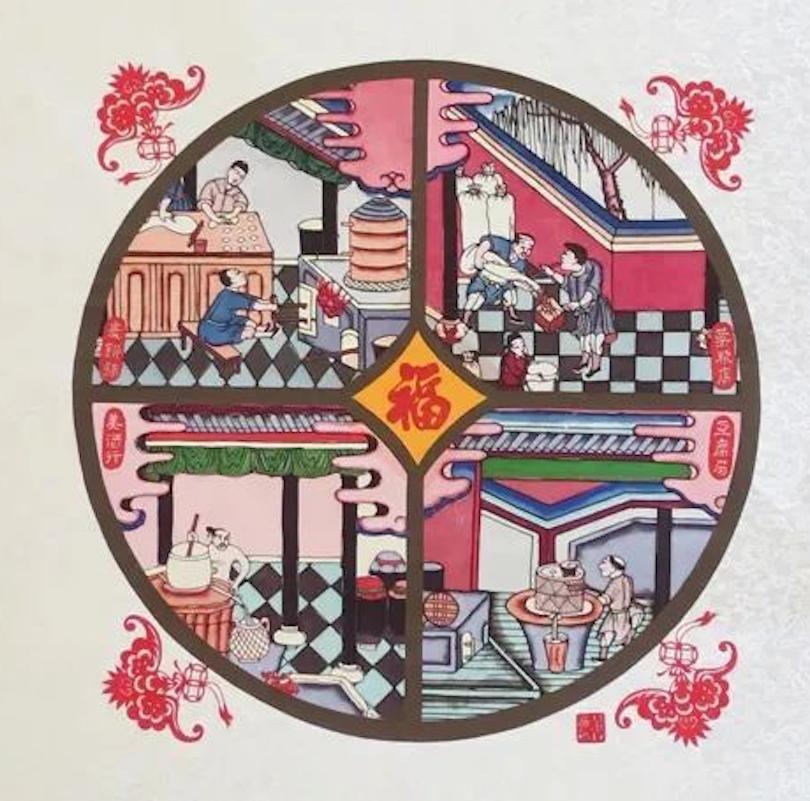
Unlike paper-cutting done with ordinary scissors, the Yuxian style relies primarily on carving knives and the "negative carving" (intaglio) technique, with vibrant hand-coloring as its core process. The workflow consists of three steps: pattern tracing, carving, and coloring. Artisans first trace auspicious patterns onto *xuan* paper, stack and secure dozens of sheets, and use fine knives to carve out the intricate designs. They then apply natural mineral pigments layer by layer by hand. The finished works feature rich, vivid colors and delicate, translucent lines, earning them the title of "Oriental oil paintings on the tip of a knife."
Historically, these paper-cuttings served as window decorations for rural households. Their themes—ranging from flowers, birds, and auspicious beasts to opera masks, folk farming scenes, and symbols of fortune and longevity—embodied hopes for family harmony, happiness, and health. Today, paper-cutting workshops dot the streets of the ancient town, and inheritors of the craft offer classes where tourists can try their hand at carving and coloring. Ancient patterns are constantly being innovated to incorporate landscapes and modern "national style" elements; these creative paper-cutting products have moved beyond the ancient fortress walls to become a signature cultural card for Hebei Province. With just a carving knife and a few boxes of pigment, the aesthetic sensibilities and folk memories passed down through generations in northern rural villages are preserved within these small squares of paper.
III. Coexistence with Ancient Fortresses: Living Heritage
Nuanquan Ancient Town preserves intact rammed-earth settlements such as Xigu Fort and Beiguan Fort. Its barbicans, ancient alleys, and traditional dwellings remain well-preserved and free from excessive commercialization, allowing two forms of intangible cultural heritage to remain deeply rooted in the local soil and integrated into the daily lives of the residents. By day, the rustling sound of carving knives fills the paper-cutting workshops as veteran artisans sit quietly at their work; as night falls, the furnaces at the Tree Flower Square heat up, preparing for the spectacular bloom of molten iron fireworks. This interplay of stillness and motion defines the unique cultural rhythm of the ancient town. Leveraging its ancient fortresses as a foundation, the locality has established platforms for the exhibition, hands-on experience, and performance of intangible cultural heritage. These initiatives not only preserve traditional techniques—such as "Shu-Shu-Hua" (molten iron fireworks) and paper-cutting—but also cultivate young inheritors and offer educational study tours. Consequently, intangible cultural heritage is transformed from static museum exhibits into a living culture that can be observed, learned, and deeply experienced.
IV. Summary of the Cultural Value of Intangible Heritage
A single fortress harbors dual arts, where the interplay of water and fire creates a magnificent spectacle. Nuanquan Ancient Town is anchored by its historic fortresses and animated by two forms of national-level intangible cultural heritage: "Shu-Shu-Hua" and Yuxian paper-cutting. The former uses molten iron and fire to inscribe the indomitable, aspiring spirit of the frontier people, while the latter employs the carving knife to capture the delicate, tender, and auspicious wishes of the folk. Blending the contrasting elements of heat and cold, strength and gentleness, these two crafts embody a millennium of rural customs, survival wisdom, and the steadfast dedication of artisans in northern Hebei. They stand as a model of a "living" intangible heritage village, ensuring that ancient folk traditions continue to thrive with vibrant vitality in the modern era.

