


Fanjing Mountain: A city in the sky above a sea of clouds, an ecological island that has remained suspended for 1.4 billion years.
While many regions at the same latitude on Earth have turned into deserts, a lush green island stands proudly amidst the karst landscape of southwestern China in satellite imagery. In 2018, when the 42nd UNESCO World Heritage Committee session concluded in Bahrain, Fanjingshan was officially inscribed on the World Natural Heritage List, becoming China's 53rd World Heritage site. The International Union for Conservation of Nature (IUCN) stated in its technical assessment report: "This area showcases and preserves a unique subtropical island mountain ecosystem with remarkable biodiversity." Since then, this mountain perched above the clouds, locally known as the "Pure Land of Brahma," has begun telling a story to the world about time, faith, and the wonders of life.
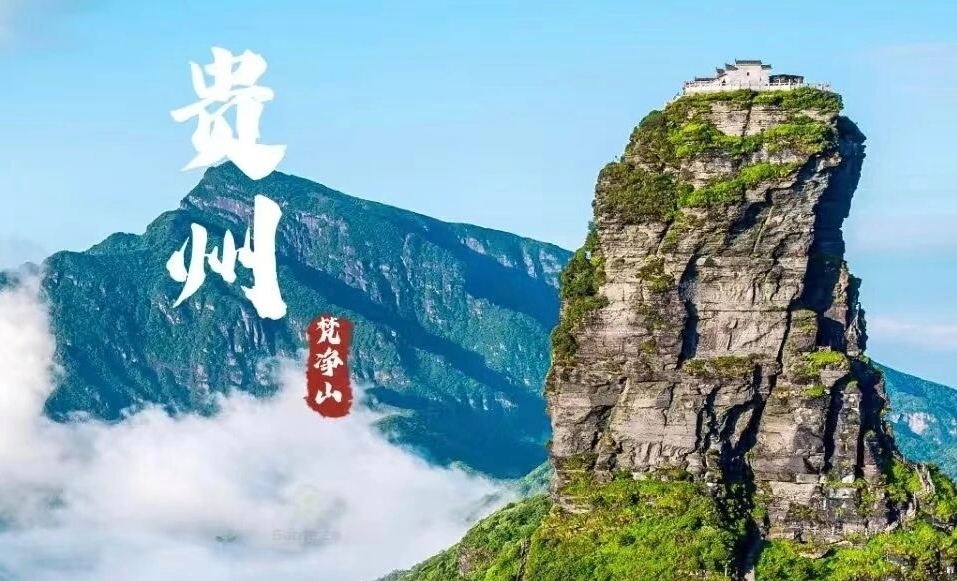
I. The 1.4-Billion-Year Mountain-Formation Tale: From Submarine Volcanoes to a City in the Sky
The story of Fanjing Mountain begins in the Earth's earliest era. Approximately 800 million years ago during the Neoproterozoic period, this region was a submarine rift basin. Intense tectonic activity triggered massive volcanic eruptions; scorching magma surged and cooled within the icy seawater, forming volcanic rock layers thousands of meters thick. These ancient rocks constitute the most primitive "skeleton" of Fanjing Mountain.
Over the following hundreds of millions of years, this land has undergone repeated transformations—forming mountains through folding, sinking beneath the sea, and rising again. It was only through the intense uplift caused by the Himalayan movement and the Quaternary neotectonic movement that Fanjing Mountain finally emerged as the principal peak of the Wuling Mountains. Its highest summit reaches an altitude of 2,572 meters, with a relative elevation difference of up to 2,000 meters. Even more remarkable is that while the main body of Fanjing Mountain consists of shallow metamorphic rocks, it is surrounded by extensive karst landscapes, resembling a "Noah's Ark" that has traveled from ancient times, standing solitary amidst a sea of eroded limestone. Today, every rock beneath the feet of visitors ascending to its summit bears the weight of 1.4 billion years of geological history.
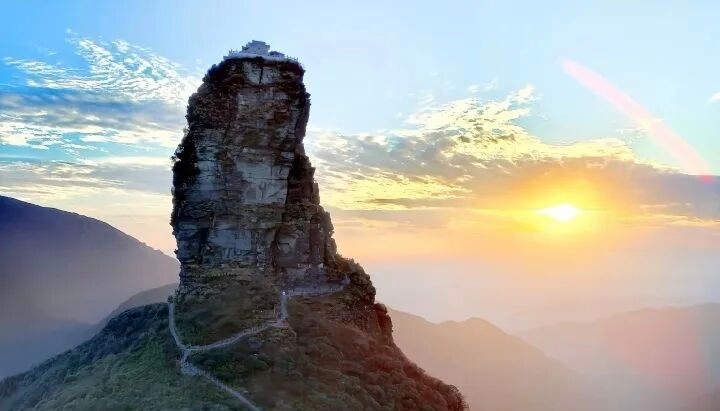
II. Faith on the Cliff: A Millennium-Long Dialogue Between Buddhism and Mountains
If geological processes shaped the physical form of Fanjing Mountain, Buddhism has endowed it with a soul. Its Buddhist heritage dates back to the Sui and Tang dynasties, but it was a mountain-building initiative during the Ming dynasty—specifically an imperial decree issued in the Yongle era—to construct a temple complex atop its summit—that truly established it as a pilgrimage site.
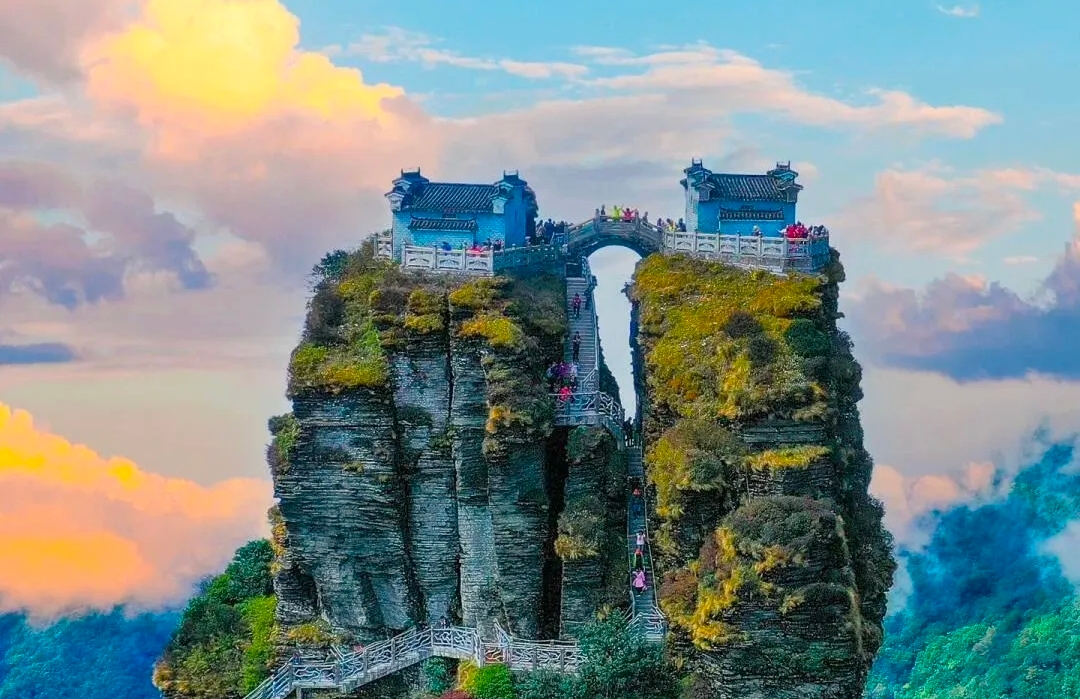
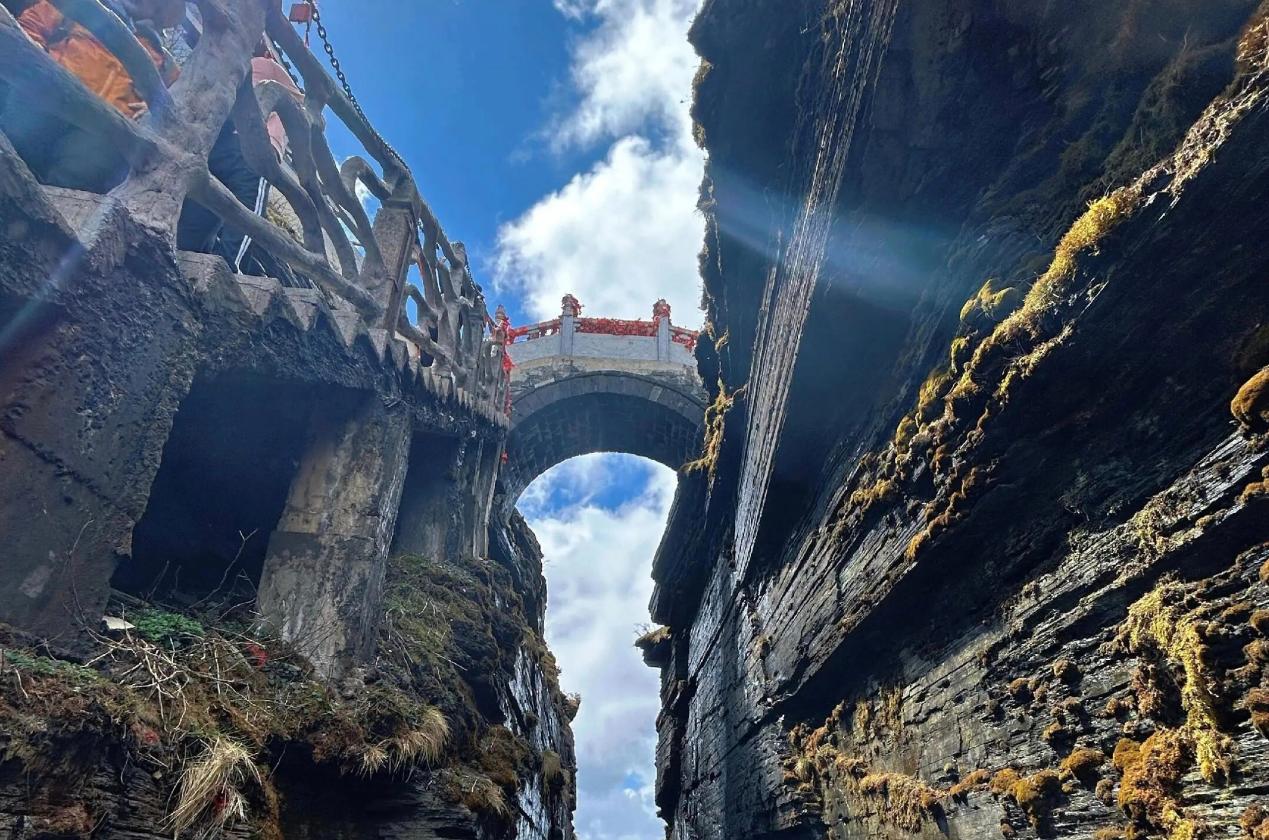
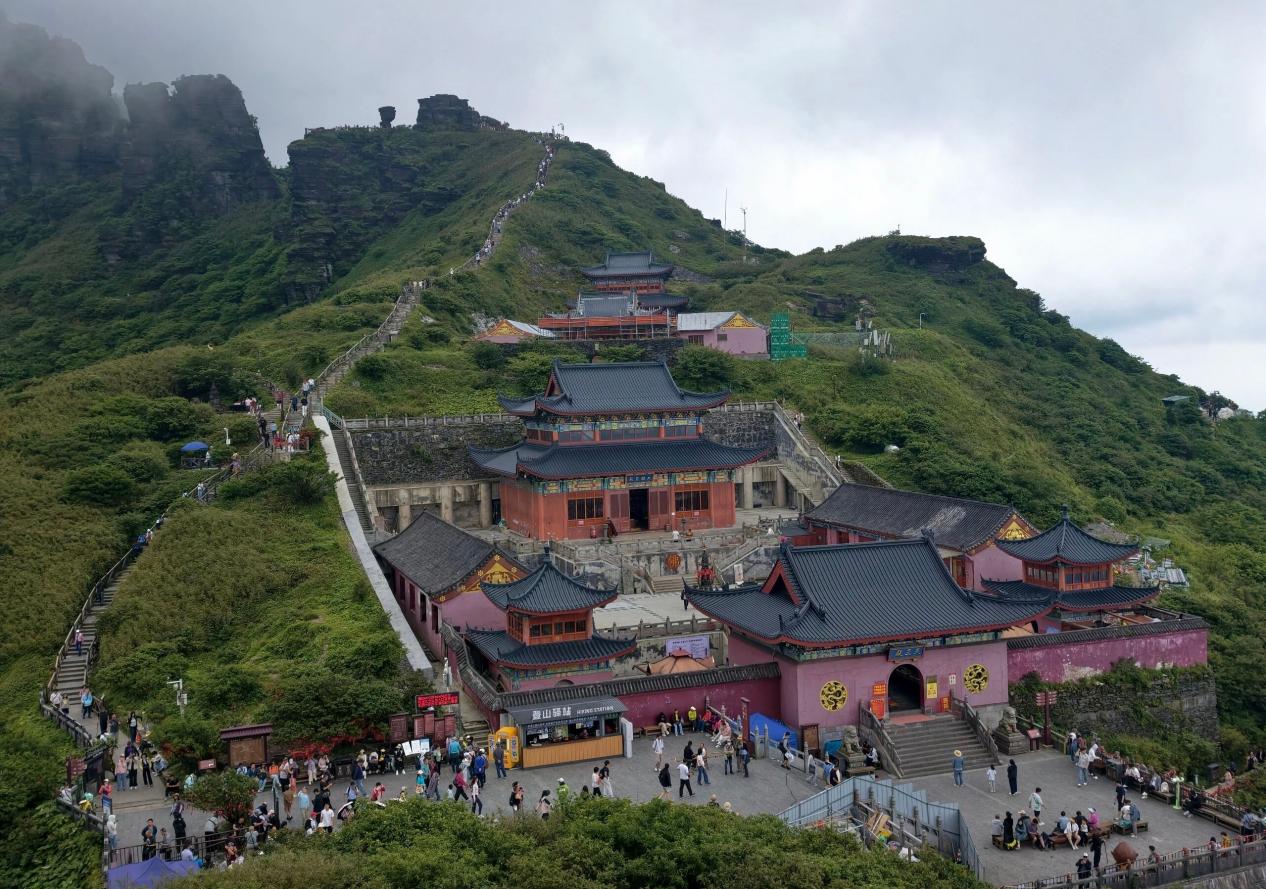
The most breathtaking sight on Fanjing Mountain today is undoubtedly the Red Cloud Golden Summit. This solitary peak, split in two by geological movements, features two halls on either side—the Shakyamuni Hall and the Maitreya Hall—connected only by a stone bridge spanning the abyss. Shakyamuni represents the present, while Maitreya symbolizes the future; practitioners crossing this celestial bridge from the mortal world to the next life do so effortlessly. During its heyday in the Ming and Qing dynasties, Fanjing Mountain boasted four imperial monasteries, forty-eight temple complexes, and hundreds of temples and monasteries, attracting countless monks and extending incense smoke for hundreds of miles. Although repeatedly destroyed and rebuilt due to warfare, the surviving steles, stone halls, and cliff carvings still narrate the millennia-old dialogue between humans and deities amidst the mist. Thus, Fanjing Mountain stands as the sole sacred site of Maitreya Bodhisattva among China's five renowned Buddhist mountains.
III. Life Islands in the Karst Ocean: A Living Laboratory of Evolution
The greatest gift Mount Fanjing has bestowed upon the world lies deep within its forests. Due to minimal human disturbance and a unique three-dimensional climate shaped by significant elevation variations, this area preserves the most complete subtropical native ecosystem at its latitude. The protected zone boasts a forest coverage rate exceeding 96%, hosting 4,394 plant species and 2,767 animal species—including ancient relict species dating back between 70 million and 20 million years.
The most dazzling "star" is undoubtedly the Guizhou golden monkey. This primate species unique to China is found exclusively in the Fanjing Mountain Nature Reserve and has been classified as "critically endangered" by the International Union for Conservation of Nature (IUCN). Its wild population numbers only about 850 individuals, making it even rarer than the giant panda, earning it the title of "the only child of Earth." Over a century ago, British missionary Thomson named it based on a mere fragment of skin; for more than six decades afterward, no further records were documented, leading to its presumed extinction. It was not until Chinese researchers conducted an in-depth investigation at Fanjing Mountain that this long-lost population was rediscovered. Sharing this sanctuary with the Guizhou golden monkey are the world's last remaining 6,300 specimens of Fanjing Mountain fir and vast expanses of "pigeon tree" —Ginkgo biloba. Fanjing Mountain serves as Asia's most important conservation site for Metasequoia forests and one of the world's richest habitats for gymnosperms.
IV. From Satellite Misinterpretation to Global Attention: The International Impact of Fanjing Mountain
The path to global recognition for Fanjing Mountain differs from that of other World Heritage sites. As early as 1986, it was designated by UNESCO as a member of the Global Network of Reserves for Man and the Biosphere. However, its true worldwide prominence emerged only after its successful inscription on the World Heritage List.
In 2024, Fanjingshan welcomed 37,000 inbound tourists, a year-on-year increase of 119%, setting a historical record. In the same year, it was included in the IUCN Green List and awarded the title of "World Famous Mountain for Tourism" by the International Mountain Tourism Alliance. Hua Chunying, former spokesperson for China's Ministry of Foreign Affairs, praised Fanjingshan as "incredibly beautiful" on social media. On the overseas social platform X, a former counselor at the Chinese Embassy in Pakistan posted multiple tweets promoting this "City in the Sky." German tourist Andreas described it as "a must-visit destination in a lifetime," while Spanish tourist Selena remarked that it "fully exceeded expectations." The global cultural tourism recommendation account Wonderful World commented: "China's Fanjingshan is one of the most extraordinary places."
Behind this international appeal lies the universal values embodied by Fanjing Mountain—it does not tell the story of any particular nation, but rather recounts the story of our planet itself: how tectonic plates collide, how life evolves, and how faith takes root on these precipitous cliffs.
V. The Balance in the Cloud: The Difficult Choice Between Protection and Gaze
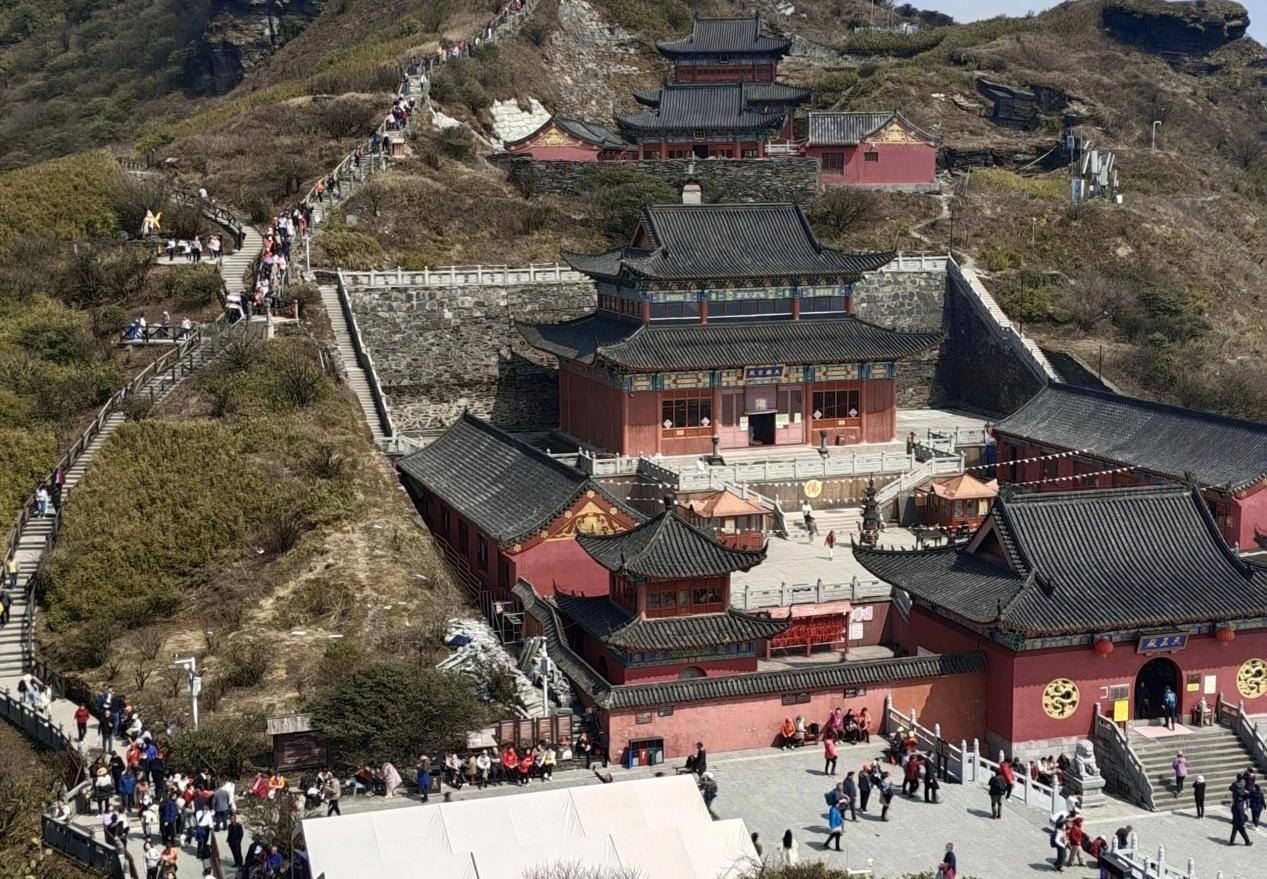 Under the spotlight, Fanjing Mountain is facing the common challenges confronting all World Natural Heritage sites. The environmental pressures arising from tourism development have become increasingly pronounced. Fanjing Mountain constitutes an "ecological island," with an ecosystem characterized by irreplaceability and extreme fragility—once the ecological chain is disrupted, the environment deteriorates rapidly, making restoration and rehabilitation extremely difficult.
The local government and conservation authorities have established the principle of "prioritizing ecological protection with tourism services as a supplement," and enacted the Tongren City Fanjing Mountain Protection Regulations. Measures such as visitor quota reservation systems, eco-friendly facility development, and digital monitoring are being implemented. However, how to showcase this "City in the Sky" to the world while preventing the act of viewing itself from causing harm is not only a challenge for Fanjing Mountain but also a common issue in global natural heritage conservation.
For every traveler who comes from afar, Fanjing Mountain offers more than just a landscape photograph. It is the sea of clouds and sunrise at four in the morning; the smooth grooves etched on the Golden Summit's stone steps by countless pairs of straw sandals; the long silhouette of Mushroom Rock under the setting sun; and a fleeting glimpse of Buddhist light encountered by chance. Standing at the center of the sky bridge over the Red Cloud Golden Summit, with a surging sea of clouds beneath your feet and two ancient temples spanning millennia on either side, while wind blows through rocks formed 1.4 billion years ago—then you realize that Fanjing Mountain's "City in the Sky" is no mere metaphor. It truly floats above time, whispering to every climber: there are still places on Earth worthy of waiting 1.4 billion years for someone to arrive.

