


In the spring of 2023, a modest industrial city in eastern China’s Shandong province found itself thrust into an unexpected spotlight. Zibo, a name previously known to few outside the country’s iron and steel circles, became the most Googled travel destination in China, all because of its distinctive take on an age-old culinary tradition: barbecue. But this was not just any grilled meat. Zibo’s version, known locally as Zibo shaokao, ignited a cross‑province frenzy that drew millions of visitors, inspired viral internet challenges, and even prompted the city government to open special “barbecue trains” and extend public transport hours. To understand this phenomenon, one must look beyond the smoke and spice and appreciate how a simple meal of seared skewers, small pancakes, and spring onions became a symbol of grassroots joy, community bonding, and the power of authentic experience in modern China.
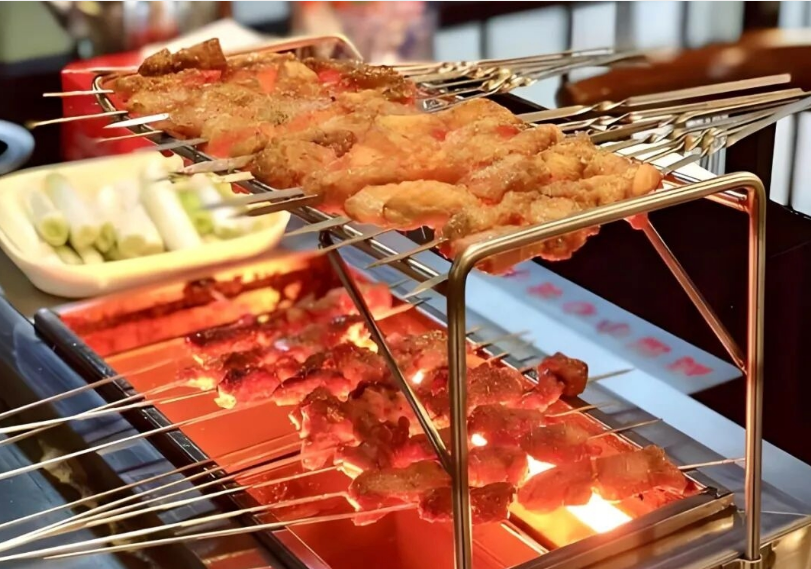
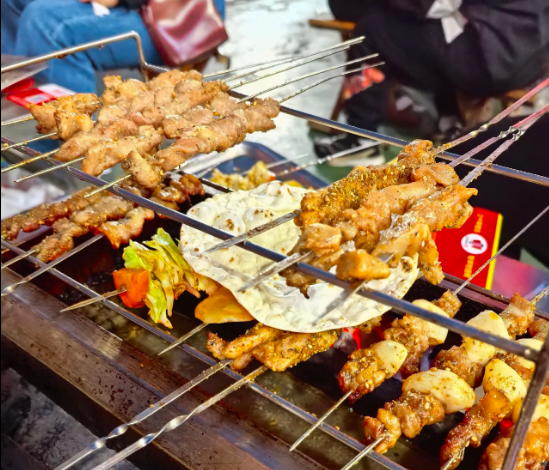
At the heart of Zibo barbecue is a ritual that is as much about participation as it is about eating. Unlike the street‑side grills of Beijing or the heavily marbled yakiniku of Japan, Zibo’s method puts the customer in the driver’s seat. Each table is fitted with a small, charcoal‑fired brazier – a miniature grill that glows orange and crackles with heat. When a diner places an order, the kitchen sends out raw skewers of meat, vegetables, or offal, often only lightly seasoned. The true artistry happens at the table, where each person takes control of the cooking process, turning the skewers over the smouldering coals until the edges curl and the fat drips, producing a satisfying hiss. This hands‑on approach transforms a passive meal into an active, almost playful experience. Strangers at neighbouring tables soon exchange tips on doneness, and friends compete to see who can achieve the perfect char without burning the morsel.
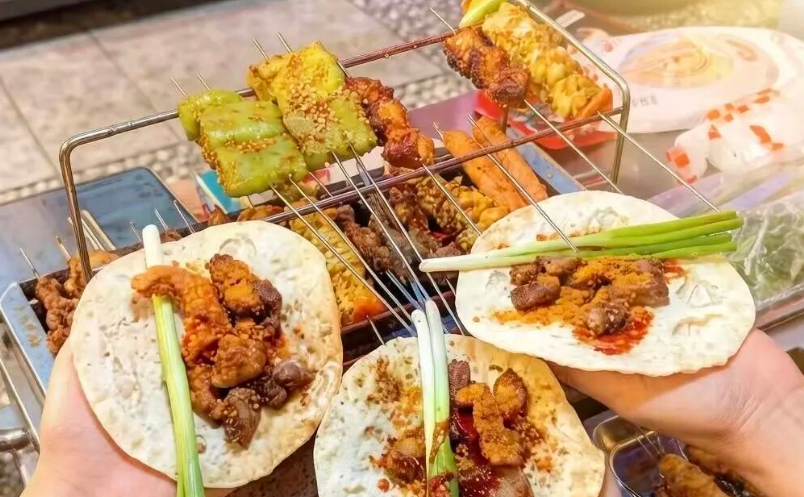
What sets Zibo’s offering apart from other Chinese barbecues, however, is the triumvirate of accompaniments that no proper meal lacks: the xiaobing (a thin, chewy wheat pancake), fresh spring onions, and a sweet‑savoury soybean paste. Once a skewer is cooked to satisfaction, the diner takes a pancake in one hand, spreads a dab of paste on it, adds a few strands of onion, and then uses the pancake to grab the hot meat directly off the skewer – pulling the metal prongs free and leaving a neat, parceled bundle. This warm, soft‑crisp wrap is then folded and popped into the mouth in one or two bites. The resulting combination of flavours and textures is remarkable: the smoky, charred note of the grilled meat, the earthy sweetness of the paste, the sharp, fresh bite of the raw onion, and the springy, bread‑like pancake that holds everything together. It is a complete, balanced mouthful that satisfies every craving – savoury, sweet, pungent, and starchy all at once.
Historically, this style of barbecue has deep roots in Shandong’s culinary culture, which prizes bold flavours, local grains, and the use of raw vegetables for contrast. Shandong, the birthplace of Confucius, has long been known as a land of generous portions and unpretentious cooking. The pancake, for instance, is a staple of the region; its invention is often traced to nomadic influences from northern China, where flatbreads served as portable eating implements. The spring onion, too, is a Shandong icon – the province produces some of the sweetest, crispest scallions in the country. What Zibo did in recent decades was to fuse these local elements with the charcoal‑grilled skewers that had become ubiquitous across China. Slowly, a distinct local practice emerged, originally known only to Zibo’s residents and a handful of adventurous foodies who ventured off the high‑speed rail network.
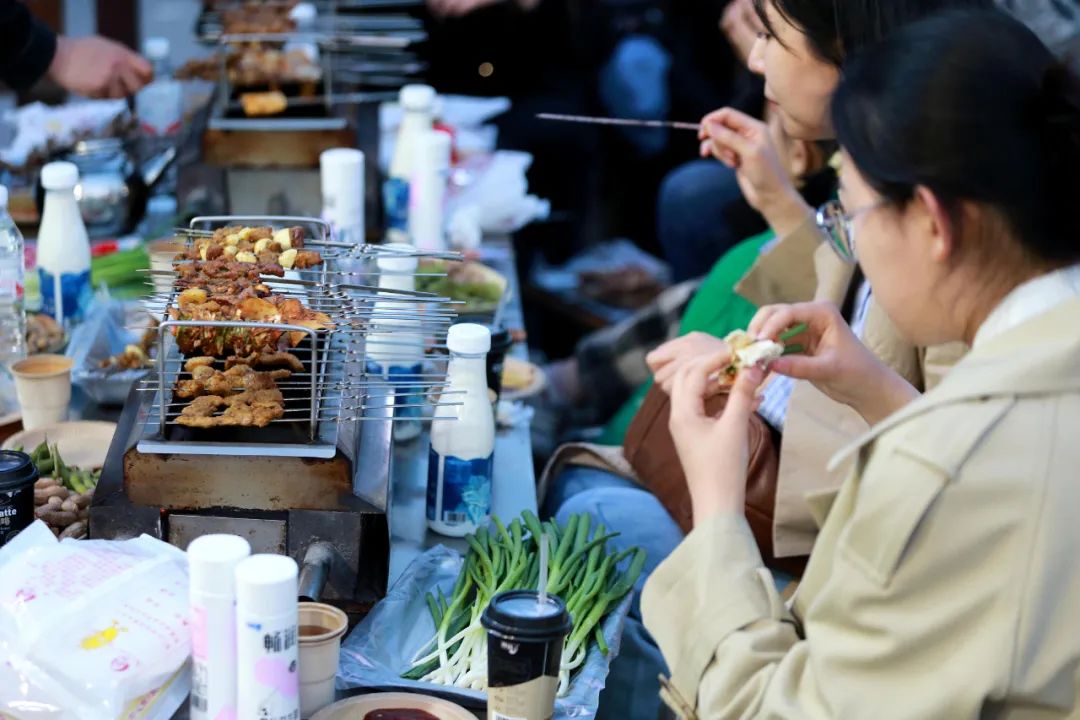
The explosion of Zibo barbecue into national, and then international, consciousness did not happen by accident. It was fuelled by a perfect storm of social media virality, savvy municipal governance, and a post‑pandemic yearning for communal dining. In early 2023, as China emerged from strict COVID‑19 restrictions, people craved connection – the simple pleasure of sitting shoulder to shoulder, sharing food and laughter without partitions or QR codes. A series of short videos posted on Douyin (the Chinese version of TikTok) showed crowds of young people in Zibo cheerfully grilling skewers, singing along to pop songs, and toasting with glasses of local beer. One video, which captured a roadside barbecue stall packed with hundreds of diners at midnight, received over 50 million views in a single day. The hashtag #ZiboBarbecue quickly became a trending topic nationwide.
What made these videos so compelling was not merely the food but the atmosphere of unscripted happiness. In many of the clips, strangers offered each other pancakes or shared their secret spice blends. Shop owners were seen smiling and waving away extra payments from satisfied customers. There were no slick influencers hawking products – only real people, real smoke, and real warmth. This authenticity resonated deeply with an audience tired of curated, perfectionist content. A young woman from Shanghai told a reporter, “I watched a video of a grandmother in Zibo wrapping a pancake for a tourist she had never met, and I cried. I wanted to be in that crowd.”
The municipal government of Zibo, showing remarkable agility, seized the moment. Instead of imposing regulations that might dampen the spontaneity, city officials leaned into the craze. They announced a “Barbecue Festival” lasting the whole summer, extended bus and train services to run past midnight, and even opened a direct high‑speed rail link from Jinan, the provincial capital, to Zibo’s special barbecue district. Police patrols were instructed to prioritise safety without bothering stall operators over minor licensing issues. The mayor made a public appearance at a popular grill house, rolling pancakes and handing them to students. In a particularly innovative move, the city published a digital map of every verified barbecue stall, including real‑time crowd density updates, so that visitors could avoid the longest queues. This combination of grassroots enthusiasm and top‑down support turned a fleeting trend into a sustained tourism boom.
For the uninitiated foreign reader, it might be useful to draw a rough analogy with certain Western food crazes – perhaps the late‑night cheeseburger runs of post‑war America or the sudden mania for pulled pork sandwiches at a small‑town barbecue joint in Texas. But Zibo’s version has its own distinct rhythm. The meal is almost always a group activity; going to a Zibo barbecue alone is considered slightly odd, akin to going bowling by oneself. Each table orders dozens of skewers at a time, typically including lamb, beef, pork belly, chicken wings, sausages, mushrooms, and the indispensable mantou (steamed bun) skewer – the latter being a local innovation where chunks of fluffy steamed bread are grilled to a golden crunch. Beer flows freely, with the pale lager Tsingtao being the most common choice, though some adventurous diners pair the barbecue with baijiu, a potent white spirit. Conversation is loud, punctuated by the clink of glasses and the sizzle of dripping fat hitting charcoal. Meals stretch for hours, often beginning at dusk and ending only when the coals have turned to ash.
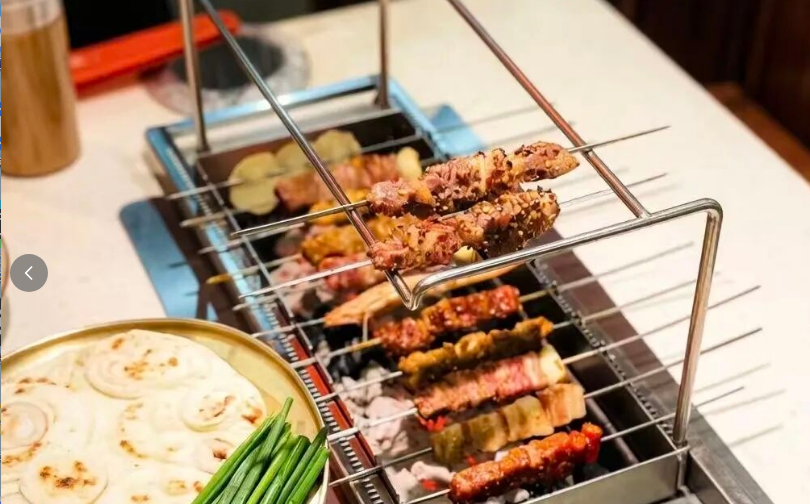
The appeal of such an experience is not hard to understand. As the world becomes increasingly digital and atomised, tangible, sensory rituals regain their value. There is something deeply reassuring about holding a metal skewer, feeling the heat on one’s face, and smelling the primal scent of burning wood and caramelising meat. Moreover, the pancake‑wrapping process introduces a gentle, tactile challenge that breaks the ice among diners. It is common to see a novice struggling to extract a skewer without tearing the pancake, only to be gently corrected by a neighbour who offers a spare, perfectly wrapped morsel. These small acts of kindness, repeated a hundred times a night across a thousand stalls, create a temporary community of eaters – a fleeting but genuine communitas that modern urban life seldom provides.
Foreign visitors who have made the journey to Zibo often express surprise at the affordability. A typical meal for two, including dozens of skewers, multiple pancakes, onions, paste, and several bottles of beer, rarely exceeds the equivalent of fifteen to twenty US dollars. This accessibility is intentional. Zibo’s barbecue tradition grew out of the city’s working‑class culture; it was the meal of factory workers and truck drivers who needed a hot, filling, and cheap dinner after long shifts. Even as the city gained fame, local stall owners resisted the temptation to raise prices. One famous vendor, known online as “Granny Wang”, told a journalist, “My customers are students and young workers. If I triple my prices, I lose my soul.” This ethics of affordability has become part of the brand – tourists know that in Zibo, they will not be cheated or charged exorbitant “hotspot” prices.
However, the Zibo barbecue phenomenon is not without its environmental and logistical challenges. The proliferation of charcoal‑fired braziers in a densely populated city raised concerns about air quality and fire safety. During peak weekends, some residential neighbourhoods complained of smoke drifting into open windows, and the mountains of used skewers and plastic gloves posed a waste‑management headache. The city responded by designating large, open‑air barbecue plazas away from central residential areas, installing industrial‑grade fume extractors, and switching to a type of charcoal that produces less particulate matter. Biodegradable skewers made from bamboo have largely replaced their plastic counterparts. These measures, while imperfect, show how a traditional food culture can adapt to modern environmental standards without losing its essential character.
For the curious foreigner planning a hypothetical trip to Zibo, the experience typically begins at the city’s high‑speed railway station, which now features signs in English and Japanese directing visitors to the barbecue district. From there, a dedicated free shuttle bus – painted with cartoon images of sizzling skewers – runs every fifteen minutes. Upon arrival, the visitor is confronted with a dizzying array of choices: more than two thousand barbecue stalls spread across the city, each with its own loyal following. Some specialise in offal – grilled lamb kidneys and beef heart are local favourites. Others focus on seafood, a nod to Shandong’s long coastline. But the most celebrated stalls are those that have perfected the balance of marinade and fire. The marinade used in Zibo is generally simpler than the complex, sweet‑soy glazes of other Chinese barbecues; it often consists of little more than salt, cumin, chilli flakes, and a hint of Sichuan peppercorn. This restraint allows the quality of the meat and the skill of the griller to shine through.
One should also note the proper etiquette, which differs subtly from other Chinese dining customs. It is perfectly acceptable to stand while grilling, and many patrons do, especially during crowded hours. Using one’s hands is encouraged; utensils are rarely seen except for picking up pickled vegetables from a shared plate. The pancake should never be cut with a knife – only torn or folded. And it is considered courteous to offer to grill a few skewers for one’s companions, just as in a Korean barbecue setting. Burping, while not actively promoted, is generally taken as a sign of satisfaction rather than rudeness. The fastest way to make friends at a Zibo barbecue is to offer a stranger a freshly cooked skewer of lamb, direct from one’s own brazier.
Beyond the sensory pleasure, Zibo barbecue carries a subtle political resonance within China’s contemporary landscape. The central government has, in recent years, called for the promotion of “cultural confidence” and the revitalisation of traditional regional cuisines as a form of soft power. Zibo’s success has been held up as a model of how local authorities can support small‑scale entrepreneurship and street‑level vibrancy without resorting to heavy‑handed regulation. Indeed, many other Chinese cities have attempted to copy Zibo’s formula – launching their own barbecue festivals, promoting local pancake‑wrapping techniques, and even hiring influencers to create viral videos. So far, none have matched the authentic, organic fervour of the original. This is because, as cultural critics have pointed out, Zibo’s craze was not manufactured in a marketing boardroom; it grew out of decades of local habit, a responsive city government, and the genuine hunger for connection that followed a period of isolation. One cannot simply fabricate that kind of magic.
From a nutritional perspective, a Zibo barbecue meal is not for the health‑conscious. It is heavy in saturated fats, sodium, and simple carbohydrates. But in the context of a balanced lifestyle, occasional indulgence is part of what makes life worth living. Moreover, the meal includes fresh spring onions and often a side of pickled radishes or cucumbers, adding fibre and vitamins. The active process of grilling also means that diners tend to eat more slowly than in a restaurant where food is served already prepared; this slower pace may aid digestion and increase satiety. But to analyse Zibo barbecue in purely nutritional terms is to miss the point. It is a celebration, a release, a joyful noise made of fire and flour.
The international media’s coverage of Zibo barbecue has been largely positive but sometimes puzzled. A correspondent for the BBC noted, “It is not the most sophisticated cuisine in China – that honour likely belongs to the imperial banquets of Beijing or the refined dim sum of Guangzhou – but it may well be the happiest.” An article in the New York Times drew parallels to the American barbecue belt, comparing Zibo’s cult following to that of Kansas City or Memphis, while noting that the pancake‑wrap technique has no real equivalent in the West. Food bloggers from Europe and Southeast Asia have flocked to the city, producing video essays that often go viral in their home countries. As a result, Zibo has seen a modest but steady increase in foreign tourism, with many visitors coming from South Korea, Japan, and Thailand – countries with their own robust barbecue cultures. These international guests often remark on how familiar yet distinct Zibo’s style feels: the tabletop charcoal grill resembles Korean gogigui, but the spices and pancake point to a uniquely Chinese lineage.
Looking to the future, the key question is whether Zibo barbecue can sustain its momentum or whether it will fade into a footnote of early‑2020s internet culture. The city government is acutely aware of the risks of over‑commercialisation. They have resisted offers from large restaurant chains to franchise the “Zibo barbecue” name, instead focusing on supporting independent stall owners through low‑interest loans and tax breaks. They have also invested in preserving the traditional skills: a “Zibo Barbecue Master” certification programme has been launched, requiring applicants to demonstrate not only grilling proficiency but also knowledge of local history and customer service. The hope is that younger generations will continue the legacy, learning the art of selecting the right cut of lamb, building a charcoal fire of the correct temperature, and mixing a paste that balances sweetness and umami.
For the foreign reader, it is worth considering that Zibo barbecue offers a rare window into contemporary Chinese life that is neither state‑sanctioned propaganda nor cynical commercial export. It is something far more ordinary and precious: people enjoying themselves in a simple, communal, delicious way. In an era when international headlines about China often focus on geopolitics, surveillance, and economic slowdown, a story about grilled skewers and spring onions might seem frivolous. But perhaps it is exactly these small, authentic pleasures that build bridges across cultures. After all, anyone who has ever stood over a glowing grill, tongs in hand, watching fat drip and flare, understands the universal language of hunger, patience, and shared reward.
A journey to Zibo is not a pilgrimage to a Michelin‑starred temple of gastronomy. It is a trip to a lively, slightly smoky street where a grandmother might hand a stranger a pancake, where a group of university students will offer a solo traveller a beer, and where the only thing that matters is the next bite. The city’s barbecue stalls do not have white tablecloths or sommeliers. They have plastic stools, sticky floors, and the very best kind of chaos. And in that chaos, for a few golden months in 2023 and continuing into the present day, millions of people found something they had been missing: a reason to gather, to laugh, and to eat with their hands. That is the taste of Zibo. It is unlikely to be forgotten anytime soon.

