


A Millennia-Old Heritage of Flavor
Across the vast expanse of the Qinghai-Tibet Plateau, butter tea stands as a culinary icon etched in the hearts of Tibetan people, a quintessential traditional delicacy of the land that has retained its mellow aroma through thousands of years. Shaped by the plateau’s unique climate and geography, this distinctive treat embodies the indigenous wisdom of adapting to nature. Boasting high altitudes, low temperatures and dry air, the plateau was home to nomadic herdsmen who roamed the grasslands and snow-capped mountains. Needing high-calorie, long-lasting and warming food to sustain their energy, they created butter tea out of practical necessity.
As a core symbol of Tibetan food culture, butter tea dates back to the Tubo Dynasty. Unlike the delicate and mild teas of inland China, it features a rich and robust flavor tailored to plateau life. More than a mere thirst-quenching drink, it is an essential sustenance that helps locals endure harsh natural conditions. For thousands of years, butter tea has accompanied Tibetan people through daily life, from ordinary meals to festivals, rituals and guest receptions, holding an irreplaceable position and becoming the warmest taste memory of the snowy plateau.
Authentic Traditional Techniques
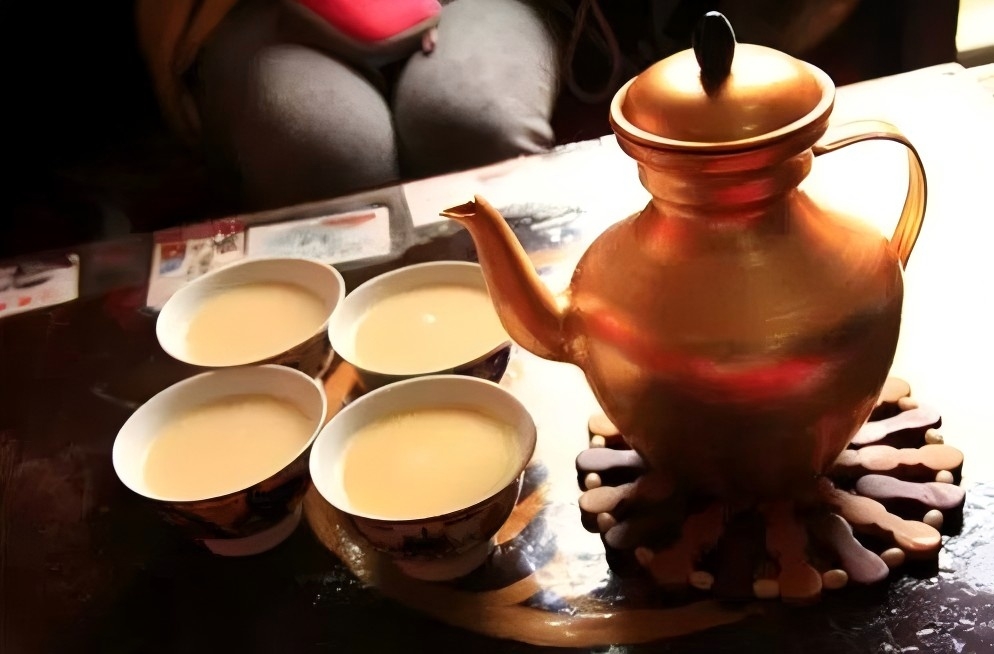
Genuine Tibetan butter tea owes its exquisite flavor to pure natural ingredients and time-honored craftsmanship, with every sip of rich aroma born from the perfect fusion of natural produce and meticulous handiwork. It requires only three indispensable core ingredients: highland yak butter, strong brick tea and natural salt, with slight adjustments made to the ratio in different regions. As the soul of butter tea, yak butter is refined from fresh yak milk on the plateau. Through repeated stirring, extraction and condensation, it forms a smooth, tender texture rich in high-quality fats and protein, bursting with a pure and creamy milk fragrance.
The traditional preparation of butter tea follows rigorous ancient handcrafted methods. First, brick tea is crushed and boiled in clean water until the tea soup turns dark brown and intensely fragrant, then strained to remove tea residues. The warm tea soup is poured into a special wooden butter tea churn, followed by an appropriate amount of yak butter and a pinch of salt. The mixture is churned vigorously up and down hundreds of times with a wooden handle. Through thorough blending, the butter, tea soup and salt merge completely into a uniform, creamy golden-yellow liquid. Free of artificial flavors and additives, it delivers an authentic plateau flavor purely from natural ingredients. Though modern machine-made butter tea is widely available today, hand-churned tea boasts a fuller aroma and richer taste, remaining the top choice for local Tibetan families.
A Flavor Perfect for the Plateau
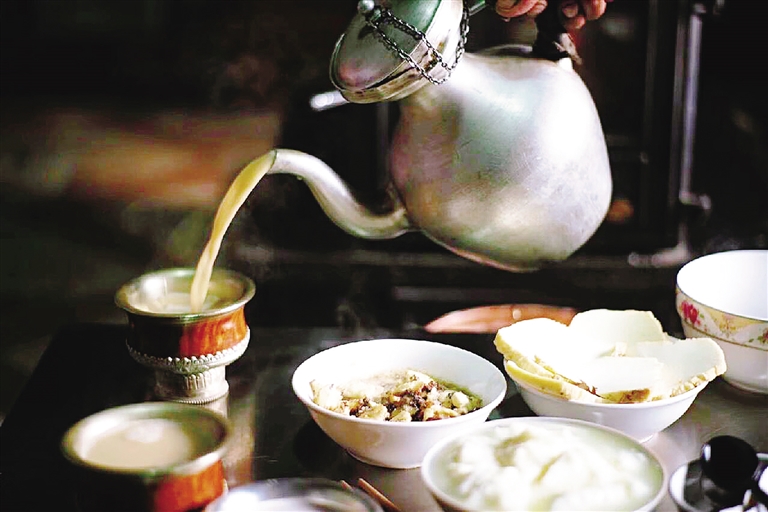
For first-time tasters, butter tea offers a surprising and distinctive flavor, breaking the common perception of sweet and refreshing tea drinks. Predominantly salty and mellow, it glides smoothly on the palate without greasiness. The subtle lingering tea sweetness first greets the tongue, followed by a rich creamy milk flavor, creating a well-balanced taste with layered nuances. Served hot, it spreads gentle warmth from the tip of the tongue throughout the body, leaving a lasting, soothing aftertaste.
This unique flavor embodies the plateau people’s wisdom of coexisting with nature. Compared with sweet beverages, salty butter tea is more refreshing, filling and pairs perfectly with tsampa and air-dried beef, staple foods of the Tibetan diet. In the dry and windy plateau climate, regular consumption of butter tea moisturizes the throat, relieves dryness, replenishes physical energy rapidly, resists cold and effectively alleviates altitude sickness. Though its taste may seem unfamiliar at first sip, further savoring reveals its mellow and enduring charm, showcasing the purity and depth of authentic plateau flavors.
The Humanistic Feelings Embodied in Butter Tea
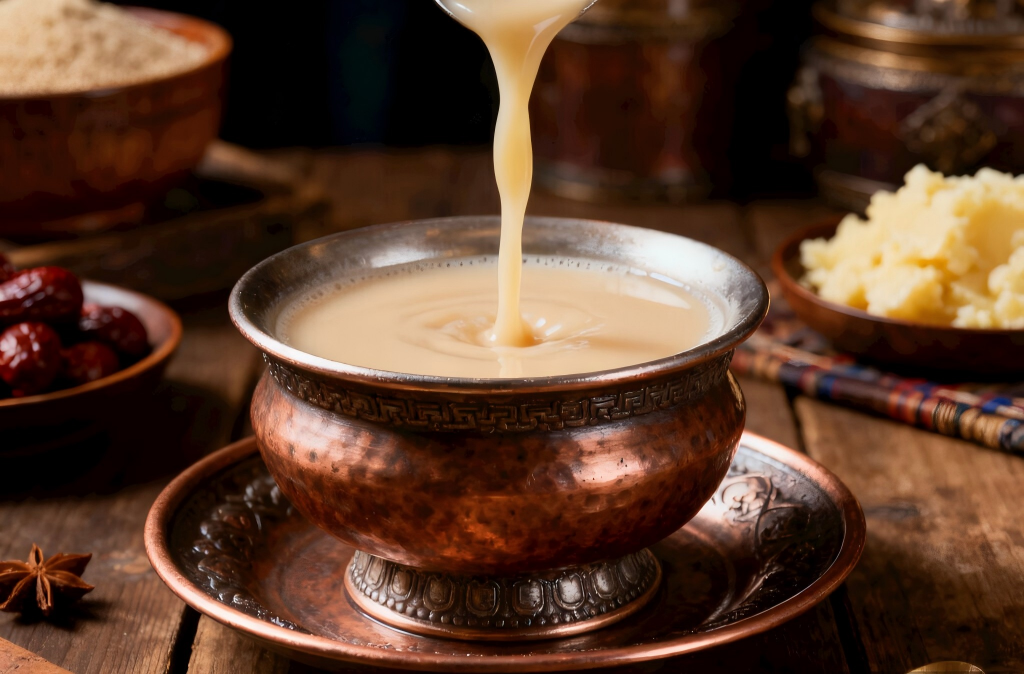
Beyond its identity as a daily beverage, butter tea carries the profound humanistic feelings and etiquette culture of Tibetan people. In traditional Tibetan customs, butter tea represents the highest hospitality. When guests arrive, hosts will personally serve warm butter tea as a sincere blessing and gesture of courtesy. It is an indispensable part of weddings, festivals, religious rituals and social gatherings, witnessing the ordinary days and grand folk ceremonies of the plateau.
In early morning Tibetan residences, curling tea steam rises gently; a bowl of butter tea paired with a piece of tsampa constitutes the simplest and most comforting breakfast for plateau families. At dusk, returning herdsmen find instant relief from a day’s fatigue in a cup of hot butter tea. It witnesses the passage of seasons on the plateau and carries the life stories and cultural heritage of the Tibetan people. With the development of cultural tourism, butter tea has stepped out of the snowy plateau and become a sought-after specialty nationwide, allowing more people to experience the unique customs and profound humanistic heritage of the Qinghai-Tibet Plateau through a single cup of mellow tea.
A bowl of butter tea condenses the natural gifts of the snowy plateau and embodies thousands of years of folk culture. Blending rich milk fragrance and subtle tea aroma, it captures the vastness and tenderness of the plateau in every sip — the most heartwarming flavor of Tibet’s everyday life.

