


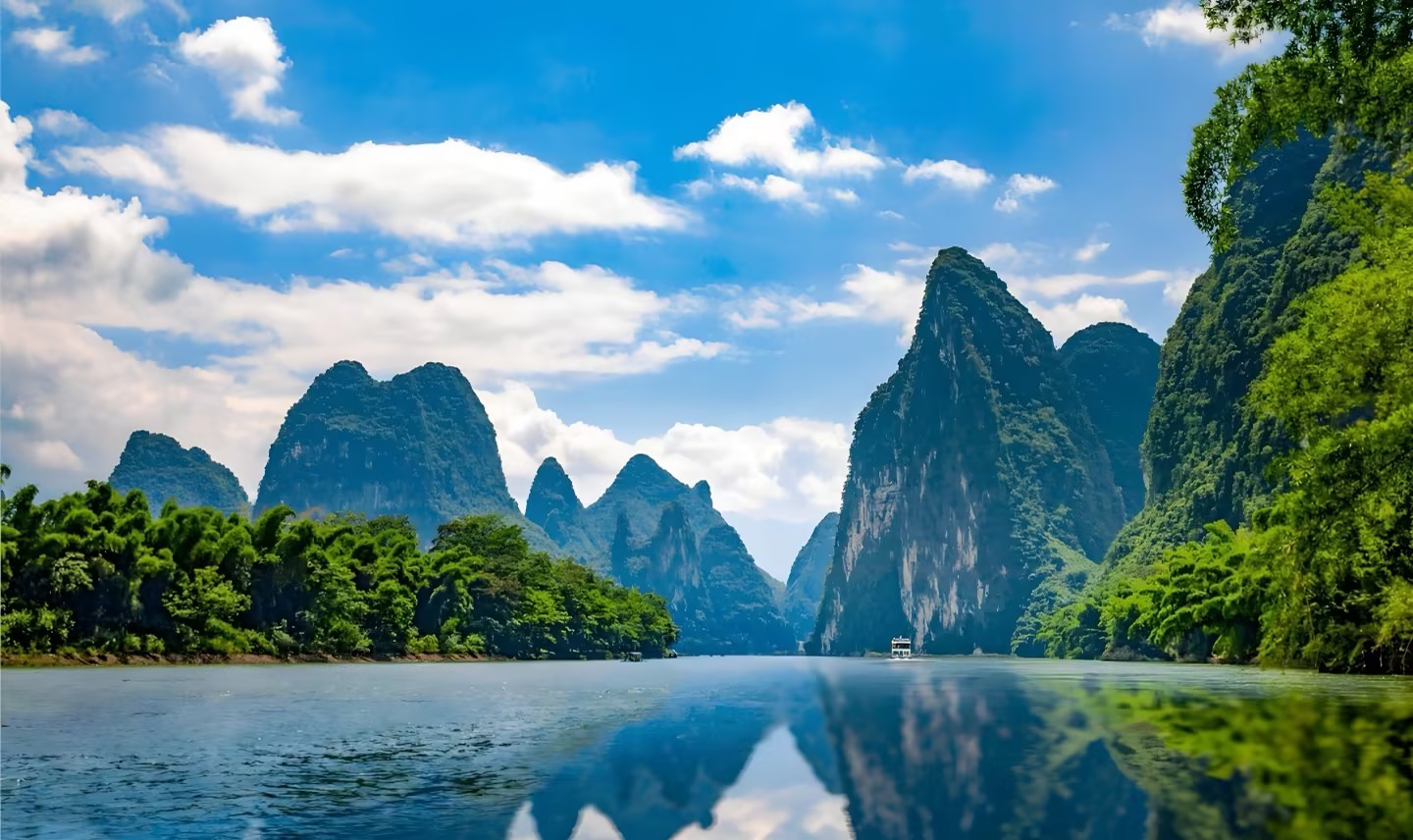
In Yangshuo, Guilin, there is a river as picturesque as a poem. Like a soft emerald ribbon, it gently drifts among the green mountains – this is the Yulong River, hailed as the "Soul of Yangshuo". A popular saying goes: "To miss the Li River when visiting Guilin is a pity; to skip the Yulong River when in Yangshuo is even more regrettable."
A Scroll of Mountains and Waters: Timeless Charm of a River. The Yulong River is the longest tributary of the Li River within Yangshuo, stretching 43.5 kilometers with a drainage area of 158.47 square kilometers. It flows through five townships (Jinbao, Putao, Baisha, Yangshuo, and Gaotian) and over 20 villages. In ancient times it was called the "Anle River" (Peaceful Happiness River), but later renamed Yulong River after the famous Yulong Bridge (Meeting Dragon Bridge) built along its middle course. It is often called the "Little Li River".
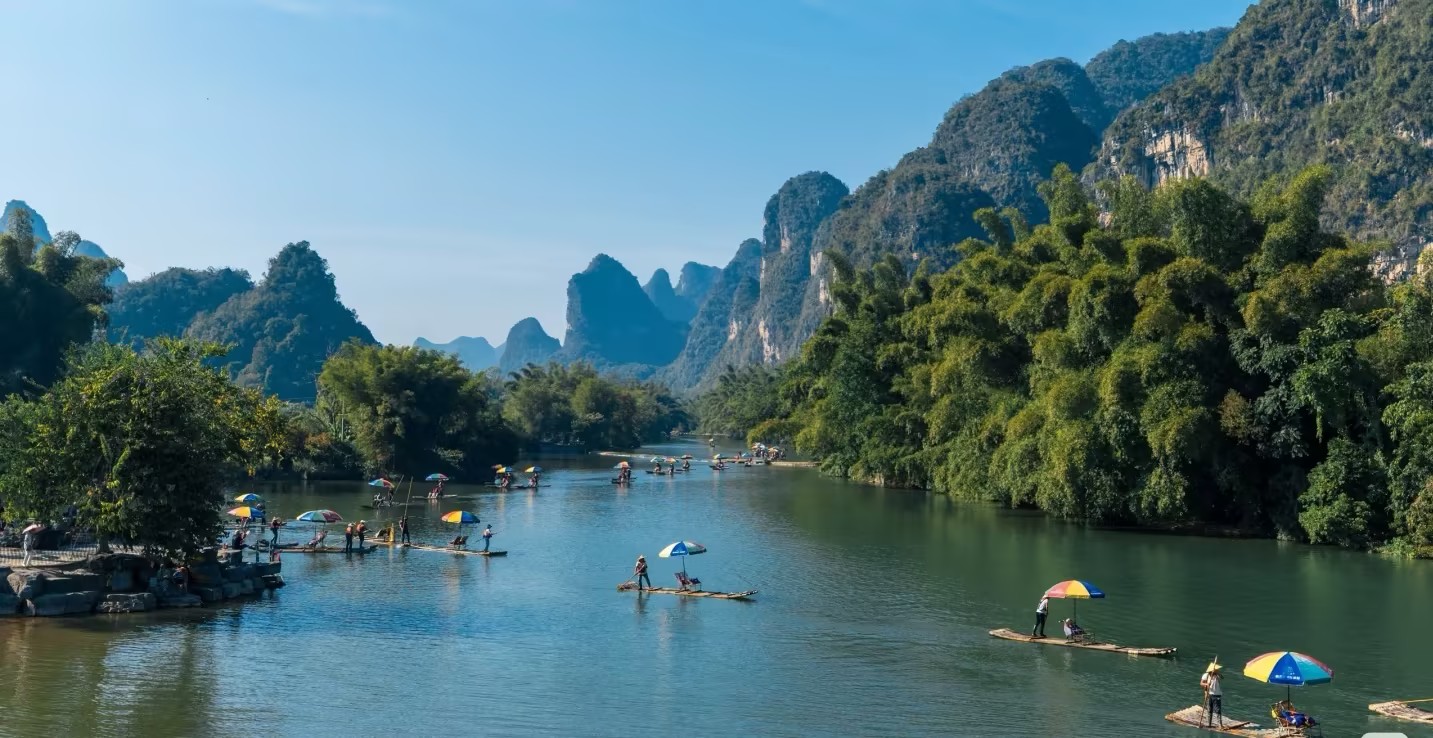
If the Li River is a "graceful lady from a noble family", then the Yulong River is a "lovely village maiden" that stirs the heart. The mountain peaks on both banks are elegant and winding, rolling endlessly in myriad shapes. The river is like a green jade – crystal clear, with fish swimming idly and bamboo rafts floating gently, everything visible beneath the surface. A light breeze brushes the water, causing ripples to spread. In the distance, the karst peaks rise in undulating layers, shrouded in a faint ink-wash hue, forming a giant traditional Chinese painting. Verdant bamboo groves line the shores, lush greenery carpets the land – a pastoral idyll that makes one feel as if they have entered a poetic, heaven-on-earth realm where man and nature are in perfect harmony.
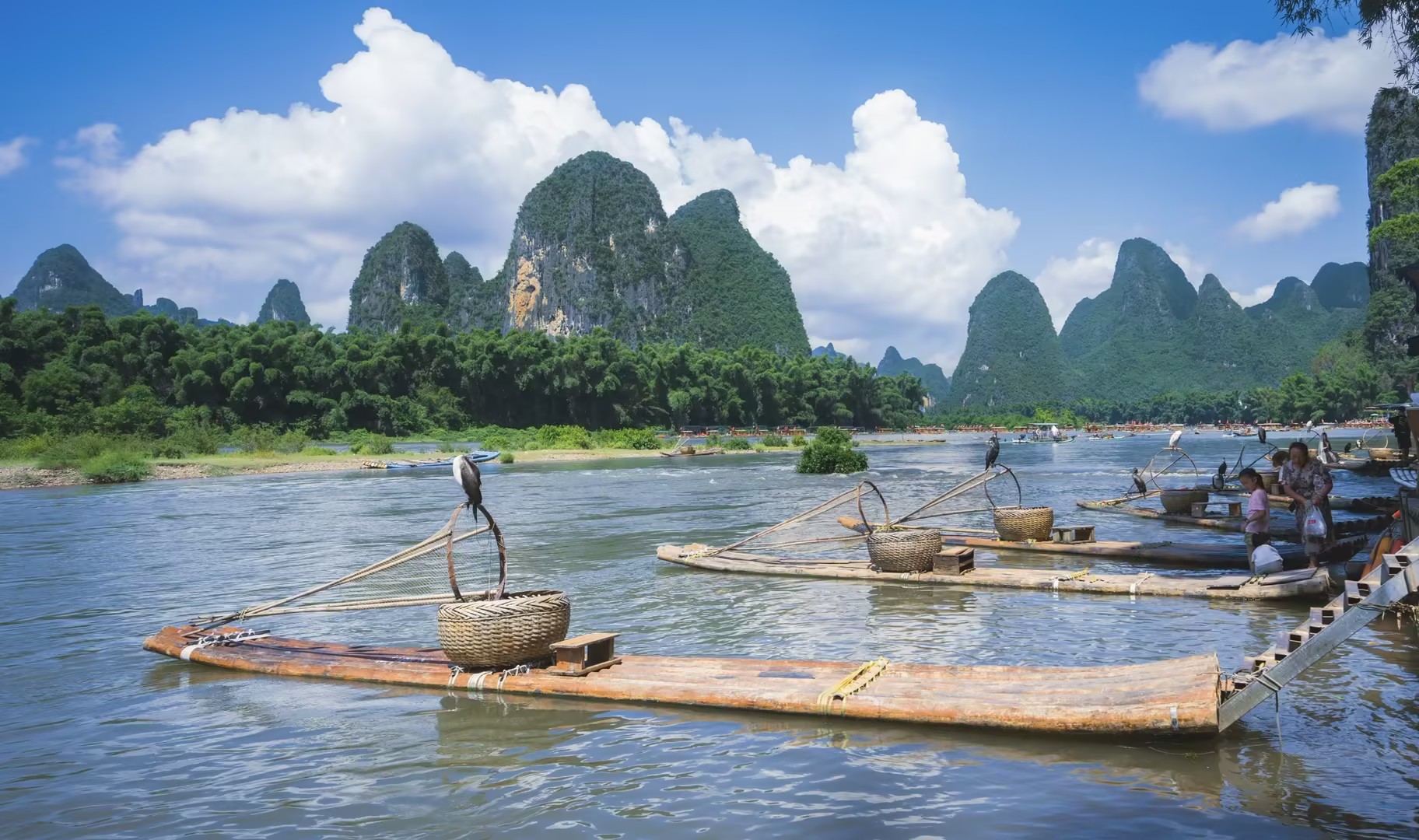
Scattered along the Yulong River are numerous historical relics, among which ancient bridges shine brightest. Yulong Bridge, built in the 10th year of the Yongle reign of the Ming Dynasty (1412 AD), has a history of over 600 years. It is a single-arch stone bridge in the虹式 (rainbow) style, built with dry-laid stones. Its arch rises nine meters high, presenting an imposing form, while vines trail over the bridge body, adding to its serene and rustic elegance. The bridge deck is paved with flagstones; their polished, gleaming surface records the footprints of travelers over centuries. Nearby stands Fuli Bridge, which spans the Wugui River. Also a single-arch stone structure built in the Ming Dynasty about 500 years ago, it is highly photogenic with its classical charm. Xiangui Bridge is the oldest surviving stone arch bridge in Guangxi. The site of Guiyi Ancient City and the cluster of old county residences quietly recount the long history of this land.
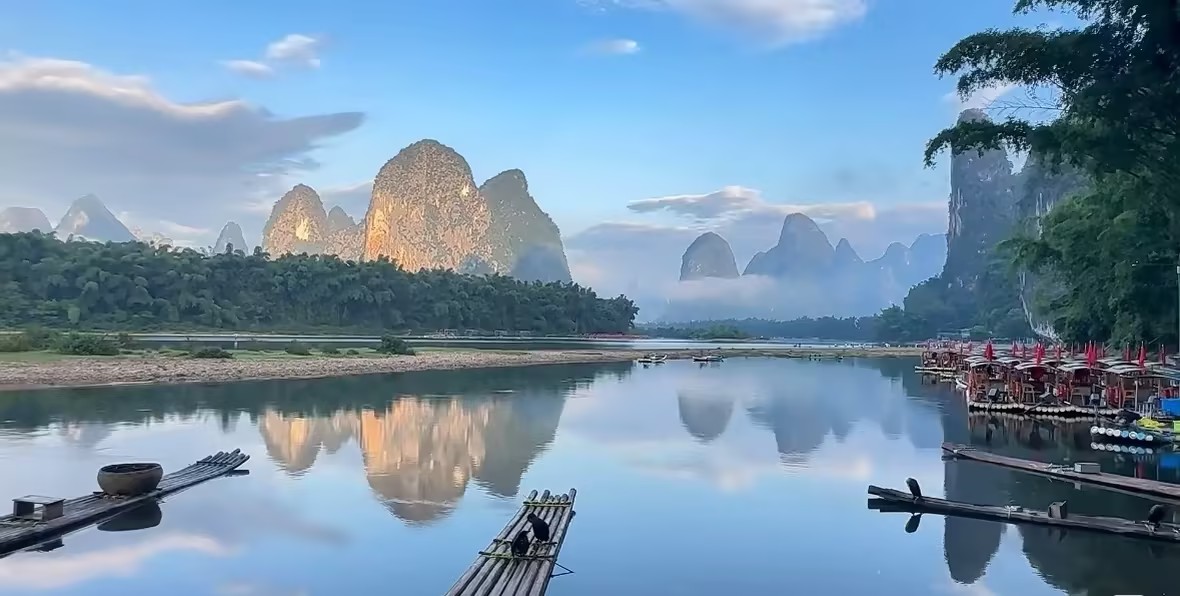
Legends of the Dragon: Moving Stories of a River.The Yulong River is not only blessed with stunning scenery but also nurtured by countless touching legends, adding mystery and romance to its waters.
There is a beautiful folk tale about how the river got its name. Long ago, a dragon from the East China Sea, while patrolling the area, was so captivated by the scenery that he found the East China Sea dull and colorless by comparison. He decided to hide there and never leave. At night he would surface to enjoy the views, and eventually he couldn't resist coming out even during the day. Many villagers saw him, and thus the river became known as Yulong (Meeting Dragon) River.
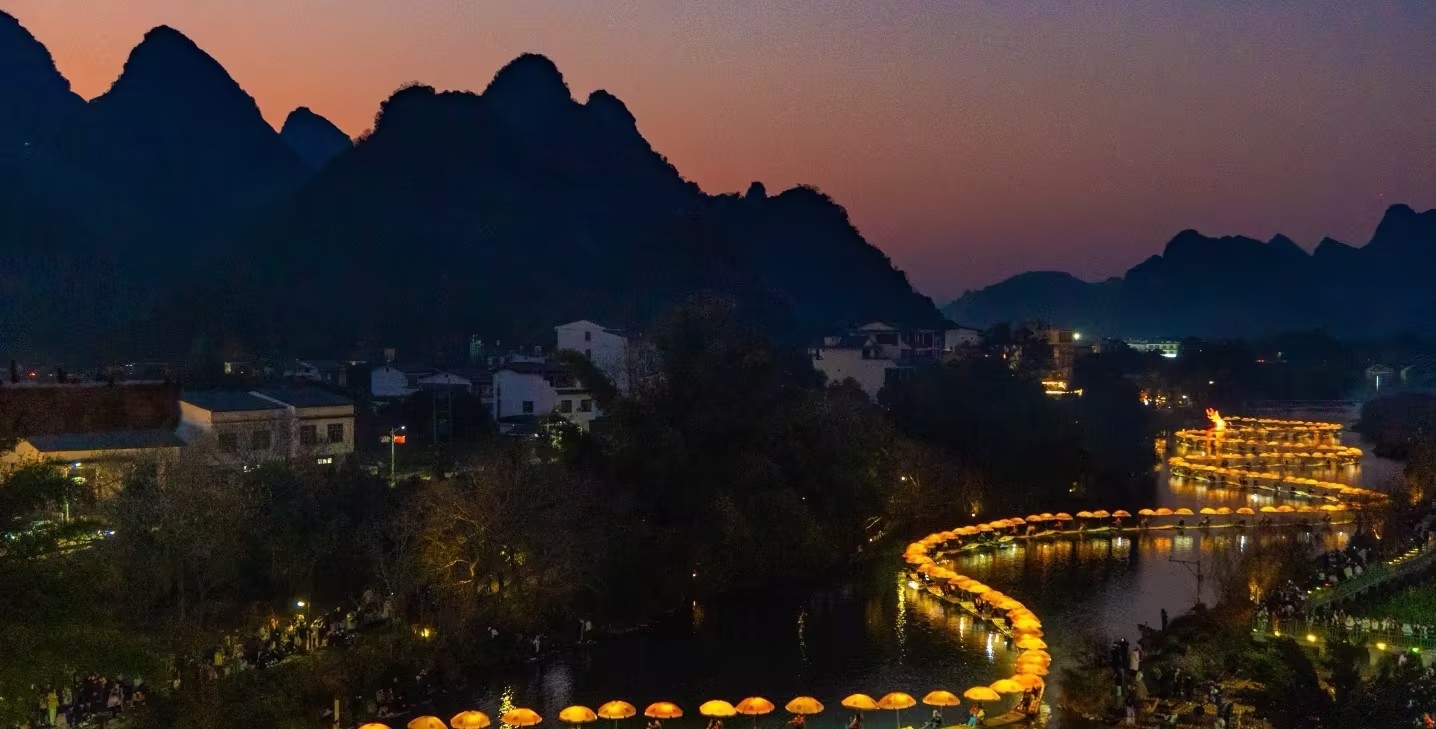
Another more moving legend tells the origin of Yulong Bridge. In ancient times, a water monster terrorized the Anle River. A scholar on his way to the imperial examinations reached the riverbank just as fierce winds, huge waves, and darkness descended, making it impossible to cross. In despair, he encountered a woman. She rode the clouds, summoned the Dragon King and the Eight Immortals, who vanquished the monster. Immediately a golden arched bridge appeared over the river. Later the scholar learned that the woman was actually a daughter of the Dragon King. After achieving the highest rank in the exams, he resigned his post, returned south, and married the dragon maiden by the Anle River. To express gratitude to the "dragon", he built a magnificent stone arched bridge named "Yulong Bridge" (Meeting Dragon Bridge), and the Anle River was renamed Yulong River.
Besides bamboo raft drifting, visitors can also cycle along the dedicated greenway beside the Yulong River, exploring freely and immersing themselves in the pastoral landscape. Bicycles are readily available for rent in Yangshuo (about 20 yuan/day) as are e-bikes (about 50 yuan/day). Alternatively, one can hike from Yulong Bridge in the upper reaches to Gongnong Bridge, visiting various scenic spots and villages along the way – a total distance of about 17 kilometers. For those seeking a different perspective, low-altitude tours by helicopter, hot air balloon, or airship offer panoramic views of the karst peaks. Outdoor activities such as rock climbing, cycling, hiking, and cave exploration are also available. On rainy days, when mist and clouds shroud the peaks, the scenery becomes even more enchanting, allowing visitors to fully appreciate the charm of Yangshuo. Experts from home and abroad unanimously agree: "The Yulong River is a first-class natural heritage of mankind shared by the whole world."
The Yulong River – this emerald ribbon flowing through the land of Yangshuo – weaves a dream of landscapes for every visitor with its clear waters, graceful peaks, ancient bridges, and moving legends. Here, time seems to slow down, allowing one to return to simplicity, to experience the most heartfelt dialogue between man and nature amidst poetic charm.

