


A Taste Icon by the Yellow River
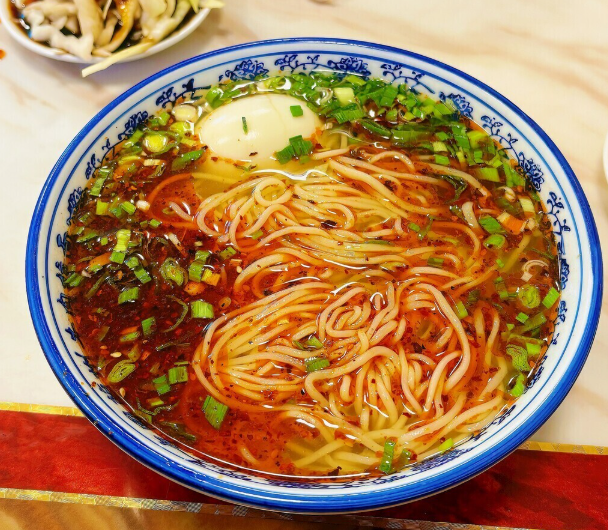
In Lanzhou, the early morning streets are never short of fireworks. A bowl of steaming hot hand-pulled noodles is the most touching opening of this city. Known as "China's No.1 Noodle", Lanzhou hand-pulled noodles have long transcended the meaning of satisfying hunger and become a cultural symbol embodying the customs of Northwest China and the wisdom of the nation. From the banks of the Yellow River to the whole country, and even across the oceans, every strand of chewy noodles and every spoonful of fresh soup tells a story of a century of inheritance and perseverance, condensing the products and feelings of the northwest land.
A Century of Circulation and Ingenious Inheritance
The history of Lanzhou hand-pulled noodles can be traced back to the Jiaqing period of the Qing Dynasty, and its origin has a story spanning regions. According to legend, Ma Liuqi, a Dongxiang man from Gansu, learned the technique of clear soup beef noodles from Chen Weijing in Huaiqing Prefecture, Henan (now Bo'ai County, Jiaozuo City). After bringing it back to Lanzhou, it was continuously improved by Chen's descendants and Hui chef Ma Baozi, gradually forming a unique flavor and standard. During the Republic of China, Ma Jiesan, a descendant of Ma Baozi, further optimized the craftsmanship and named it "Clear Soup Beef Noodles", winning the reputation of "Stopping horses at the smell of fragrance and stopping cars at the taste", laying the foundation for today's Lanzhou hand-pulled noodles. Today, this craft has been passed down for six generations and was included in the fifth batch of national intangible cultural heritage list in 2021, becoming the most beautiful city card of Lanzhou.
Clear, White, Red, Green and Yellow, Five Flavors in One
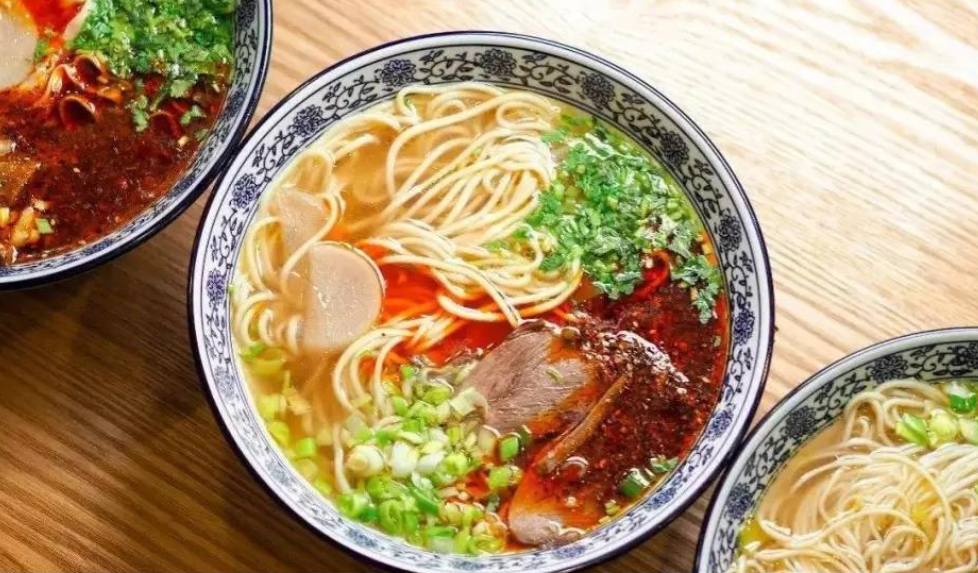
The soul of Lanzhou hand-pulled noodles lies in the strict standard of "one clear, two white, three red, four green and five yellow". This ten-character maxim is not only the essence of the craftsmanship, but also the guarantee of the flavor. "One clear" refers to the clear soup. Fresh beef and beef bones from the Gannan grassland are selected, matched with more than a dozen spices and simmered on low heat for 5 to 7 hours. The boiled soup is clear and transparent, fresh but not greasy, without a trace of foam. "Two white" is the white and soft radish slices. Fresh green radishes are selected, sliced and blanched to relieve greasiness and enhance freshness with a refreshing taste. "Three red" is the bright red and shiny chili oil, which is slowly boiled with high-quality chili noodles and rapeseed oil, spicy but not dry, with a strong aroma. "Four green" is the fresh green coriander and garlic sprouts, which add a finishing touch and a fresh flavor. "Five yellow" is the smooth and yellow noodles, chewy and elastic, showing the skill of hand-pulled noodles.
Handicraft Skills, Ingenuity in Every Detail
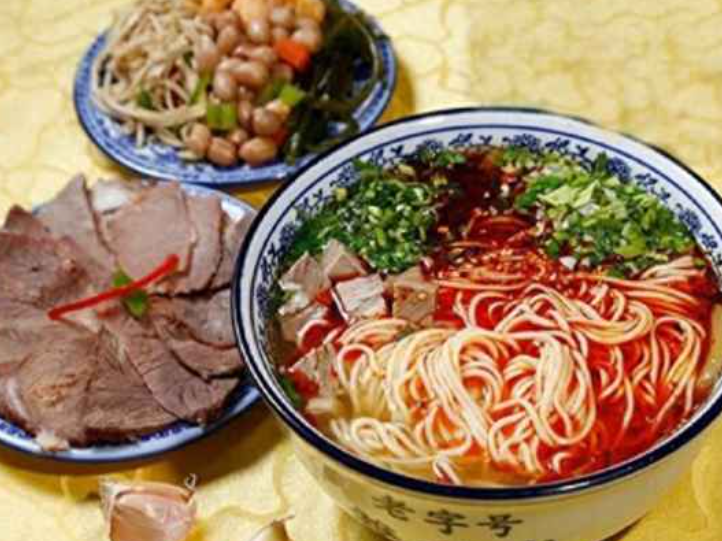
An authentic bowl of Lanzhou hand-pulled noodles is inseparable from the ingenuity of the masters. Every step from mixing flour to pulling noodles hides knowledge. The production of noodles needs to go through five steps: selecting materials, mixing flour, proofing noodles, kneading noodles and pulling noodles. High-gluten flour is selected, mixed with an appropriate amount of peng ash water in an accurate proportion, and the noodles can be chewy and not sticky only if the proofing is in place. Pulling noodles is even a unique skill. A skilled master can stretch, pull, throw and shake a ball of dough into noodles of different thicknesses in just a few seconds—thin as hair, wide as a belt, and eight styles such as chives leaf, second thin, third thin, etc., to meet the preferences of different diners. The whole process is like "ballet on the noodle board", which has both the beauty of strength and rhythm. The boiling of the soup is also exquisite, with accurate amount of spices and strict control of heat. It is necessary to extract the freshness of meat and bones without letting the spices cover the original flavor. This rigor is the foundation of a century of inheritance.
A Bowl of Noodles, the Feelings of a City
For Lanzhou people, hand-pulled noodles have long been integrated into daily life and become a taste memory engraved in their bones. In the early morning noodle shops, people sit around the table and shout "Second thin, more chili", and the masters understand it. In a moment, a bowl of steaming hot hand-pulled noodles is served. Take a sip of chewy noodles, drink a spoonful of fresh soup, match with a few pieces of soft beef, and then eat with a clove of garlic—hearty and warm all over the body. Today, Lanzhou hand-pulled noodles have long gone out of Lanzhou. More than 40,000 stores across the country and more than 160 noodle shops in more than 40 countries overseas have brought this northwest flavor to the world. It not only has the persistence of time-honored brands, but also has new innovations; it not only retains the temperature of handcraft skills, but also adapts to the rhythm of modern life, becoming a link connecting regions and conveying culture.
A Bowl of Noodles, a Legacy of Inheritance
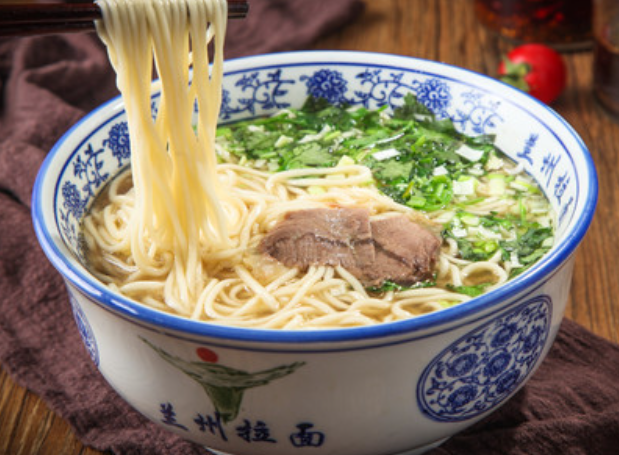
The charm of Lanzhou hand-pulled noodles lies not in the gorgeous plate, but in the pure flavor and persistent ingenuity. It is a gift from the products on both sides of the Yellow River, a crystallization of the integration of multiple ethnic cultures, and even more a respect and inheritance of traditions by generations of craftsmen. From street stalls to chain stores, from handcraft skills to standardized development, what changes is the form, and what remains unchanged is the freshness and chewy texture. A bowl of hand-pulled noodles carries the fireworks of Lanzhou and hides the boldness and enthusiasm of northwest people. Take a bite, and you will understand the warmth and depth of this city.

