


Miracle on the Cliff: Hanging Temple, an Oriental Temple Challenging Gravity
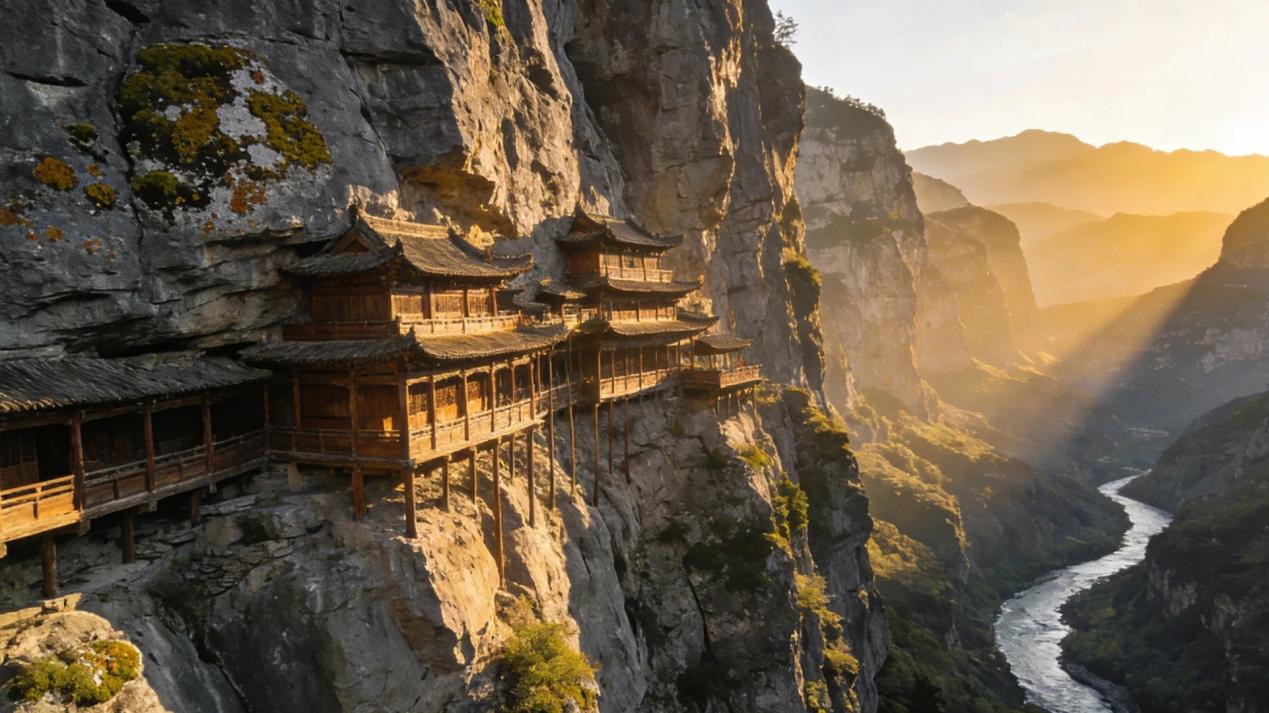
Between the sheer cliffs of Cui Ping Peak in Hengshan, Shanxi, the Hanging Temple hangs like an exquisite model lifted by an invisible hand, suspended 75 meters above the ground. This wooden architectural complex, built in the late Northern Wei Dynasty (around 491 AD), is not only a mechanical marvel in the history of Chinese architecture but also a cultural landmark where Confucianism, Buddhism, and Taoism converge. Having withstood over 1,500 years of storms, wars, and earthquakes, it remains firmly "attached" to the cliff, attracting global travelers to decipher its survival code. For international visitors, the Hanging Temple is not just a temple but also a materialized meditation on faith, science, and Eastern philosophy.
Origin: Aerial Utopia in the Age of Chaos
The birth of the Hanging Temple is deeply intertwined with a turbulent era of division. During the Northern Wei Dynasty, frequent dynastic changes and incessant warfare prompted monks and Taoist priests to seek secluded spiritual retreats. Legend has it that the Celestial Master Kou Qianzhi, on his deathbed, instructed his disciples: "Build a temple suspended in mid-air, reaching the heavens above and cutting off worldly noise below." His disciples ultimately found their ideal site on Mount Heng—a naturally recessed cliff with a canopy-like top that perfectly shielded the structure from wind and rain.
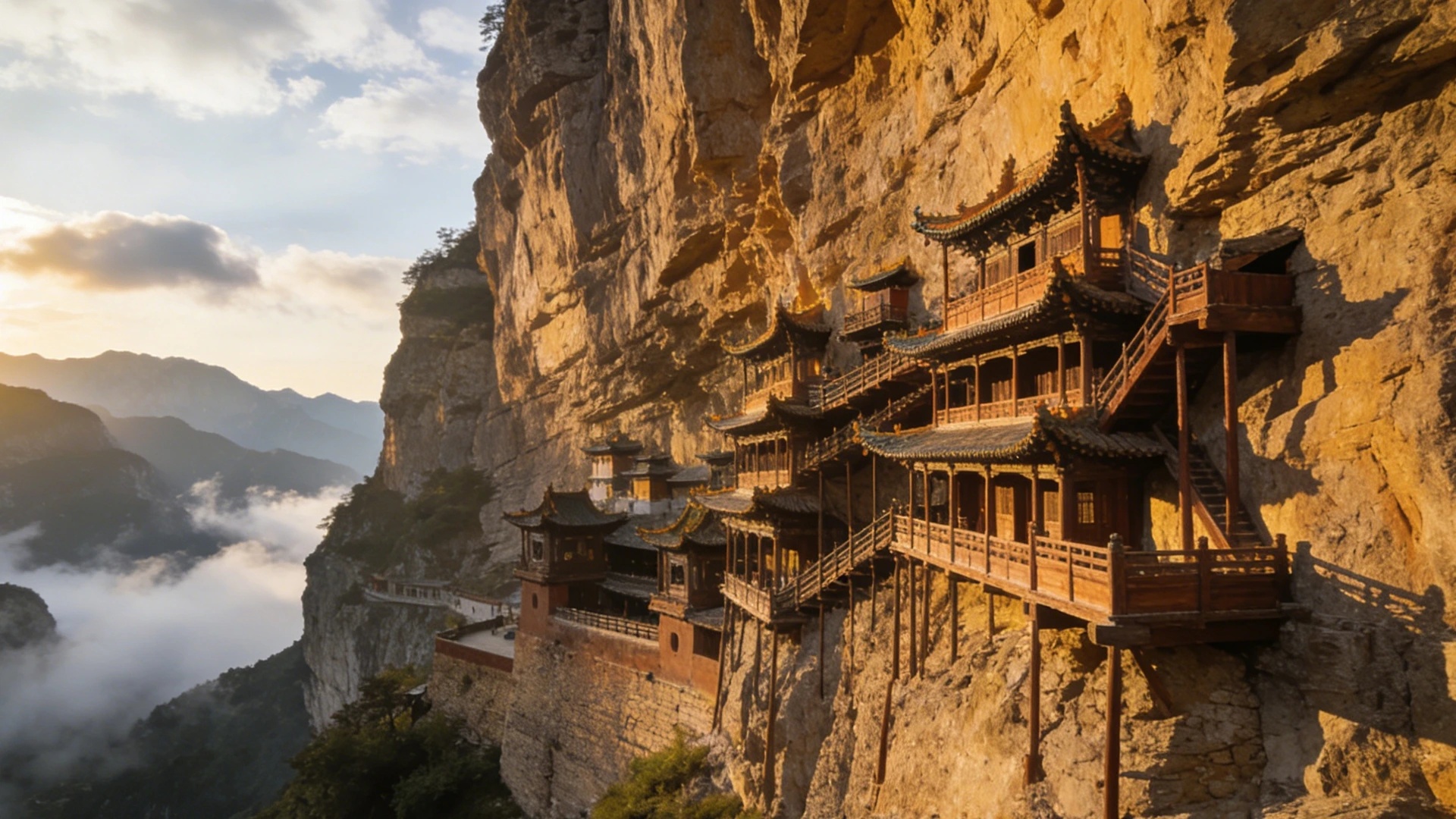
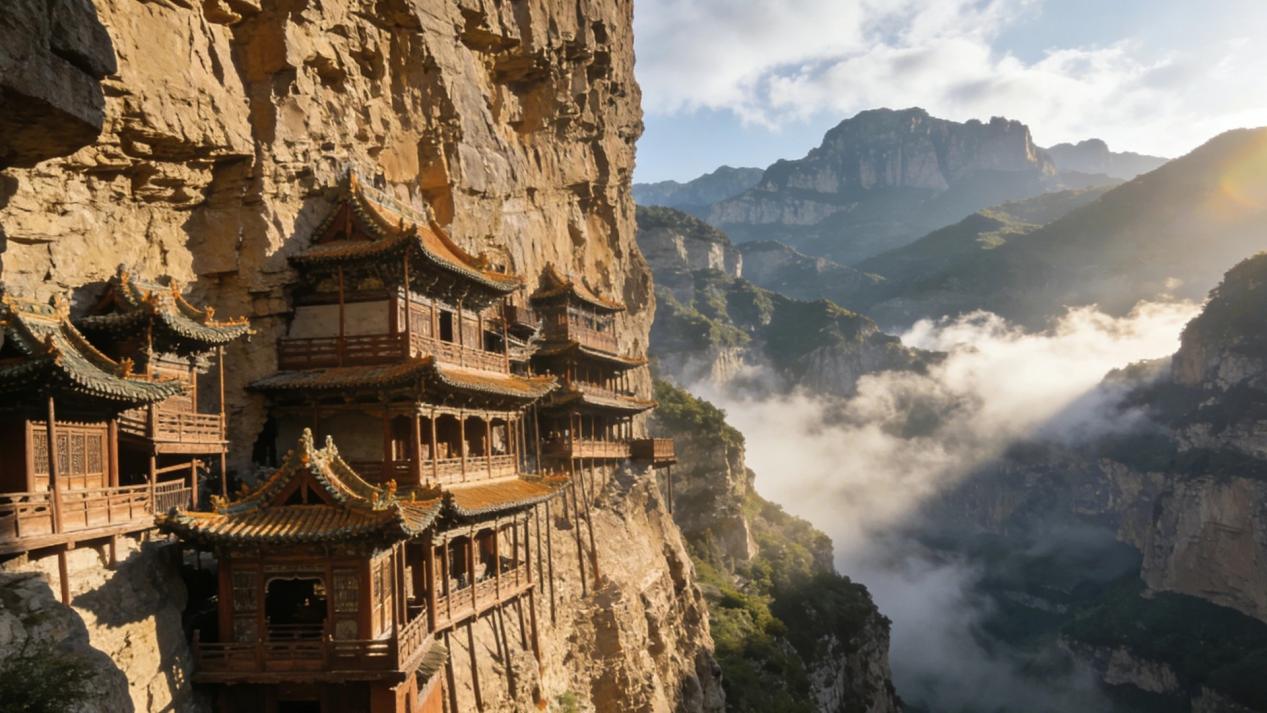
The craftsmen faced an unprecedented challenge: how to construct pavilions on vertical cliff faces without modern lifting equipment? Their solution was ingenious. They first carved holes into the rock face and inserted beams, with two-thirds embedded deep into the mountain as load-bearing foundations, while the exposed third supported wooden platforms. All pavilions featured keel structures at their bases, ingeniously joined to the beams through mortise-and-tenon joints, forming a load-bearing system described as "half-inserted flying beams as foundations, ingeniously borrowing rock support." Even more astonishingly, the slender wooden columns supporting the structure below were not actually stressed—only slightly touching the ground during peak tourist periods to provide auxiliary support. This design has been validated by modern mechanics as a "stabilizing structure of visual deception."
Unlike Western Gothic architecture that pursues sheer height, the Hanging Temple embodies Taoist philosophy of "harmonizing with nature." Its 40 halls and pavilions are arranged in a staggered pattern following the mountain's contours, with internal passages so narrow that only one person can pass through at their narrowest point. Every turning point features a Buddhist niche, achieving optimal spatial utilization. Within the Three Religions Hall, statues of Confucius, Laozi, and Sakyamuni coexist in a single chamber—a rare religious fusion that held special significance during turbulent times, symbolizing universal human values transcending sectarian divisions.
Window of the World: Global Narratives of the Hanging Temple
The international recognition of the Hanging Temple began with the writings of explorers and scholars. In 1633, Xu Xiake described its perilous nature in his "Diary of a Tour to Mount Heng" as "so awe-inspiring that it makes one brave to climb alone," and this account later entered the Western world through the translations of sinologists. In the early 20th century, German architect Ernst Borschmann, during his investigation in China, took photographs of the Hanging Temple, which for the first time presented this "building that defies the laws of gravity" to Europe. In his book "Chinese Architecture," he marveled: "The Chinese seem to have mastered the secret of making wood grow in the air."
The true turning point of globalization occurred in 1972 when British scientist Joseph Needham analyzed the mechanical principles of the Hanging Temple in detail in his book "Science and Civilisation in China", calling it "a model of ancient Eastern systems engineering". In 1996, the Hanging Temple was inscribed on the UNESCO World Heritage Tentative List, with UNESCO commenting: "It is not only a triumph of architecture but also a symbol of humanity's pursuit of spiritual heights in extreme environments." In recent years, through the dissemination of international media such as the documentaries "The Great Engineering of Mankind" and "The Price of Miracles", the "mystery of its suspension mid-air" has become a hot topic among global audiences.
For international visitors, the Hanging Temple's most captivating feature lies in its "readable architectural logic." Unlike European churches that emphasize a sense of divine oppression, the temple's precarious structure invites visitors to engage in a puzzle-solving experience: every trembling pillar and mortise-and-tenon joint tells the story of how ancient craftsmen defied gravity. Japanese architect Kengo Kuma once compared it: "If Greek temples are sculptures of stone, the Hanging Temple is the dialectics of wood—it exists through dialogue with the cliff rather than confrontation."
International Echo: Oriental Wisdom and Modern Enlightenment
The Hanging Temple's global influence has long transcended architectural boundaries. In environmental design, its philosophy of' minimal intervention in nature 'has inspired contemporary eco-architecture. Mexican architect Elena Garindo openly stated during the Cliff Hotel project:' We adopted the Hanging Temple's principle of' nesting like a swallow's nest against the cliff,' ensuring the structure blends into the terrain rather than invading it. 'At the 2019 Venice Biennale, the Chinese Pavilion's installation art 'Floating Balance,' modeled after the Hanging Temple, explored the metaphor of coexistence in a globalized era—how diverse cultures can forge connections on shaky ground.
In popular culture, the Hanging Temple has become a symbol of Eastern mysticism. It appears in the level design of the video game "Assassin's Creed: Chronicles-China," where players must stealthily navigate through the reconstructed eaves of the Hanging Temple. The Hollywood film "Mummy 3" drew inspiration from it as the tomb of the Dragon Emperor. Although these recreations may not align with historical accuracy, they demonstrate the adaptability of the Hanging Temple as a cultural icon—its "impossibility" perfectly satisfies the world's imagination of Eastern wonders.
More importantly, the Hanging Temple offers a unique case study for global heritage conservation. To address the pressure of 600,000 annual visitors (35% of whom are international tourists), conservation teams developed a "micro-disruption monitoring system" by implanting hundreds of sensors at critical structural points to track real-time temperature, humidity, and deformation data. This system was later applied to the preservation of Pompeii's ancient city walls in Italy. Swiss structural engineer Max Huber remarked: "The Hanging Temple teaches us that protecting ancient architecture isn't about freezing it in time, but understanding how it breathes."
Challenges and the Future: Maintaining Balance in the Wind
The Hanging Temple now stands at a historic crossroads. The aridification of Hengshan Mountain has accelerated rock weathering, while recent rare torrential rains have tested the drainage system's resilience. Visitors' breath and body heat have altered the local microclimate, revealing unprecedented microbial communities within wood cracks. Cultural heritage protectors face a dilemma: over-reinforcement would compromise its "suspended" character, while neglect could lead to disaster. The current solution embodies Eastern dialectical thinking—employing "silk thread suturing" technology, where carbon fiber threads penetrate cracks and natural resin is injected. This invisible restoration method has been validated in the conservation of ancient Italian churches.
Internationalization also brings challenges in cultural interpretation. Western tourists often simplistically describe the Hanging Temple as "China's adventure playground," overlooking the philosophical depth behind its integration of three religions. To address this, the management office introduced a "contextualized experience": visitors must first learn about the history of the Northern Wei Dynasty at the cultural center at the foot of the mountain. When wearing AR glasses during the visit, they can see virtual characters performing historical scenes such as Kou Qianzhi's sermons and craftsmen working on construction. This "understand first, then watch" model has been recognized by the International Council on Monuments and Sites as "the best practice in heritage interpretation."
Looking ahead, the Hanging Temple is transitioning from a static heritage site to a dynamic educational hub. The "Global Alliance for the Preservation of Wooden Ancient Architecture," launched in 2024, has established the Hanging Temple as its research base, bringing together experts from Norway's wooden churches and Japan's Horyu-ji Temple to develop wood preservation technologies. An even more ambitious "Digital Immortality" initiative is underway: through laser scanning and AI modeling, virtual replicas with 0.1-millimeter precision will be created. Even if the physical structure vanishes someday, people can still experience the dizzying sensation of walking through its suspended corridors in the metaverse.
For hurried international travelers, the Hanging Temple may merely be a thrilling photo stop. But for those who pause to gaze, it reveals a deeper metaphor: human civilization, like this cliffside structure, constantly seeks balance in uncertainty and creates transcendence within limitations. As conservation expert Wang Xueshi remarked, "The Hanging Temple's greatest wonder isn't its 1,500-year suspension, but how each wind whisper poses a quiet question—how do we preserve seemingly impossible beauty in a world in flux?" This temple will continue to hang on the cliff of time, inviting each generation to interpret their own answers.

