


In the brilliant galaxy of Shandong cuisine, Jiuzhuan Dachang is definitely a unique existence. This traditional famous dish originating from Jinan uses pork intestines as the main ingredient. With its intricate production process, balanced five flavors, and soft, glutinous and mellow taste, it has evolved from a street snack to a signature dish at banquets. It has also been included in the list of "China's Top Ten Classic Dishes in Shandong". It not only perfectly embodies the Shandong cuisine concept of "food should be as refined as possible, and meat slices as thin as possible" but also contains the rustic charm of old Jinan and the Chinese people's ultimate pursuit of delicacy.
The Elegant Transformation from Braised Pork Intestines to Nine-Turn Elixir
The birth of Jiuzhuan Dachang is inseparable from the commercial prosperity and the integration of food culture in Jinan at the end of the Qing Dynasty. In the early years of Guangxu in the Qing Dynasty, the "Jiuhua Building" restaurant located at the north end of Dongxiang County, Jinan, first created this dish, which was then named "Braised Pork Intestines". The owner of the restaurant, surnamed Du, was a wealthy businessman who not only opened 9 restaurants with the character "Jiu" (nine) in Jinan but also had a special preference for the character "Jiu", believing in the Buddhist saying of "nine returns to one".
During a feast for business partners, this exquisitely cooked braised pork intestines amazed everyone present. A literati at the table, who was well aware of Boss Du's preference and admired the chef's superb skills, proposed renaming it "Jiuzhuan Dachang". He explained that in Taoism, alchemy is known as "Nine-Turn Elixir". This dish has a production process as intricate as alchemy and a taste as mellow as the elixir, implying that eating it can bring the ultimate taste enjoyment. This elegant proposal was immediately met with unanimous praise, and the name "Jiuzhuan Dachang" has been passed down since then, spreading from Jiuhua Building to Jinan Mansion and finally becoming popular all over Shandong.
The Ingenious Adherence to Ingredient Selection and Cleaning
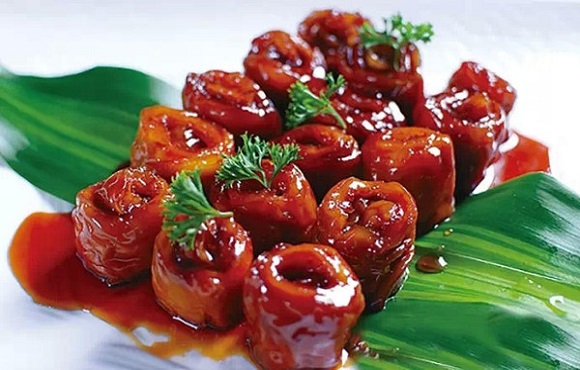
The deliciousness of Jiuzhuan Dachang starts with the strict control of raw materials and thorough cleaning. In terms of ingredient selection, chefs only use the rectum section of fresh pork intestines. This part has thick and tough meat with evenly distributed fat. It can not only ensure sufficient fat aroma but also not affect the taste due to excessive greasiness. Inferior or too lean intestines cannot bear the subsequent complex seasoning and cooking at all.
Cleaning is the key to removing the fishy smell of pork intestines and also the most patience-testing link. The traditional method requires multiple processes: "scraping, turning, washing, rinsing, and soaking". First, turn the inner wall of the intestines inside out and scrape off the attached mucosa and impurities; then repeatedly rub with flour and coarse salt to remove surface fat and mucus by friction; then soak in rice wine and ginger slices for more than half an hour to further neutralize the fishy smell; finally, blanch in boiling water to completely lock in moisture and remove residual odors. The entire process must be "cleaner than washing one's face", but the fat on the intestinal wall cannot be completely cleaned off—this thin layer of fat is the foundation for the subsequent formation of a mellow flavor.
The Art of Heat Control in the "Nine-Turn" Process
"Nine turns" is not a vague term, but an accurate summary of its intricate cooking process. From raw intestines to the finished dish, the intestines go through repeated processes such as blanching, boiling, frying, stewing, and braising. Each step tests the chef's precise control of heat, which can be called the pinnacle of the heat art in Shandong cuisine.
In the preprocessing stage, the cleaned intestines need to be first folded into an "interlocking loop" of eight or nine layers, tightly tied with thin string, then put into a cold water pot with green onions, ginger, and rice wine to cook thoroughly. After taking out and cooling, cut into uniform sections of about 3 centimeters. This step not only initially shapes the intestines but also makes the meat elastic and tough, preparing for subsequent flavor absorption. Next is frying and shaping: in 60% hot wide oil, the intestinal sections are fried until the outer skin turns golden and wrinkled, forming a crispy outer shell. This can not only lock in the internal fat and moisture but also increase the taste level.
The most demanding part is the stewing and sauce-coating link. Leave a little bottom oil in the pot, sauté ginger slices, green onions, and star anise until fragrant, then pour in the intestinal sections and stir-fry to extract part of the fat. Then add seasonings such as light soy sauce, dark soy sauce, rock sugar, and mature vinegar, and pour in rice wine (instead of clear water) that covers the intestinal sections. Bring to a boil over high heat, then turn to low heat and simmer slowly for 20 minutes, allowing the flavor of the sauce to penetrate every pore of the intestines. During the stewing process, the chef needs to constantly shake the wok to prevent sticking to the bottom. Finally, thicken the sauce over high heat until it reaches a state where "the thick sauce coats the intestines". Before serving, drizzle a spoonful of prickly ash oil and sprinkle a little amomum villosum powder. The slightly bitter and sweet aftertaste is instantly full, which is the soul of the "nine-turn" process.
Unlock a Five-Flavor Intertwined Feast in One Bite
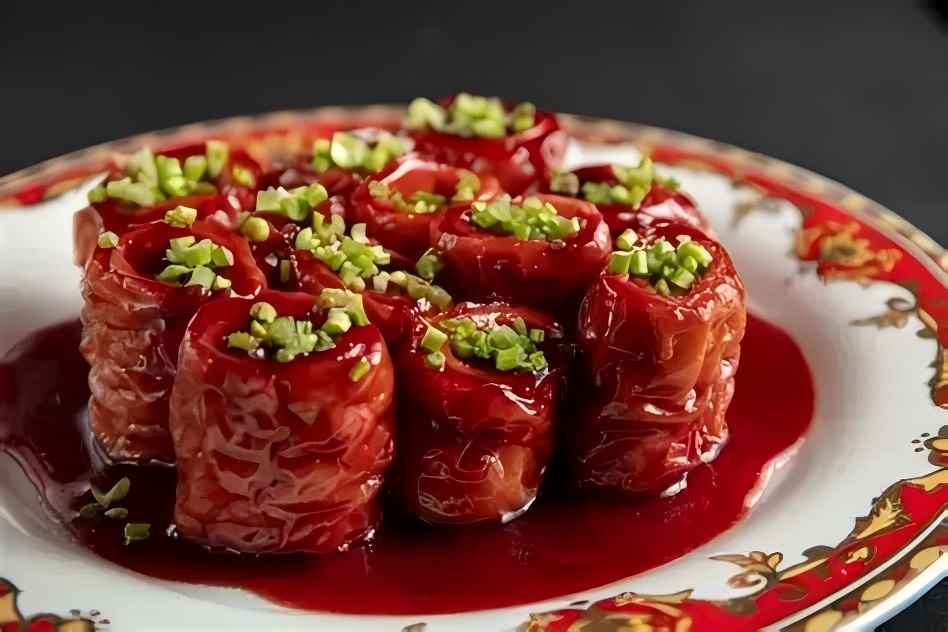
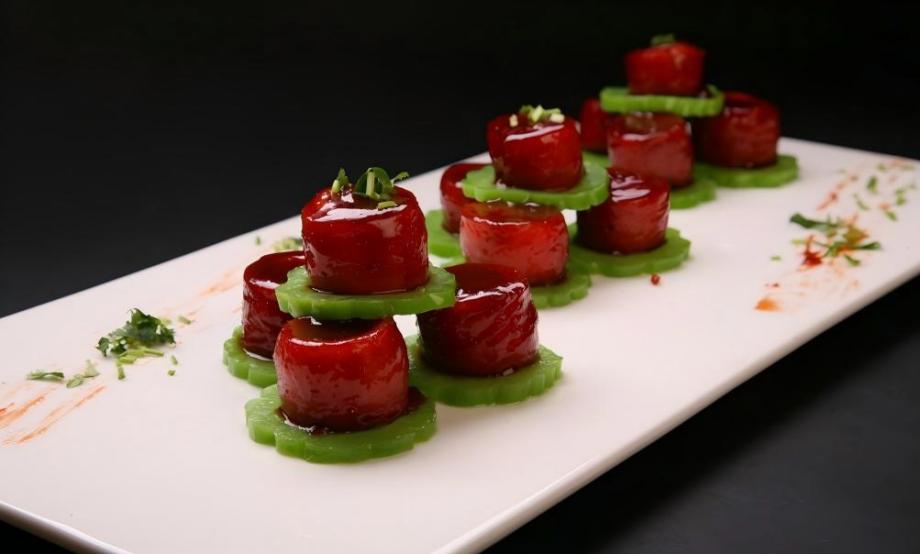
The real Jiuzhuan Dachang is a gradual taste waltz. When it is just served, it has a bright red and shiny color, and the glossy intestinal sections are neatly arranged, with a strong sauce aroma and fat aroma. Before picking up the chopsticks, it already makes people's mouths water. Pick up a piece with chopsticks, and you can feel the slight crispness and toughness of the outer layer and the softness and glutinousness of the inner layer. Take a light bite, and the rich sauce bursts in the mouth instantly, and the fat aroma and sauce aroma fill the entire mouth immediately.
The taste level is even more rich and varied: the first bite is the sweet taste brought by rock sugar, mild and not cloying; followed by the slight sourness of mature vinegar, which skillfully relieves greasiness; then the umami taste of light soy sauce as the base, mellow and long-lasting; occasionally you can taste the subtle spiciness of dried chili, which plays a finishing touch; finally, the faint bitterness brought by cinnamon and amomum villosum, with a hint of sweetness in the aftertaste. The five flavors of sour, sweet, fragrant, salty, and bitter blend in balance without being obtrusive. After multiple processes, the pork intestines have no fishy smell at all, leaving only the pure fat aroma and complex seasoning aroma. They are rich but not greasy, and the more you chew, the more flavorful they become.
It is worth mentioning that Jiuzhuan Dachang has a different flavor when eaten cold. After refrigeration, the fat solidifies into a thin jelly, covering the surface of the intestinal sections. The taste is firmer, and the five flavors are more concentrated. It is a top-quality appetizer with wine, and it is a perfect match when paired with rice wine.
The Cultural Mark from Street Snacks to Banquet Dishes
For more than a hundred years, the production process of Jiuzhuan Dachang has been continuously inherited and developed. Modern chefs have standardized the length of the intestines, increased the number of layers of the "interlocking loop" to eight or nine, and enriched the types of seasonings to make the flavor more mellow. In 1959, this dish was included in "China's Famous Recipes·Volume 6 (Shandong)", becoming one of the representative dishes of Shandong cuisine; in 2018, it was selected into the classic list of "China's Dishes", which is a full affirmation of its cultural value.
Today, time-honored restaurants in Jinan such as Jufengde and Yanfu Private Cuisine still adhere to traditional craftsmanship. Master chef Li Peiyu has even developed a "Pork Intestine Feast" with Jiuzhuan Dachang as the main dish, bringing new vitality to this classic famous dish. For diners, tasting Jiuzhuan Dachang is not only enjoying a feast of taste but also touching the food history of Jinan and feeling the ingenuity and wisdom of Shandong cuisine chefs who "turn the ordinary into the extraordinary".
From a street snack made of pork offal to a signature banquet dish, Jiuzhuan Dachang has become a shining business card of Shandong cuisine with its intricate production process, balanced five flavors, and profound cultural heritage. It tells us that real delicacy never discriminates against the price of ingredients. As long as we pour in ingenuity and wisdom, ordinary raw materials can also release a shocking taste power.

