


As the top treasure among China’s five famous craft wares, glass is a luminous gem embedded in the context of Chinese civilization. Boshan in Zibo, Shandong Province, serves as the core birthplace and inheritance hub of Chinese glass culture, boasting a millennia-old glass firing technique. Renowned for its crystal-clear texture, gorgeous and varied hues, and exquisite craftsmanship, Zibo glass is hailed as “sculpture forged by fire”. For thousands of years, raging fires have refined ingenuous craftsmanship, and luminous glassware embodies the essence of Qilu culture. Through the vicissitudes of time, Zibo glass has evolved from a royal tribute in ancient times into an artistic treasure integrating traditional heritage and modern aesthetics, shining brightly in the new era.
A Millennium of Origins: Ancient Qilu Furnaces Forging Glass Heritage
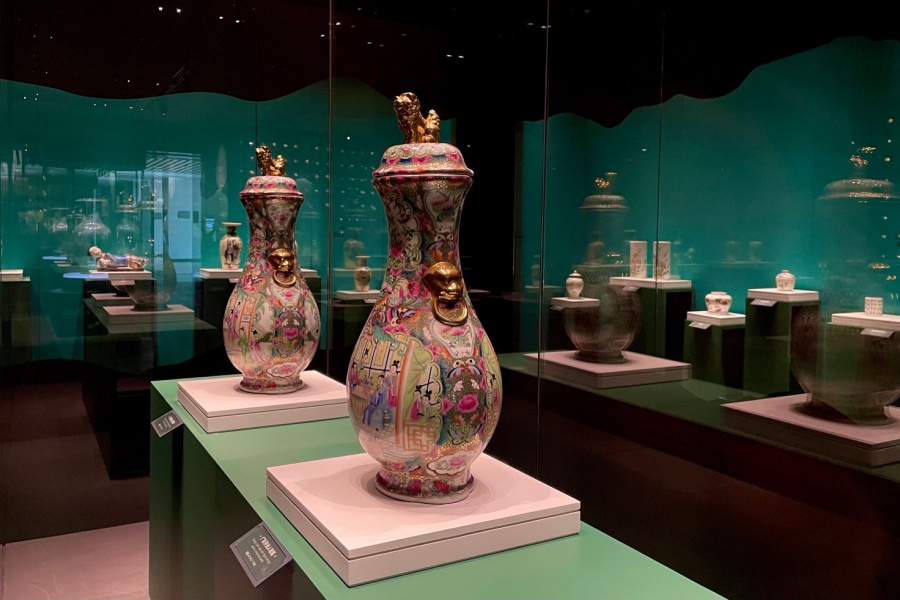
Zibo glass enjoys a time-honored history, dating back to the Western Zhou Dynasty. After dynastic iterations, it has gradually developed into a distinctive Lu-style glass system. In the Tang Dynasty, its craftsmanship matured with elegant and delicate products. In the Song Dynasty, it was gracefully named “medicine jade” for its mild and refined temperament. In the Ming Dynasty, it was termed “niter jade”, with increasingly sophisticated techniques, and became a exclusive craft for the imperial court. In the Qing Dynasty, universally known as “material ware”, its products including overlay glass and snuff bottles swept the nation and became cherished collectibles of nobles and dignitaries.
Archaeological discoveries testify to the profound heritage of Zibo glass. The ancient glass kiln ruins in Boshan dating back to the late Yuan and early Ming dynasties are the earliest existing cluster of glass kiln sites in China, witnessing the large-scale and professional production of glass at that time. By the late Ming and early Qing dynasties, Boshan had grown into the national center of glass production, with products sold far to Guangdong, Guangxi, Korea and the Hetao region, earning widespread fame. As the cradle of Chinese glass, Zibo preserves the earliest glass kiln sites, the first monograph on glass, and the first glass museum in China, forming a complete system for the inheritance of glass culture.
Exquisite Craftsmanship: Intangible Cultural Heritage Forged by Fire
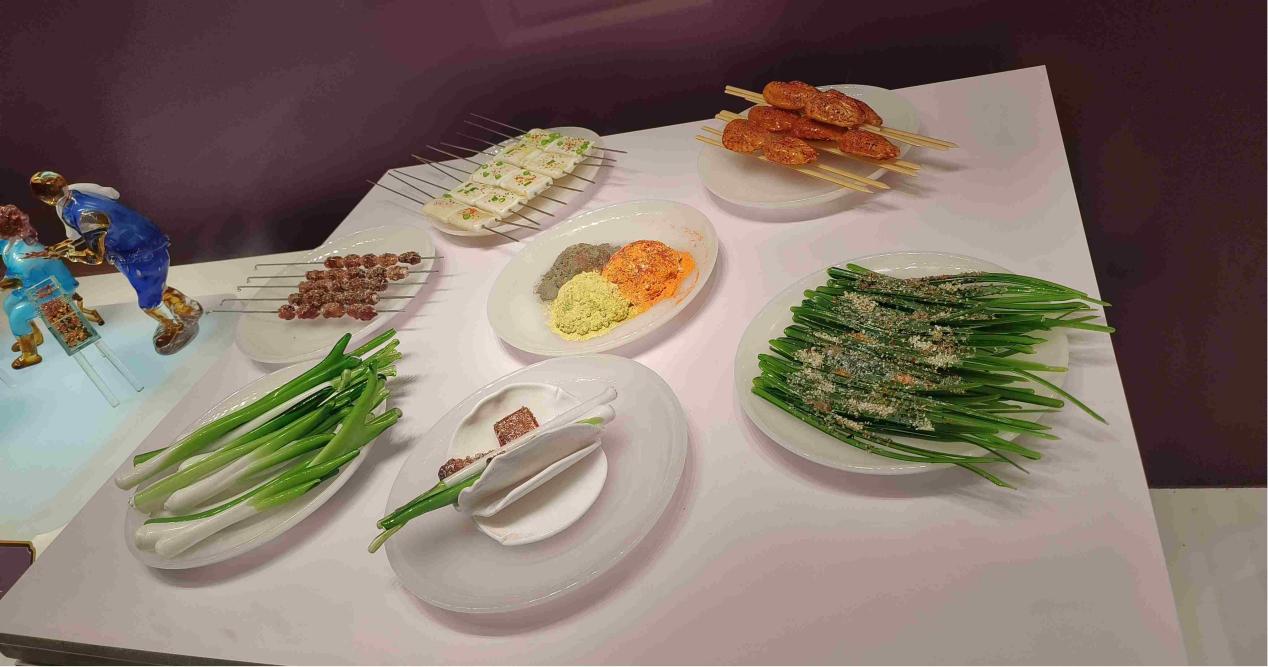
The stunning texture of Zibo glass stems from time-honored ancient craftsmanship. The firing technique of Boshan glass is listed as a national intangible cultural heritage. Every glass artwork is a perfect integration of raging fire and exquisite craftsmanship. It adopts pure natural local ores such as marlite, purple stone and lingzi stone as raw materials, laying a solid foundation for the crystal and transparent texture of glass. The production process is complicated and rigorous, involving dozens of manual procedures including ingredient preparation, high-temperature smelting at 1,400 degrees Celsius, blowing, shaping, carving and polishing. The whole process relies entirely on artisans’ experience, with every detail of temperature, strength and speed requiring precise control.
Lampworking is the signature skill of Zibo glass. With high-temperature flames as brushes and glass rods as ink, artisans knead, shape and trim the molten glass in an instant, freezing unique and irreplicable shapes. In addition, Lu-style interior painting, overlay glass carving, glass filament weaving and lost-wax casting each have their own characteristics. The layered overlay glass, delicate interior paintings and vivid filament weaving break the morphological limitations of glass, endowing works with both three-dimensional sense and exquisiteness. Meanwhile, exclusive color materials such as chicken-fat yellow, chicken-liver stone and post-rain blue create the unique and mellow color texture that distinguishes Zibo glass.
Natural Charm: The Artistic Grace of Diverse Forms
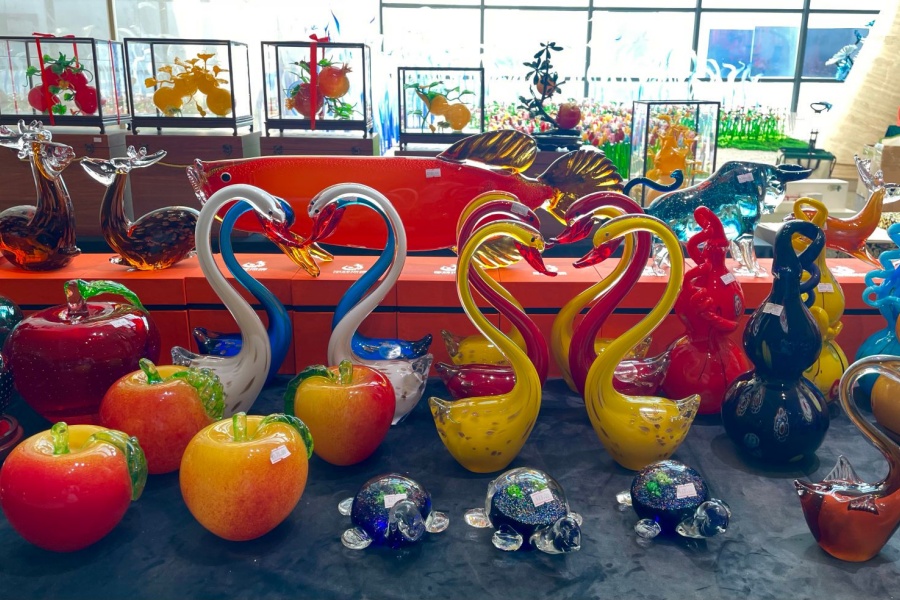
Different from the warmth and heaviness of ceramics and the restraint and calmness of jade, Zibo glass features unique transparency, vivid luster, oriental elegance and natural vitality. It covers a wide range of categories, including display ornaments, cultural play accessories, daily utensils and art collections. Traditional snuff bottles, glass hairpins and antique ornaments are simple and elegant, reflecting the aesthetic tastes of ancient people. Lampworked works themed on flowers, birds, fish, insects and landscapes are lifelike, full of natural vitality. Modern glass artworks with avant-garde shapes and gorgeous colors fit contemporary aesthetic trends perfectly.
The beauty of Zibo glass lies in its “unfixed form and infinite colors”. Molten glass flows and shapes naturally at high temperatures. Light penetrates its transparent texture, refracting layered luminous shades — as clear as autumn water, as bright as rosy clouds, and as mild as uncarved jade. Within a small square inch, it can embrace the artistic conception of mountains and rivers as well as delicate subtle details, showing bold bearing in grand parts and exquisite craftsmanship in trivial details. It perfectly interprets the traditional Chinese aesthetic conception of integration of virtuality and reality, and harmony with nature.
Inheritance and Innovation: New Vitality in the Integration of Tradition and Modernity
Rooted in the fertile soil of Qilu culture for thousands of years, Zibo glass keeps iterating and upgrading with an inclusive, pragmatic and innovative spirit. Today, Boshan in Zibo gathers nearly a hundred glass production enterprises and art studios, occupying 70% of China’s domestic glass market and serving as the core hub of the national glass industry. Local artisans adhere to the core of ancient craftsmanship, abandon impetuous assembly line production, uphold manual ingenuity, and guard the authenticity of intangible cultural heritage.
Meanwhile, Zibo glass actively embraces the times, breaks the barriers of traditional craftsmanship, and integrates Dunhuang culture, Qilu culture and Chinese style aesthetics into creation, launching numerous high-quality innovative glass works and making traditional craftsmanship break out of niche circles. From collected masterpieces in museums and cultural and creative products in cultural tourism markets to fine artworks displayed in international exhibitions, Zibo glass has stepped out of Shandong, spread across China and won worldwide reputation. The furnace fire never fades, and craftsmanship never stops. This millennia-old craft glows with new vitality in the integration of tradition and modernity, becoming an important cultural card showcasing Shandong’s charm and conveying the aesthetic of oriental ingenuity.

