


The World Living Room by the Canal: Yangzhou, an Oriental City of Life Nourished by Water
At the confluence of the Yangtze River and the Beijing-Hangzhou Grand Canal in China, there lies a city born and thrived by water—Yangzhou. Here, there are no skyscraper forests or the hustle and bustle of a fast-paced life, but rather a grand canal that has flowed for over 2,500 years, a well-preserved ancient city from the Ming and Qing dynasties, a series of mouthwatering Huaiyang dishes, and an Eastern philosophy of life called "slow living." Li Bai's verse "In the misty March, I journey to Yangzhou" has made this city a poetic destination in the hearts of countless people. Yet for international travelers eager to truly understand China, Yangzhou's value extends far beyond this—it is a three-dimensional chronicle of Eastern civilization and a window into how China integrates history, culture, and modern life.
Origin and Development: The First Spade of Soil from Hangou and the Millennium Rise and Fall of Yangzhou
The story of Yangzhou begins with a river, a city, and the ambition of an emperor. In 486 BC, King Fuchai of Wu ordered the excavation of the Hangou Canal between the Yangtze and Huai Rivers and the construction of Hangcheng to expand his northern territories. Hangcheng is considered the earliest urban prototype of today's Yangzhou, while the Hangou Canal is the first canal in China recorded in historical texts with precise dating, making Yangzhou the true "origin city" of the Grand Canal of China. This river, which later continued to extend, not only laid the foundation for Yangzhou's water-based urban layout but also shaped the repeated prosperity of this ancient city over the centuries.
Historically, Yangzhou experienced three periods of prosperity. In the mid-Western Han Dynasty, King Liu Bi of Wu established his capital at Guangling, boiling seawater for salt production, minting coins, and engaging in commerce, ushering in Yangzhou's first peak of development. During the Sui and Tang dynasties, Emperor Yang of Sui connected the Grand Canal, and Yangzhou, leveraging its geographical advantage of being situated between the river and the sea, became one of the most important hub ports in China and even the world. By the mid-Tang period, the saying "Yangzhou first, Yiyang second" spread throughout the land—Yangzhou's prosperity ranked second only to the capital Chang 'an. In the mid-Qing Dynasty, Yangzhou, situated at a strategic transportation hub and benefiting from its salt and fishing industries, had a population exceeding 500,000. It was not only one of the eight major cities in China at the time but also one of the world's top ten cities in the late 18th and early 19th centuries. At that time, Yangzhou was a crucial node in the global trade network, with merchants and envoys from Arabia, Persia, and Korea transiting through Yangzhou Port, witnessing the city's glorious era as a corridor for economic and cultural exchange.
Cultural Treasures: A Feast of Gardens, Cuisine, and Intangible Cultural Heritage
If the Grand Canal serves as the skeletal framework of Yangzhou, then its gardens, cuisine, and intangible cultural heritage constitute the flesh, blood, and soul of this city. These three elements intertwine to form Yangzhou's unique cultural identity.
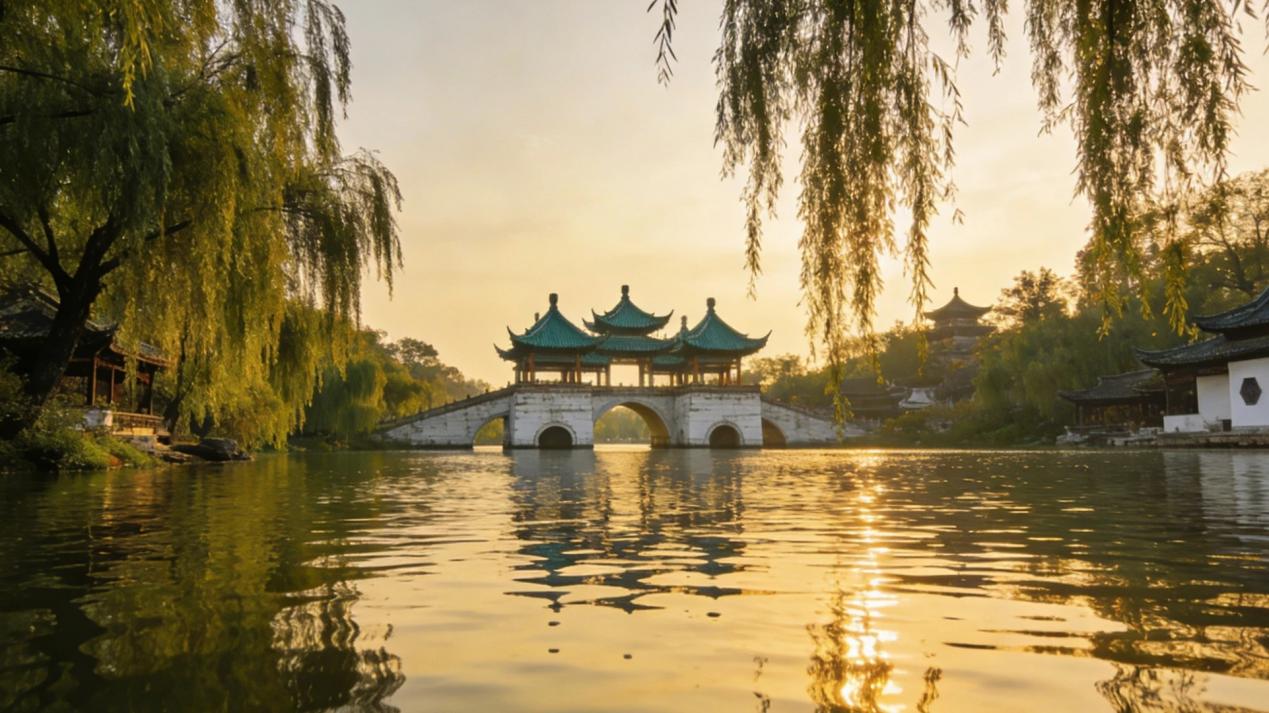
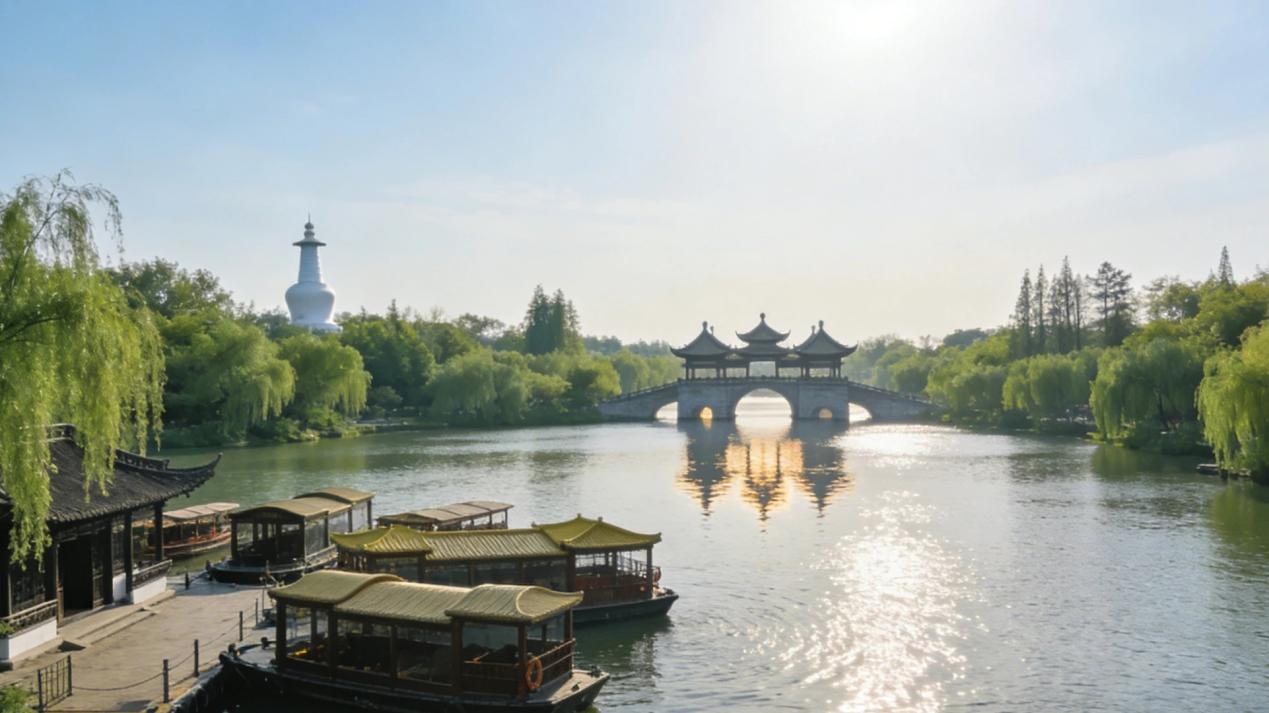
Gardens: Poems of Dialogue Between Humans and Nature. Yangzhou gardens hold a pivotal position among China's classical gardens, combining the grandeur of northern imperial gardens with the delicate elegance of southern private gardens. During the Qing Dynasty, Yangzhou's salt merchants were among the wealthiest in the world, investing their fortunes in garden construction, which still preserves artistic treasures such as Slender West Lake, Ge Garden, and He Garden. Ge Garden was built by Huang Zhijun, the chief salt merchant of the Two Huai regions, in the 23rd year of the Jiaqing reign (1818). It features artificial hills constructed with bamboo shoots, lake stones, yellow stones, and Xuan stones, representing the four seasons—spring, summer, autumn, and winter—integrating garden design principles with landscape painting theories, leaving visitors in awe. He Garden is hailed as the "First Garden of the Late Qing Dynasty," with a 1,500-meter-long covered corridor running through the entire garden, skillfully blending Chinese and Western architectural elements, making it a unique and spectacular landscape in China's gardens. Slender West Lake stands as the masterpiece of "gardens on lakes." During the Qing Dynasty, salt merchants dredged the river to welcome Emperor Qianlong, earning it the reputation of being "the most magnificent garden in the world." Strolling through it, water flows with the mountains, bridges emerge from the scenery, and every step unfolds as a Chinese landscape painting.
Gourmet: The Art on the Tip of a Knife and the History on the Tongue. Huaiyang cuisine is one of the four major culinary traditions of China, renowned for its exquisite knife skills, fresh flavors, and meticulous cooking techniques. Yangzhou Lion Head is a representative dish of Huaiyang cuisine, primarily made with minced pork, which is hand-mashed to achieve a firm texture before being simmered until tender, with a texture as soft as tofu and melting in the mouth. Wensi Tofu vividly showcases the pinnacle of Yangzhou's knife craftsmanship—cutting a block of lactic acid tofu into threads as fine as cow hair tests not only skill but also temperament. Yangzhou fried rice, braised dried shredded noodles, crab powder Lion Head... Each dish is a journey through time and space of taste. Savoring Huaiyang cuisine is like reading a historical book about the Grand Canal, salt merchants, and the landscapes of Jiangnan.
Intangible Cultural Heritage: Living Transmission of Millennium Skills Yangzhou boasts a rich intangible cultural heritage, with woodblock printing, guqin (Guangling School), and paper-cutting listed in the UNESCO Intangible Cultural Heritage List. Techniques such as Yangzhou lacquerware decoration, Yangzhou jade carving, and rod puppetry are equally renowned both domestically and internationally. The Yangzhou Intangible Cultural Heritage Treasure Museum integrates five galleries, showcasing over ten thousand exquisite collections. In 2025, these intangible cultural heritage projects made a stunning debut in Xinjiang, transitioning from Jiangnan craftsmanship to Northwest charm, as Yangzhou's intangible heritage expands onto broader stages through diverse forms. Located in Yangzhou's 486 Intangible Cultural Heritage Cluster Area, the museum seamlessly combines "static exhibitions" with "living displays," allowing visitors to experience traditional skills like woodblock printing and lacquerware decoration firsthand, feeling the vitality of intangible heritage.
International Vision: From World Canal Capital to Global Cultural Tourism Destination
Yangzhou's connection with the world has never been as strong as it is today. In recent years, the city's global influence has continued to grow. By July 2025, Yangzhou ranked eighth in China's Comprehensive Communication Power Index and entered the top ten in YouTube's Communication Power Index. With an open-minded approach, this city is making its voice heard across the world.
Taking proactive initiatives and delivering targeted promotions, Yangzhou has actively expanded its overseas market presence by establishing tourism promotion centers in Japan and South Korea. The city has organized cultural tourism enterprises to participate in international exhibitions such as the Seoul International Tourism Exhibition and Japan International Tourism Expo, while launching cultural tourism brands like "Find China in Yangzhou." In August 2025, Yangzhou hosted the cultural tourism promotion event "Exploring Millennium Cultural Heritage and Experiencing Yangzhou's Charm" in Seoul, signing a cooperation memorandum with the Seoul Metropolitan Tourism Association to deepen collaboration in mutual tourist exchange and market development. In November of the same year, a Yangzhou delegation traveled to Brazil and Panama, showcasing the city's urban landscape and developmental vitality through events ranging from the United Nations Climate Change Conference to cultural tourism promotions, thereby strengthening exchanges and cooperation with Latin American regions.
Canal Culture, Shared by the World. As the founding city of the World Canal Historic Cities Cooperation Organization (WCCO), Yangzhou has been actively promoting the global dissemination of its "Canal Culture IP." In 2025, the city hosted a series of high-profile international events, including the China-International Youth Dialogue on Canal Civilization, the 2025 World Canal Cities Forum, and the "Shared Moments Across the Horizon" cultural exchange dialogue between Chinese and Belgian canal cities. Participants included guests from over 10 countries, including the United States, France, and Pakistan. The canal is not just a cultural asset to Yangzhou—it represents a shared heritage cherished by the entire world.
Challenges and the Future: Striving for Balance Between Conservation and Activation
The primary challenge lies in the protection and revitalization of cultural heritage. Yangzhou boasts 10 World Heritage sites, 6 World Heritage river sections, and a 5.09-square-kilometer Ming and Qing dynasty ancient city—one of the best-preserved ancient cities in eastern China. How to protect these precious heritage sites while making them accessible to international tourists and experiential to visitors is a complex issue. Yangzhou has provided an answer: Since 2015, it has successively issued the "Yangzhou Ancient City Protection Regulations," the "Yangzhou Grand Canal Cultural Heritage Protection Regulations," and the "Yangzhou Shugang-Shouhu Lake Scenic Area Protection Regulations," establishing a legal "umbrella" for the ancient city, the ancient canal, and Shouhu Lake. With the "Golden Corridor" as a strategic framework, Yangzhou is transforming the Grand Canal cultural corridor into an open value platform to promote the "living inheritance" of intangible cultural heritage.
Looking ahead, Yangzhou aims to become a "living world living room" —a vibrant space that preserves the rhythmic sounds of the Grand Canal, the poetic charm of its gardens, and intangible cultural heritage traditions, while also embracing the daily life of its residents, the exploratory experiences of visitors, and cultural exchanges with international friends. In 2025, Yangzhou launched the immersive performance "Grand Canal Yangzhou" in its ancient city, where a boat journey through a thousand years of history transforms tourists into characters within the show. The city has also established multiple "Urban Study Rooms" throughout its historic districts, filling the streets with the fragrance of books and blending history with modern life. These initiatives demonstrate that an ancient city can perfectly preserve its cultural roots while embracing the world.
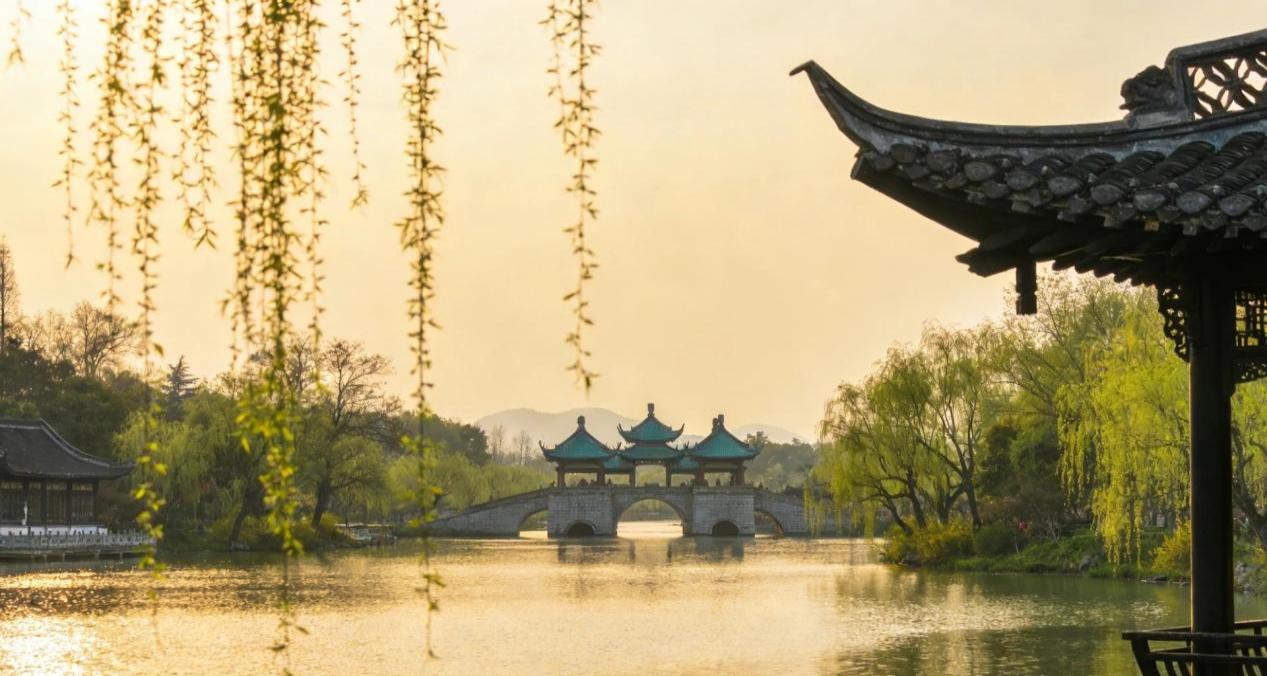
As the sun sets, the reflection of Wuting Bridge over Slender West Lake ripples on the water, while the distant sound of the Guangling Qin School's melodious music drifts through the air. On the bluestone pavement of Dongguan Street, tourists from around the world and local residents walk side by side, holding freshly cooked Yangzhou fried rice or a cup of Xie Fuchun's fragrant powder. The waters of the Grand Canal flow quietly, just as they have for over 2,500 years without pause. Yangzhou, this city nourished by water, is telling the world in its unique way: understanding China can begin in Yangzhou. And to understand Yangzhou is to grasp the most touching balance between water and civilization, tradition and modernity, perseverance and openness.

