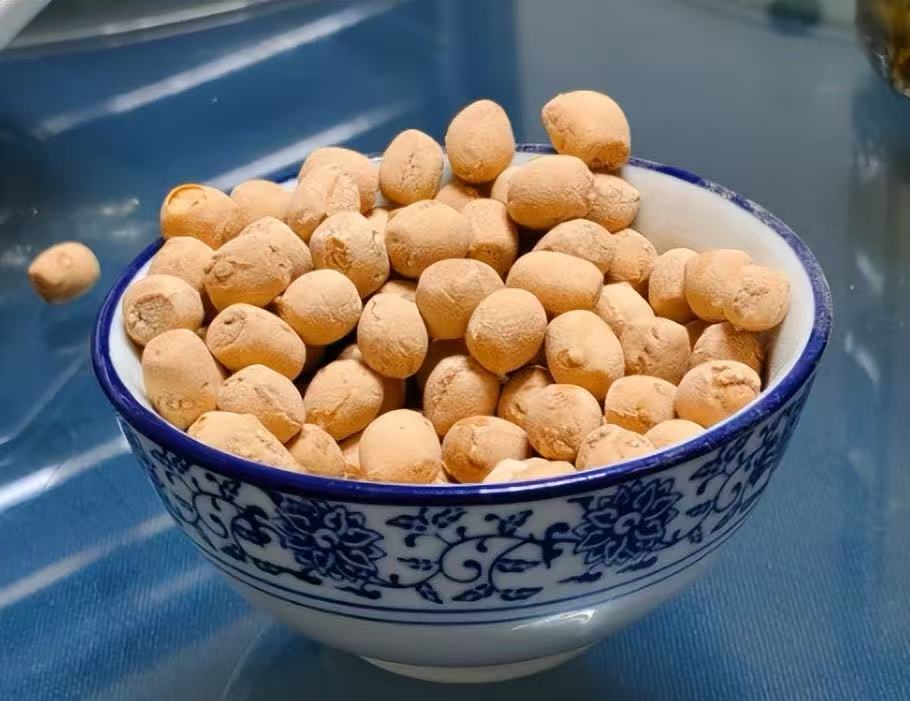


The Scent of Wangwu Earth, a Heritage Preserved—The Thousand-Year-Old Flavor of Jiyuan’s *Tumuo*. Nestled at the foot of Mount Wangwu in Jiyuan, Henan Province, lies a unique snack that captures the very essence of the earth itself. Crafted using a distinctive "white flour soil" (or *baimiantu*) found only in these mountains, this delicacy possesses an earthy-yellow hue resembling the soil from which it is made. Upon tasting, one encounters a delightful contrast: a crisp exterior yielding to a soft, tender interior. It serves not only to sate hunger and satisfy cravings but also acts as a gentle remedy for regulating the digestive system. It is the very sustenance—the dry rations—featured in the legendary tale of "The Foolish Old Man Who Moved Mountains"; it is a dietary remedy cited in the *Compendium of Materia Medica* for its ability to "borrow the earth's vital energy to nourish the spleen"; and, most significantly, it represents a traditional craft that was officially recognized in 2021 as part of Henan Province’s fifth batch of Intangible Cultural Heritage—this is *Jiyuan Tumuo*, also known as *Tuchao Mo* (Earth-Fried Buns).
The very soul of *Tumuo* lies in the *baimiantu* (also known as *Guanyintu* or "Goddess of Mercy Soil")—a unique soil found exclusively on Mount Wangwu. This natural mineral-rich soil—fine in texture and free of impurities, abundant in iron, zinc, calcium, and potassium—is not consumed directly; rather, it serves as a medium for constant, uniform heat transfer during the cooking process. In ancient times, when mountainous regions suffered from poor transportation and difficulties in grain storage, villagers discovered that frying dough products in high-temperature white soil offered a brilliant solution: it effectively sterilized the food while simultaneously locking in the natural aroma of the wheat. This technique allowed the *Tumuo* to remain fresh and unspoiled for extended periods—often lasting up to a full year—making them the most reliable form of sustenance for those embarking on long journeys or engaging in strenuous labor. Folk legends further recount that during the epic task of "The Foolish Old Man Moving Mountains," the local villagers relied on *Tumuo* as their primary dry ration; tales also persist of wandering monks and herbalists carrying these buns on their travels to ward off digestive ailments caused by changes in local water and soil conditions.
This intangible cultural heritage preserves a legacy of rigorous craftsmanship passed down through generations. The process begins with the meticulous selection of local winter wheat flour, enriched with eggs, sesame seeds, sesame oil, and fresh Sichuan pepper leaves for flavor. After undergoing natural fermentation using a traditional "old dough" starter, the mixture is kneaded repeatedly until perfectly uniform, then rolled into ropes and cut into thumb-sized dough pieces. Meanwhile, the *baimiantu* undergoes a multi-stage purification process—involving chiseling, grinding, and sifting—to remove all impurities, before being heated in a wok until scorching hot. The dough pieces are then tossed into this bed of earth, heated to approximately 200°C, and stirred continuously to ensure the heat from the soil envelops every single piece evenly. This process continues until the buns turn a golden-yellow hue with a hint of charring; finally, a fine-mesh sieve is used to separate the *Tumuo* from the soil, shaking away any lingering dust, resulting in a finished product that carries the subtle fragrance of wheat and a lingering, mineral-rich aftertaste. Fan Shuangqi, a designated inheritor of Intangible Cultural Heritage, has steadfastly practiced this craft for over thirty years. As he puts it: "The temperature of the soil and the duration of the roasting—if either is even slightly off, the flavor will be miles away from the mark."
The true charm of *Tumuo* (Roasted Earth Cakes) lies not merely in its flavor, but even more so in its therapeutic value. As recorded in the *Compendium of Materia Medica*, "roasting with wall-earth allows one to harness the vital energy of the soil to nourish the spleen." *Tumuo* is mild and non-irritating; it serves to invigorate the spleen, strengthen the stomach, and aid digestion. Whenever the people of Jiyuan suffer from gastric discomfort, they often chew on a handful of these cakes for relief. Travelers leaving home to study or work in distant lands invariably pack a bag of *Tumuo* in their luggage to alleviate the physical distress caused by adapting to a new environment and diet. Devoid of complex additives, it relies solely on the traditional earth-roasting process for preservation, making it a truly natural and wholesome food.
Today, *Tumuo* has long since ventured beyond the rustic farm stoves of Mount Wangwu, finding its way into specialty shops and livestreaming studios. In addition to the traditional original flavor, new varieties—such as five-spice and sweet versions—have emerged; yet, what remains unchanged is the unwavering commitment to using "white-earth" soil and adhering to the ancient roasting techniques. The recognition of *Tumuo* as a piece of provincial-level Intangible Cultural Heritage in 2021 has garnered increased attention and protection for this ancient craft. It has also helped more and more people realize that this humble snack—imbued with the very essence of the earth—is not merely a coarse morsel for staving off hunger, but rather the crystallized embodiment of the agrarian civilization and culinary wisdom of the Central Plains.
A single bite of *Tumuo* encapsulates the unique terroir of Mount Wangwu, the nostalgic longing of the people of Jiyuan, and—above all—the vibrant continuation of Intangible Cultural Heritage experienced right on the tip of the tongue. When you visit the legendary "Hometown of the Foolish Old Man" (Yugong), take a moment to purchase a bag of these golden-hued *Tumuo* cakes; amidst their delightful crispness, you will discover the deep affection and enduring legacy of this land.