


Jiaodong Huabobo, a traditional art of flour-based food passed down across the Jiaodong Peninsula—including Yantai, Weihai, and Qingdao in Shandong Province—is a provincial-level intangible cultural heritage of Shandong. Far more than mere sustenance, it has evolved into a folk art form deeply woven into Jiaodong's customs and brimming with generations of blessings. Using pure wheat flour as its canvas and skilled fingers as its brush, artisans knead everyday hopes into countless intricate shapes, making Huabobo the most vivid and heartwarming cultural symbol of the Jiaodong region.
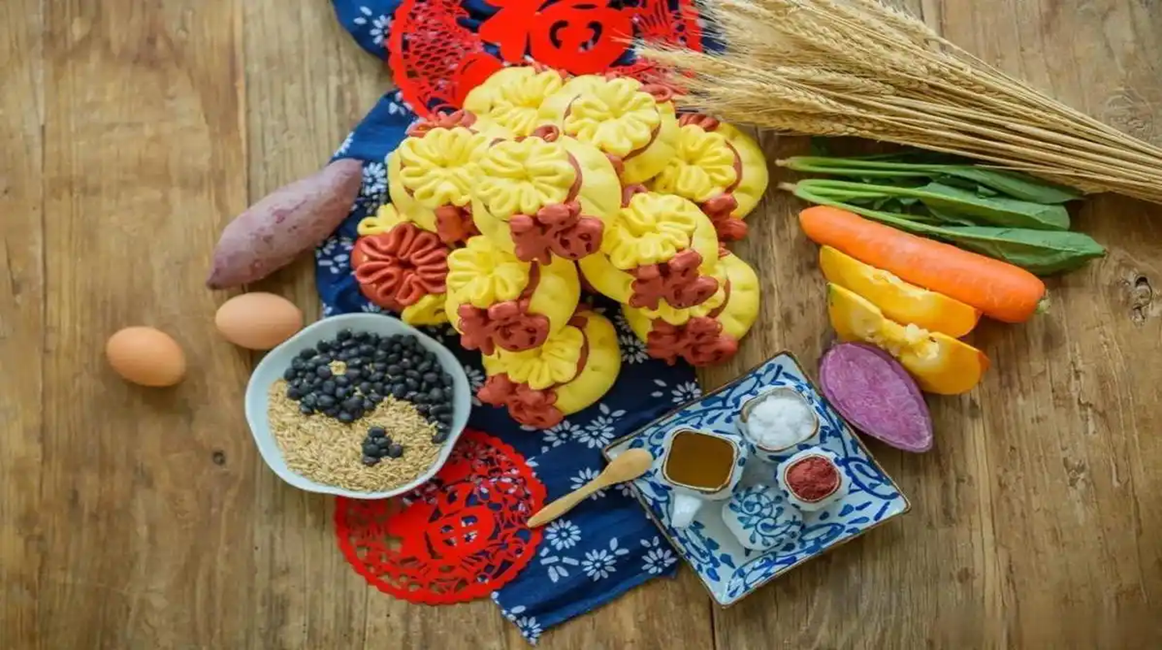
Crafting Jiaodong Huabobo is a labor of dedication and patience, with every step honed by centuries of tradition. The ingredients are simple yet exacting: premium local wheat flour, naturally leavened with a sourdough starter, no unnecessary additives—preserving the pure, sweet aroma of wheat, a gift from the land. Unlike ordinary steamed buns, Huabobo's vibrant hues come entirely from natural fruit and vegetable juices, no artificial colors: bright golden from pumpkin, fresh green from spinach, festive red from red yeast rice, soft purple from purple sweet potato, and delicate blue from butterfly pea flowers. Each shade is naturally beautiful, balancing visual appeal with delicious taste, and reflecting Jiaodong people's simple pursuit of healthy living.
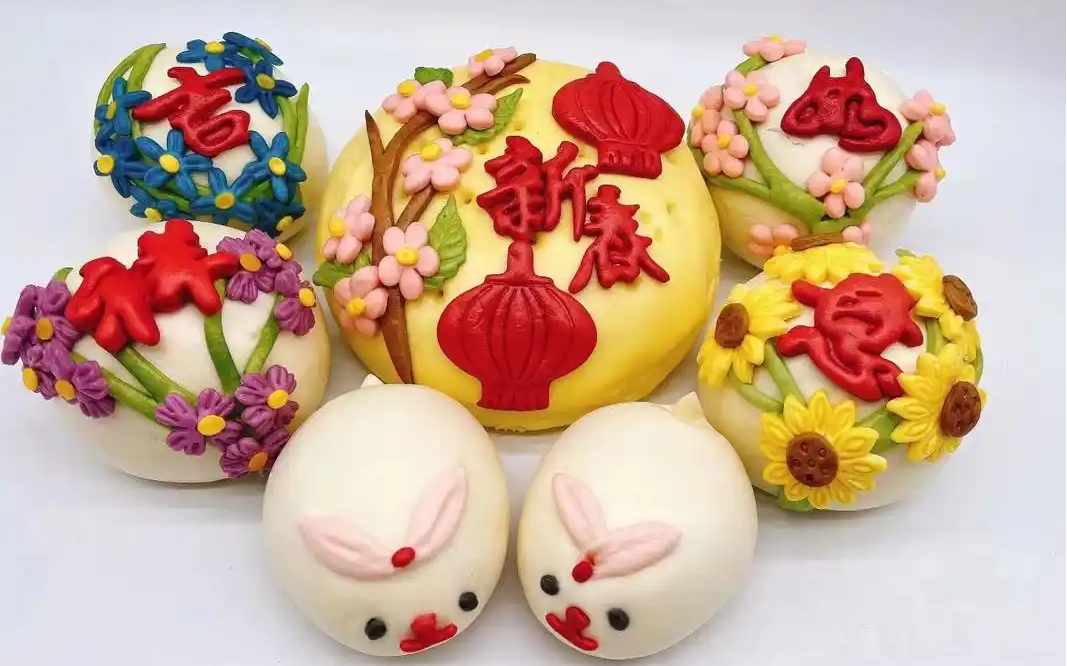
The process is elaborate and precise, consisting of four main stages: mixing, leavening, shaping, and steaming. Sourdough fermentation is foundational; artisans carefully control temperature and time to let the dough rise slowly into a light, fluffy, elastic base that defines the final texture. Shaping is where true mastery shines—with just hands, small scissors, and a comb, artisans use dozens of techniques: kneading, pinching, rolling, cutting, pressing, and picking. Ordinary dough transforms into lifelike forms: soaring dragons and phoenixes, plump longevity peaches, playful tigers, lively koi, and layered peonies. Every detail, from overall grace to delicate petal veins and animal features, is rendered vividly. After a second rise, the buns steam over high heat; the air fills with wheat and produce scents. The finished Huabobo are bright, plump, soft yet artful—truly "edible folk sculptures," each piece a testament to craftsmanship and devotion.
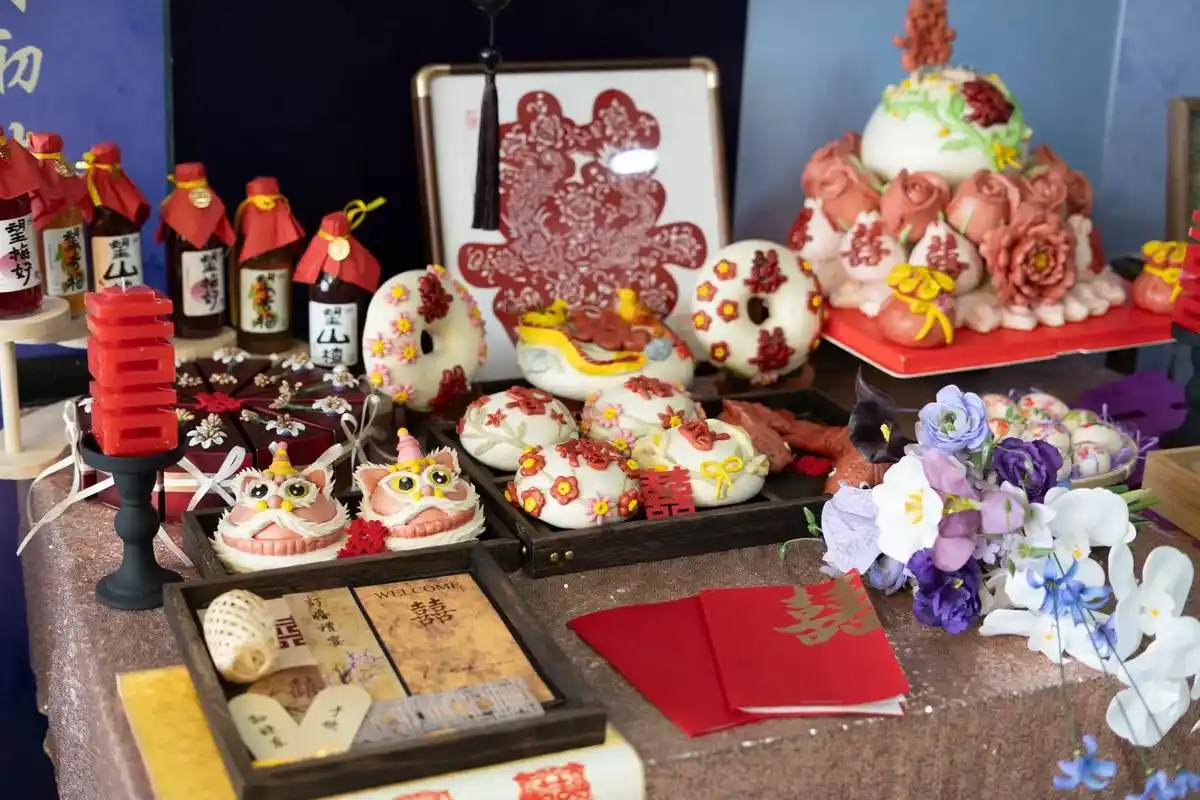
In Jiaodong life, no Huabobo shape is random; each design ties to a specific occasion and carries heartfelt meaning, a direct expression of local culture. During Spring Festival, families make date-stuffed buns and fish-shaped Huabobo, symbolizing surplus year after year and family reunion. At weddings, dragon-phoenix and mandarin duck buns are wedding gifts, signifying a harmonious, lifelong union. For elders’ birthdays, longevity peach and pine-crane buns convey wishes for health and long life. For babies' full moons or first birthdays, tiger buns and "ong-life" buns hope for strength, safety, and longevity. Even housewarmings and academic milestones call for custom Huabobo. A steamer of hot Huabobo serves not just tasty food, but Jiaodong people's love for life, care for family, and hopes for the future.
A handful of flour, skilled hands, steamy kitchens, and a living heritage. Jiaodong Huabobo turns humble ingredients into brilliant folk art, guarding Jiaodong's cultural roots with warm, everyday joy. It is a culinary delight, a fingertip intangible heritage, and a symbol of reunion and good fortune etched into Chinese hearts. Through millennia, it continues to shine with warm, profound cultural light, passing down Jiaodong's folk spirit and hopeful wishes from generation to generation.

