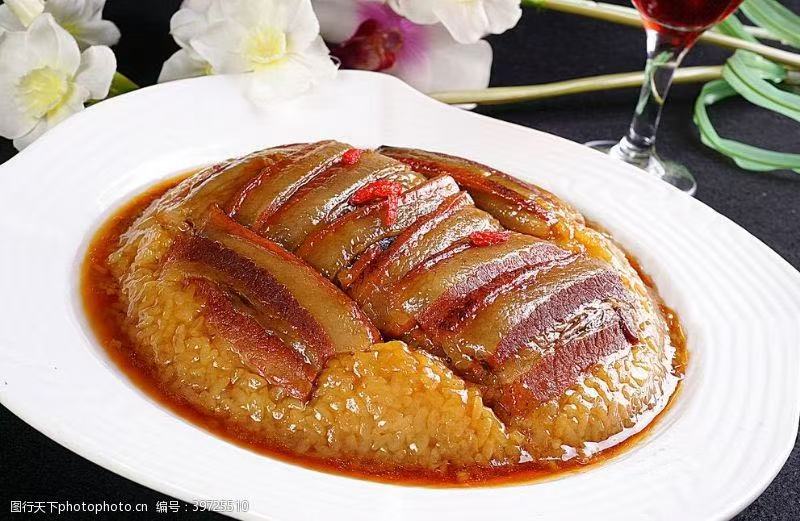


In the food pedigree of Bashu, sweet roasted white is a taste symbol with great contrast and charm. It was born in the Baba banquet of Sichuan farmers. It uses plump pork belly and dense brown sugar glutinous rice to create the ultimate balance of sweet and salty, oily and glutinous. It is not only an indispensable "big item" for weddings and weddings, but also a nostalgic memory engraved in the DNA of Sichuan and Chongqing people. Every piece of meat and every grain of rice in this dish carries the cooking wisdom and life philosophy of Bashu ancestors. In the dense steam, it tells stories about fireworks, banquets and human warmth.
1. From banquet to dining table: the birth and evolution of Tian Shao Bai
The origin of sweet roasted white can be traced back to the Sichuan countryside during the Ming and Qing Dynasties. At that time, the pace of farming life in Bashu was slow. During festivals, weddings and funerals, every household would put on a "Nine Bowls" banquet to entertain relatives and friends in the most solemn way. In this banquet where "nine" is the most important thing, the sweet roasted white dish is the final sweet dish, playing a key role in "finishing, relieving boredom, and highlighting the joy".
Its birth is closely related to Sichuan's products and climate. The Sichuan Basin has a humid climate and is rich in high-quality glutinous rice and brown sugar. The native pigs raised by farmers, with their fat and lean pork belly, are excellent raw materials for making this dish. The ancestors cooked the pork belly and sliced it, added brown sugar and bean paste, then covered it with soaked and steamed glutinous rice, and put it in a steamer to slowly steam for several hours. Under the action of high-temperature steam, the oil penetrates into the glutinous rice, and the sweet aroma of brown sugar blends into the meaty aroma, ultimately forming a unique flavor of "fat but not greasy, sweet but not tangy".
As time goes by, sweet roasted white wine gradually moves from rural banquets to urban dining tables, becoming a classic representative of Sichuan banquets. Nowadays, it can be found in century-old stores in Chengdu and street restaurants in Chongqing. But no matter how the form evolves, its core "sweet, glutinous and plump" taste has never changed, becoming the taste link between tradition and modernity.
2. Ingredients and craftsmanship: ingenuity is seen in the details
The delicious taste of sweet roasted white stems from the extreme pickiness of ingredients and meticulous craftsmanship. Every process embodies the ingenuity and persistence of Sichuan and Chongqing chefs.
1. Selection of ingredients
Pork belly: You must use the "third-line meat" of local pigs, and the fat-to-lean ratio is strictly controlled at 3:7, so that after steaming, you can achieve the effect of "fat but not greasy, and melting in the mouth."
Glutinous rice: Sichuan local round glutinous rice is preferred. It has full grains and moderate stickiness. Only after soaking and steaming can it absorb enough fat and sugar.
Brown sugar and bean paste: Brown sugar needs to be made from earth-brown sugar cooked in ancient ways, which is bright red in color and sweet and mellow; bean paste is made from red adzuki beans that are slowly boiled. It is delicate and has no residue, adding a dense texture to the dish.
2. The inheritance of craftsmanship
1. Cook the meat: Put the pork belly in cold water, add ginger, green onions and cooking wine, cook until cooked, remove and let cool, then cut into even thin slices.
2. Flavoring: Spread a layer of brown sugar and bean paste on the bottom of the bowl, then place the meat slices neatly, skin side down, to ensure that each piece of meat can fully absorb the sugar.
3. Spread the rice: Spread the soaked glutinous rice on the meat slices, compact it, then pour a layer of brown sugar water and put it in the steamer.
4. Steaming: Steam over high heat for 2-3 hours. During this period, water needs to be replenished several times to ensure sufficient steam and allow the oil and glutinous rice to fully blend.
This seemingly simple step actually contains a hidden secret. The control of heat, the proportion of ingredients, and the steaming time, every detail affects the final taste. Only experienced chefs who have experienced years of experience can accurately grasp the proportions.
3. Cultural Symbols: The Bashu Spirit behind Sweet Shaobai
In the lives of Sichuan and Chongqing people, sweet roasted white has long gone beyond the scope of a dish and has become a cultural symbol, carrying deep emotional and spiritual connotations. It is a symbol of reunion. At the Baba banquet, the sweet roasted white dish is served, which means that the banquet has reached its climax. Relatives and friends sit together to share this sweet and glutinous delicacy. In the laughter and laughter, family affection and friendship are sublimated. It is an expression of tenacity. The Sichuan Basin is prone to many disasters. From wars in history to earthquakes in modern times, the people of Sichuan and Chongqing have always faced life with an optimistic and tenacious attitude. The sweet and white "fat but not greasy" is just like the character of Sichuan and Chongqing people - they develop a warm undertone in suffering and live a passionate life in fireworks. It is the carrier of inheritance. Nowadays, more and more young chefs are beginning to learn how to make sweet roasted rice and carry forward this ancient skill. In their hands, Sweet Shao Bai is not only a traditional dish, but also a bridge connecting the past and the future, allowing Bashu food culture to continue to flourish.
4. Contemporary Interpretation: Protecting the Original Taste in Innovation
With the development of the times, Tianshaobai is also constantly innovating. Some young chefs are beginning to try to add new elements to traditional recipes, such as garnishing them with osmanthus and rose petals, or replacing part of the brown sugar with low-sugar ingredients to meet the health needs of modern people. But no matter how innovative it is, its core "sweet, glutinous and plump" flavor has never changed, because this is the original flavor engraved in the taste memories of Sichuan and Chongqing people.
In today's food exhibition, the appearance of Tian Shao Bai is not only a tribute to tradition, but also an expectation for the future. It reminds us that in the fast-paced modern life, we might as well slow down, taste the story behind a dish, and feel the warmth and power from the countryside.
When we gaze at this sweet roasted white, we see not only the oily luster and attractive color, but also the customs and customs of Bashu and the Sichuan and Chongqing people’s love and perseverance in life. In the thick steam, every piece of meat and every grain of rice are telling stories about fireworks, banquets and human warmth. This is the charm of Sweet Shao Bai and the charm of Chinese food culture.