


Walking through the streets and alleys of Qinzhou’s old town, one finds a welcome respite from the clamor of trendy, "viral" food spots. Near the local wet markets or at small stalls along the old streets, you are likely to encounter a snack that has been a childhood staple for generations of locals: *shui mi yi* (水米乙). The term *yi* (籺)—pronounced *ēi* in the local Cantonese dialect—refers to a traditional rice-based delicacy passed down through generations among the coastal Hakka people. With its mild, gentle flavor, it embodies the simple, understated culinary romance cherished by the people of Qinzhou.
*Shui mi yi* is crafted from a smooth batter of glutinous rice flour, which is then steamed. The resulting cakes are pristine, translucent, and soft yet resilient—delicate enough to be tender without being heavy or sticky. They carry a natural, fragrant aroma of rice and come in both savory and sweet varieties, each with its own distinct charm. The savory version is a local favorite: fresh shrimp and diced shiitake mushrooms are sautéed beforehand to lock in their flavors—savory and aromatic, with no hint of fishiness—and then encased within the rice cake. Each bite reveals a soft, chewy exterior complemented by the fresh, succulent shrimp and the hearty texture of the mushrooms—a savory delight that remains light on the palate. The sweet version features a classic filling of smooth, velvety red bean paste blended with the toasted, nutty aroma of roasted sesame seeds. The sweetness is restrained—refreshing rather than cloying—making it a beloved treat for both the young and the elderly.
Preparing these cakes requires great patience. Glutinous rice flour is mixed thoroughly with water to create a silky-smooth batter, which is then poured into trays and steamed. Many traditional, long-standing shops employ a layering technique—pouring the batter in successive rounds and steaming each layer—which creates a distinct, multi-layered texture and enhances the cake’s elasticity. Once steamed and cooled, the cakes are either shaped around a filling or sliced into smaller pieces. Savory versions are often drizzled with a house-made sweet-and-sour soy-based sauce, while sweet versions are enjoyed as-is, allowing the subtle fragrance of the rice to unfold slowly on the tongue.
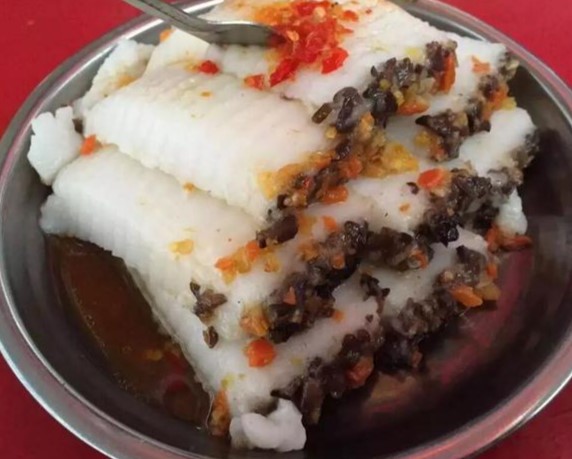
Unlike the bold, intense flavors often associated with Guangxi street food, *shui mi yi* leans toward a lighter, more delicate profile. Free from heavy spice or excessive oil, it highlights the natural, clean sweetness of the rice itself. It is a versatile treat for the people of Qinzhou—a go-to choice for breakfast, afternoon tea, or as a festive staple during holidays. Served chilled in the summer, it is smooth and refreshing; warmed up in the winter, it becomes soft, chewy, and comforting. Many travelers passing through Qinzhou often overlook this hidden culinary gem. Lacking any fancy packaging, these treats are typically presented in simple plastic containers, freshly handmade by elderly women who have manned their stalls for years. Each small *shuimiyi* (steamed rice cake) embodies the fusion of farming and fishing traditions found along the shores of the Beibu Gulf—simple, gentle, and offering a taste of the authentic, time-honored daily life of Qinzhou’s old town.
Dining Tip: You can mostly find these at the wet markets or from mobile street vendors in Qinzhou’s old town. They are usually available in both savory and sweet versions at very affordable prices—a perfect, off-the-beaten-path local delicacy to try during your travels.

