


If there is one delicacy that embodies the temperament of a city, it is undoubtedly Wuhan hot dry noodles. As the iconic staple of Wuhan’s morning snack culture and a national intangible cultural heritage snack, hot dry noodles stand out uniquely among Chinese noodles. Unlike mild soup noodles or plain mixed noodles, they feature chewy alkaline noodles, rich mellow sesame paste, and a well-layered blend of seasonings. Rooted in Wuhan’s century-old street culture and embodying the bold and enthusiastic spirit of local people, a bowl of hot dry noodles warms up every morning and captures the unique streetscape and urban memory of Wuhan.
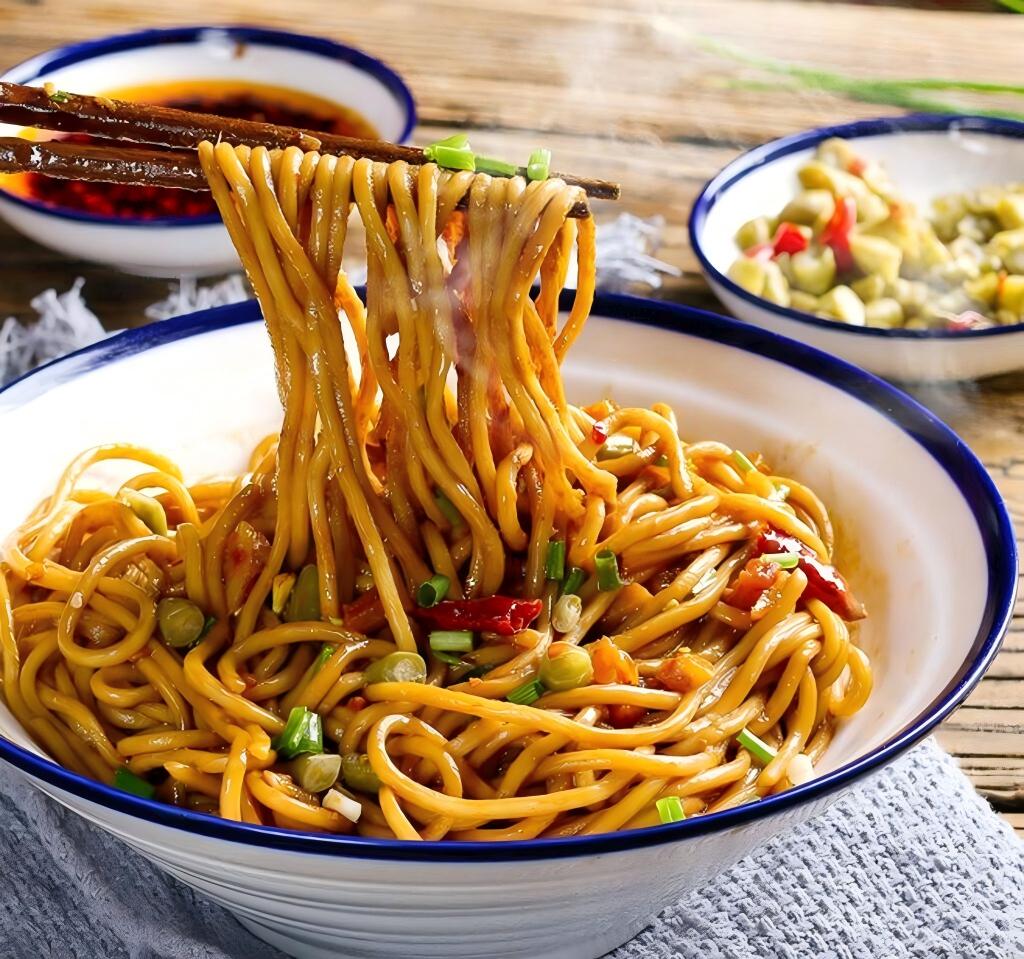
A Century of History: Born from Urban Street Life
The creation of hot dry noodles stems from accidental ingenuity and the refinement of folk craftsmanship. Its prototype dates back to the traditional cut noodles in old Hankou during the Qing Dynasty, and the morning noodles recorded in Hankou Bamboo Branch Poems are the earliest form of hot dry noodles. The modern version of this snack originated from a folk story in the 1930s. At that time, Li Bao, a street food vendor on Changdi Street in Hankou, sold fresh noodles every day. In sweltering summer weather, uncooked noodles spoiled easily. To preserve his surplus stock, he boiled the noodles, drained the water, and spread them out to cool. He accidentally knocked over a sesame oil jar, coating every noodle evenly with fragrant oil. The next day, he blanched the oil-coated noodles in boiling water and seasoned them with sesame paste and soy sauce. The result was incredibly chewy and aromatic, winning instant popularity among customers, and hot dry noodles were thus born.
Later, folk artisans represented by Cai Mingwei optimized and standardized the core techniques of noodle blanching and seasoning, stabilizing and perfecting the classic flavor. After a century of evolution, this humble street snack has stepped out of old alleys, evolved into a cultural heritage representative of Wuhan’s catering culture, and witnessed the changes and inheritance of Jiangcheng’s folk customs.
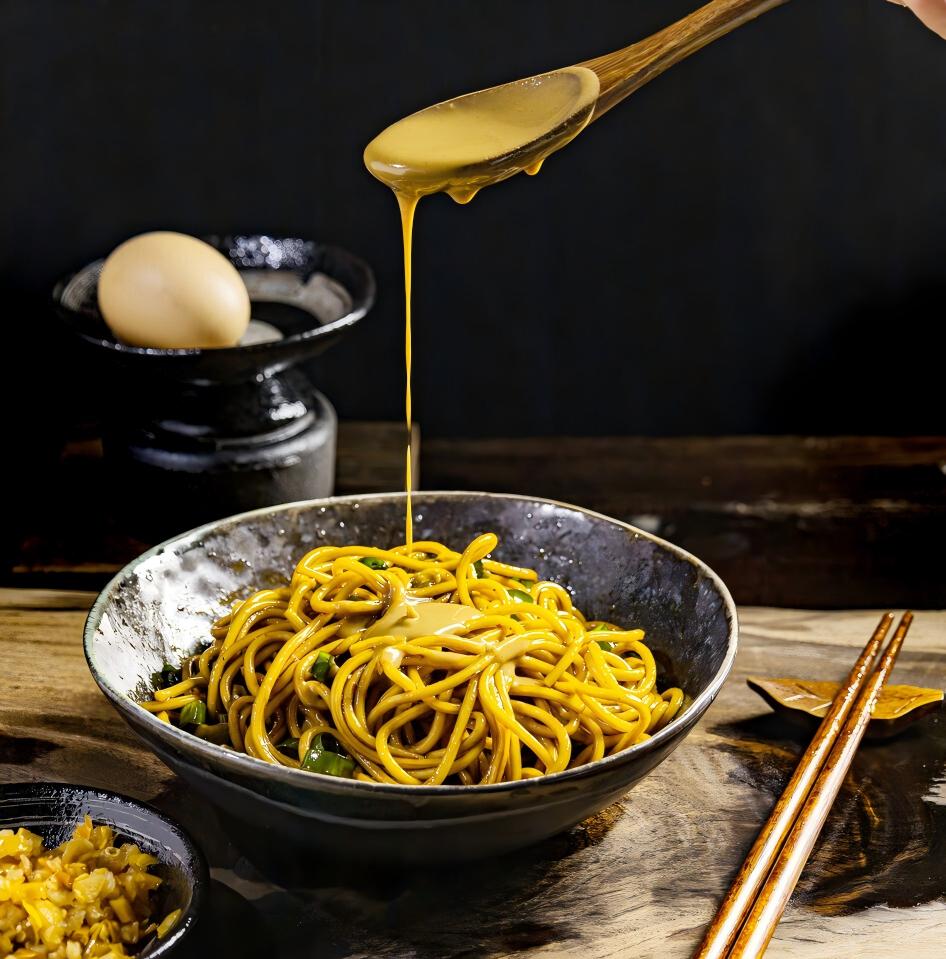
Exquisite Ingredients: The Secret of Authentic Flavor
The authenticity of classic hot dry noodles lies not in complicated procedures, but in carefully selected ingredients and precise craftsmanship, all embodying the exquisite ingenuity of Wuhan cuisine. Noodles form the backbone of this dish. Exclusive alkaline noodles are made by kneading flour with edible alkali and salt, then rolling and cutting the dough into thin, round strips. Finished noodles are pale yellow and translucent, firm and resilient. They do not clump or turn mushy easily, and carry a faint unique alkaline aroma — the core feature that distinguishes hot dry noodles from other mixed noodles.
The noodle cooling process is the key to success and a hallmark of traditional craftsmanship. Noodles are removed from boiling water when 70 percent cooked, quickly scattered and cooled, then evenly brushed with cooked sesame oil and spread out to air dry. This ensures every noodle stays separate, absorbs rich oil fragrance, and maintains its chewy texture. Stone-ground sesame paste serves as the soul seasoning. Made by slow-grinding premium sesame seeds with ancient methods, it is smooth, dense, rich and mellow without greasiness, offering a lasting aftertaste with no adulterants. Paired with crisp sour cowpeas, savory diced radish, fresh chopped green onions, minced garlic and chili oil, the layers of salty, fragrant, sour and slightly spicy flavors blend perfectly without overwhelming one another.
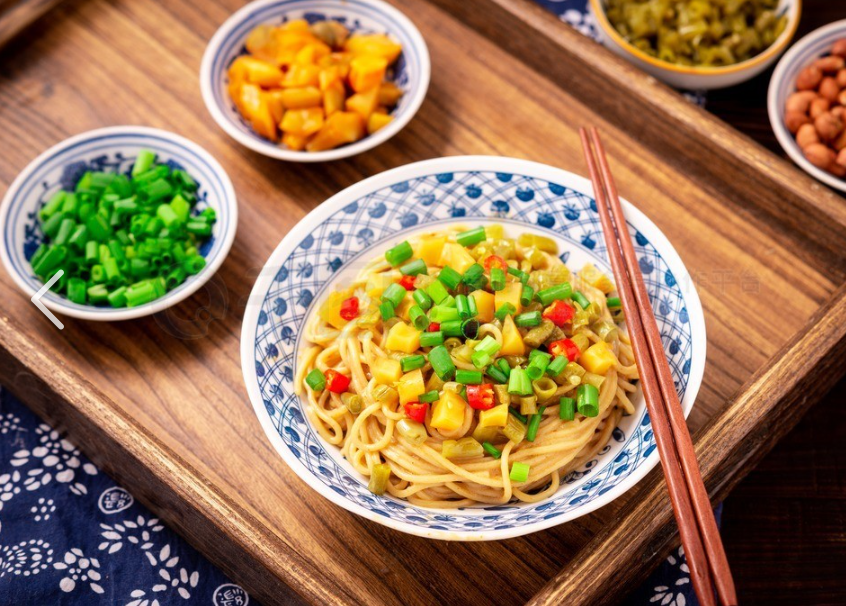
Distinctive Texture: Reflecting Wuhan’s Spirit
Different from the dry texture of northern mixed noodles and the softness of southern soup noodles, hot dry noodles have a one-of-a-kind taste that perfectly mirrors Wuhan’s straightforward and vigorous urban character. Quickly blanched noodles retain a firm, springy bite, coated evenly with thick, glossy sesame paste. The first taste brings the rich mellow aroma of sesame, followed by the subtle alkaline sweetness of the noodles. The crisp sour cowpeas and fresh diced radish balance the richness of the paste, creating a rich and layered taste on the palate.
Hot dry noodles are defined by four qualities: dry, fragrant, chewy and refreshing. Free of excess soup, they are pure and refreshing, full-bodied and increasingly flavorful with every chew. This neat and unpretentious taste mirrors the candid, bold and sincere personality of Wuhan people. A bowl of hot dry noodles requires no elaborate preparation, filling the stomach and awakening the taste buds every morning. It is an innate dietary habit of local residents and the most authentic taste of urban street life.
Cultural Inheritance: The Nostalgic Taste of a City
In Wuhan, hot dry noodles are far more than ordinary food; they are a cultural symbol integrated into the city’s soul and a carrier of nostalgia. Every morning, street-side noodle shops across Jiangcheng emit curling steam. Vendors skillfully blanch noodles, mix seasonings and add toppings with fluent, practiced movements, forming the most heartwarming scene of Wuhan’s early mornings. Office workers, students and local residents gather to enjoy a bowl of hot dry noodles, standing or sitting, savoring the simple delicacy while chatting casually. Ordinary daily life is warmed and enlivened by this bowl of street food.
For a hundred years, hot dry noodles have adhered to its original essence without excessive commercial modification, preserving its pure folk flavor. It has witnessed the prosperity and changes of Hankou Wharf and accompanied generations of Wuhan people’s growth, evolving into an iconic taste of Jiangcheng. No matter how far they travel, overseas Wuhan natives always yearn most for a bowl of authentic hot dry noodles — one bite brings the warmth of hometown.
A bowl of hot dry noodles tells the vivid story of Jiangcheng. Within this simple delicacy lie the street vitality, artisan ingenuity, and unique tenderness and spirit of Wuhan. As a century-old intangible cultural heritage delicacy, it continues to spread its fragrance in the morning breeze, writing an everlasting urban food legend of Wuhan.

