


The concentric circles of the earth: Discovering the ultimate form of home in Fujian Tulou
On the global architectural landscape, few dwellings can match the Fujian Tulou in astonishing even satellite reconnaissance experts—during the 1960s, these massive circular structures scattered across the mountainous regions of Fujian were mistakenly identified as missile launch sites. When the truth emerged, the world discovered an even more remarkable fact: these "enormous mushrooms growing from the ground" represent a heartfelt tribute from the Hakka people of China and the ancestors of southern Fujian to humanity's history of habitation. In 2008, the Fujian Tulou was inscribed on the UNESCO World Heritage List, marking the beginning of this concentric circle nestled in the mountains of western Fujian as it shares with the world the ultimate vision of "home."
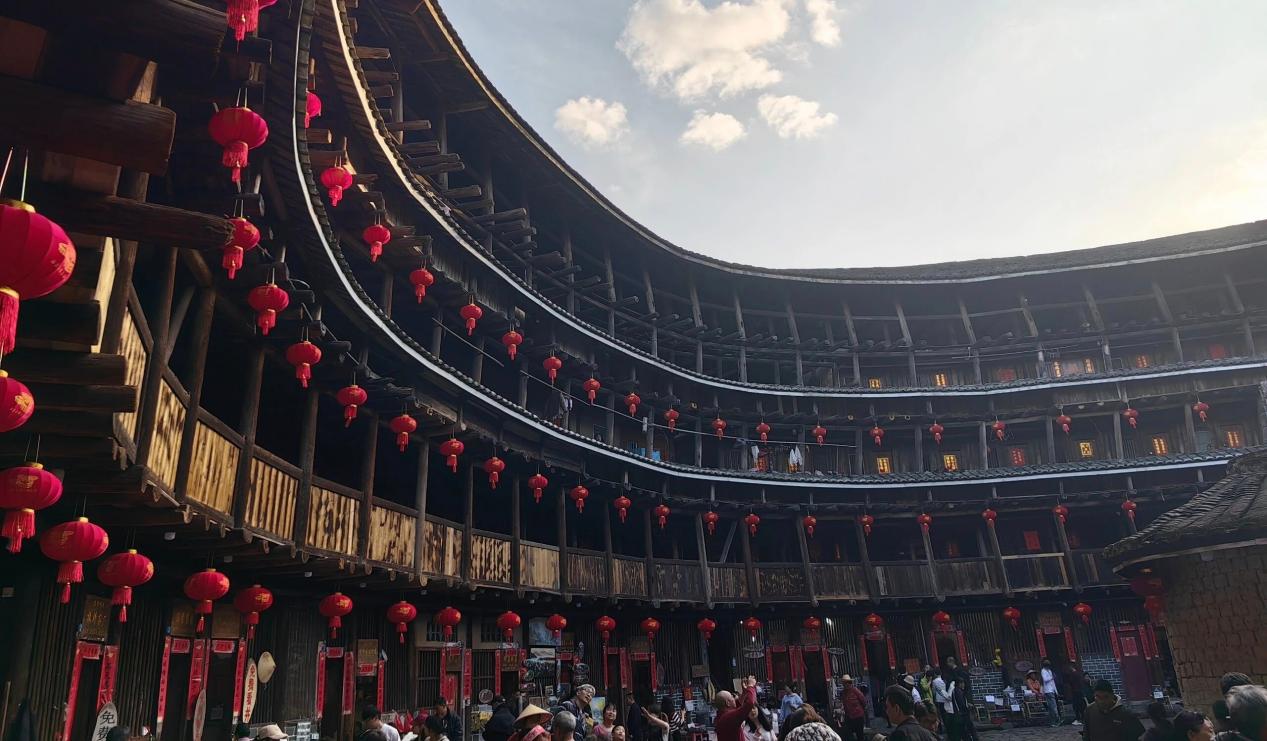
I. Loess and Migration: The Birth Code of Tulou
The story of the tulou is an epic tale of migration written in the language of rammed earth. Since the Western Jin Dynasty, Han people from Central China migrated southward en masse due to warfare and eventually settled in the rugged mountains of southwestern Fujian. While this land provided them with shelter, it was also fraught with dangers—bandit raids, wild animal threats, and frequent ethnic conflicts. Thus, a unique architectural form that combined defense and habitation emerged as a natural response.
The earliest tulou date back to the Song and Yuan dynasties, with their peak development occurring during the Ming and Qing periods. Using locally available materials such as raw soil, sand, gravel, and bamboo strips, the ancestors constructed exterior walls up to 1.5 meters thick through repeated pounding. These walls were rock-solid, capable of withstanding fire attacks, sword strikes, and even earth cannons. The circular structure is the most classic form, though variations include square, five-phoenix-shaped, and Bagua-shaped designs. Regardless of shape, they all adhere to a fundamental principle: sealed externally but open internally. A heavy gate serves as the sole entrance; it features a water basin for fire prevention, and behind it lies the entire world of the clan.
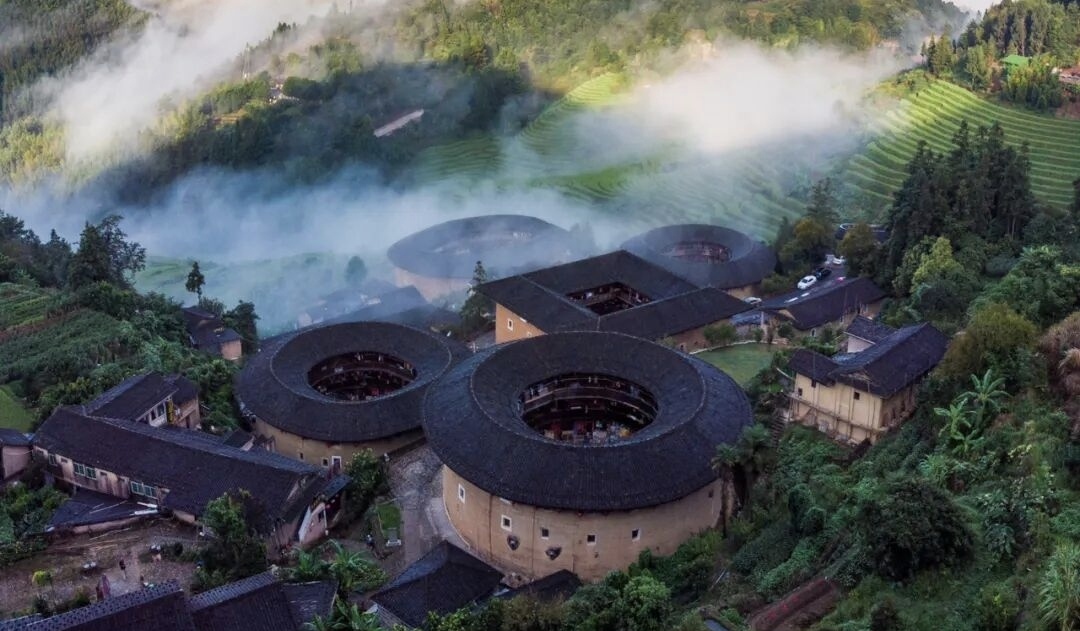
II. Order within the Circle: Confucian Ethics in Space
Upon entering a typical tulou, such as the Chengqi Lou known as the "King of Tulou," one immediately feels a strong sense of unity. This four-story circular structure features a central ancestral hall—a sacred space for enshrining ancestors' memorial tablets and serving as the communal hub for meetings, weddings, funerals, and festivals. Extending outward are the kitchen, granary, and bedrooms; each household is vertically organized from ground floor to top floor, forming independent units that are yet interconnected and share the same roof.
This spatial layout is no accident. It embodies the three-dimensional projection of Confucian clan ethics: the ancestral hall at the center symbolizes ancestors 'watchful presence and protection over future generations; equal distribution among households reflects the principle of fairness within the family; and the concentric structure reinforces a sense of interdependence among clan members. A tulou often houses hundreds of descendants sharing a common ancestor—rising with the rooster's crow, listening to children's songs at night, and experiencing life events such as births, deaths, and weddings all within this circular community. In a nearly philosophical manner, it answers the question "What is home?": a home is not an isolated island behind a security door, but a shared community of destiny where people breathe together.
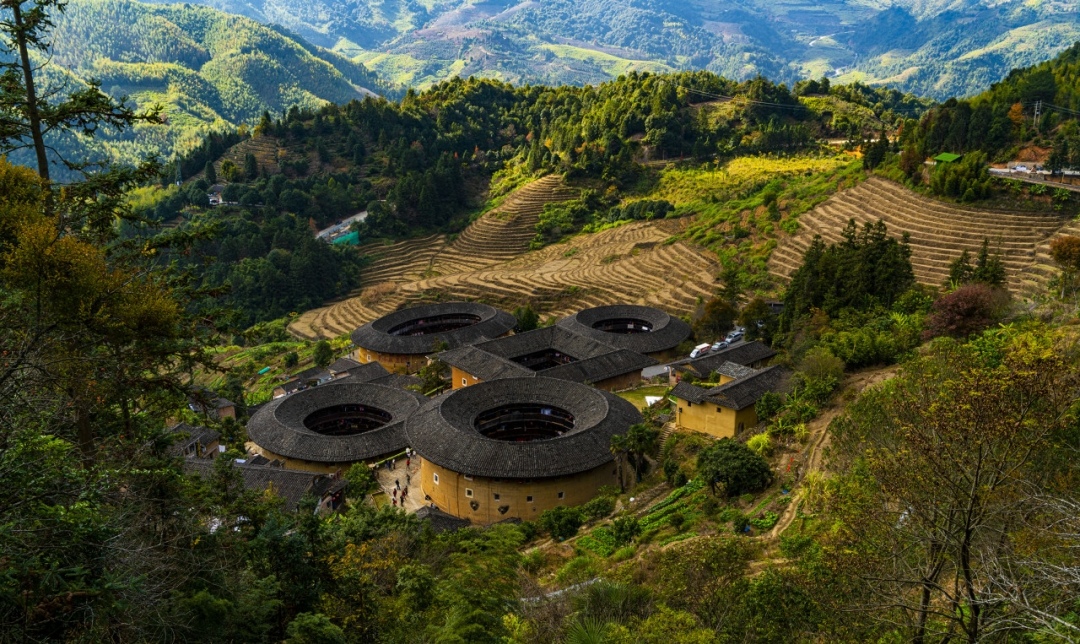
III. From Misjudgment to Amazement: The World of Tulou Resounds
The journey of Tulou to the world began with a misunderstanding during the Cold War era. In the 1980s, after the mystery surrounding this "nuclear base" was unraveled, an international architectural community experienced a surge in interest in Tulou research. Architects were astonished to discover that these dwellings, originating from remote mountainous regions, remarkably embodied many principles of modern ecological architecture: the thermal insulation properties of their thick earthen walls, microclimate regulation through inward-facing courtyards, zero-carbon footprint achieved through local material sourcing, and strong community cohesion within high-density settlements.
At the 2010 Shanghai World Expo, the China Pavilion greeted the world as the "Crown of the East," while the circular imagery of tulou was frequently referenced, becoming a spatial symbol for embodying the concept of "harmony." Abroad, tulou has inspired design practices ranging from European eco-communities to Japanese cohabitation housing. It offers not merely a replicable architectural form but a way of thinking: in an era marked by the growing prevalence of individualism, does humanity still require a deeper sense of connection?
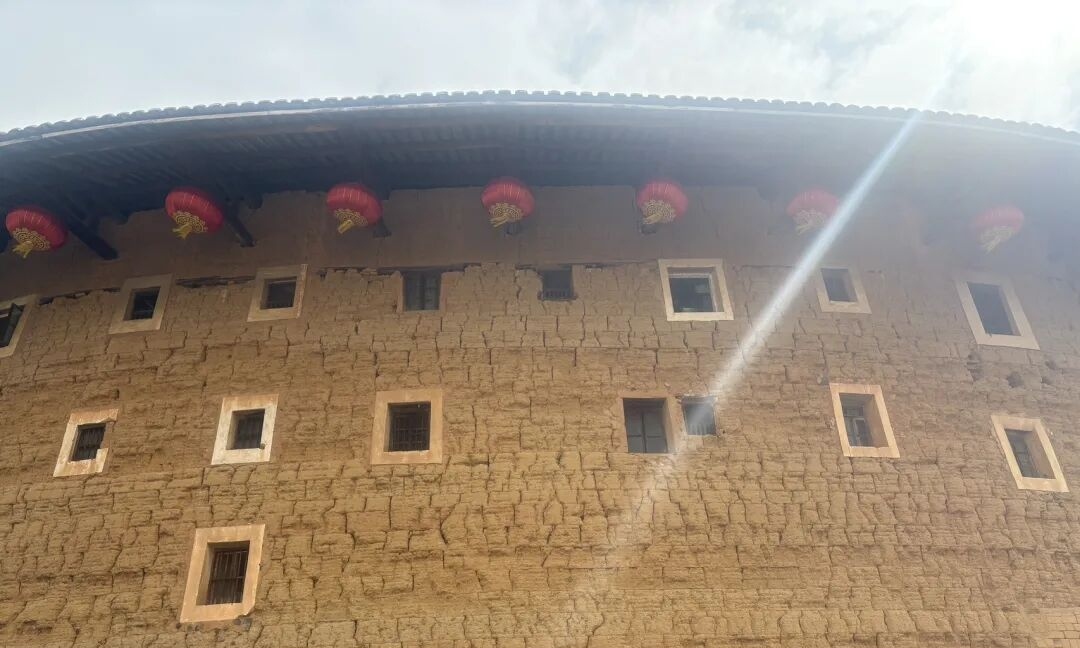
IV. Hollowness and Rebirth: The Dual Challenges Facing Tulou
However, beneath its glamorous facade, the Tulou are undergoing profound challenges. The greatest difficulty stems from within: hollowing out. As young people migrate to cities, many Tulou are left with only elderly residents and children. Wooden rooms have been abandoned, and incense offerings at ancestral halls have dwindled. Meanwhile, tourism development has introduced new pressures—how to strike a balance between showcasing this heritage and preserving the residents' way of life? Some Tulou have become mere tourist attractions, with their former vibrancy replaced by souvenir shops and standardized tour guides.
There have also been encouraging initiatives. Some tulou have adopted the "heritage + community" model, encouraging indigenous residents to live within the structures while allowing visitors to participate in activities such as making glutinous rice cakes, brewing tea, and learning Hakka folk songs, thereby experiencing the living culture rather than merely viewing the empty shells of the buildings. Others have been transformed into youth hostels or artist residencies, preserving their original architecture while introducing new functions. These efforts all address the same question: how can an ancient building continue to serve as a "home" rather than just a "tourist attraction"?
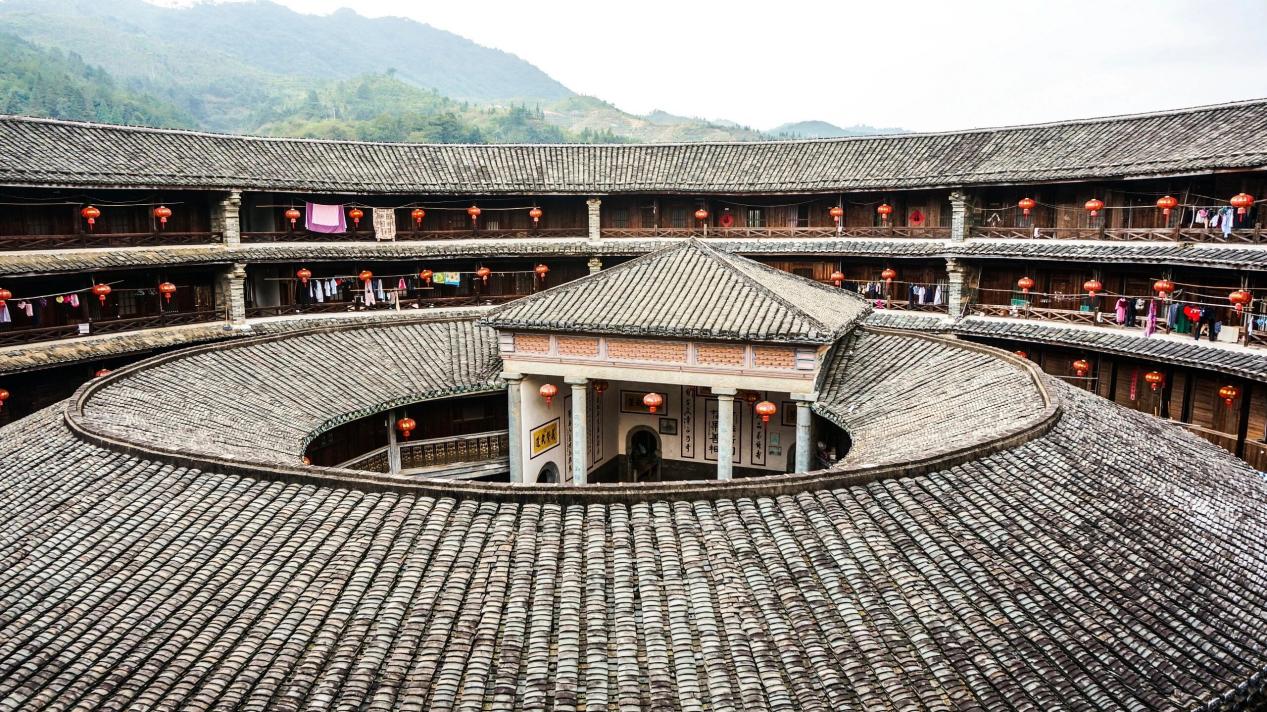
For international travelers, Fujian Tulou offers an opportunity to re-examine the concept of "residence." Here, you can touch the warm yellow earth walls and feel their coolness during the day and their lingering warmth at night; stand before the ancestral hall and listen to an elder recount the family's journey across the sea to Southeast Asia; or on a full moon night, stand at the center of the circular courtyard and gaze up at the night sky divided into concentric circles by the eaves. At that moment, you will realize that the "roundness" of the Tulou is more than just a geometric concept—it represents a round table where family members gather for meals, a circle dance where kin hold hands, and the most persistent yet gentle pursuit of "perfection" in China's culture.
It whispers to every visitor who comes from afar: Home doesn't have to be a physical house—it can be an embrace.

