


A Thousand Years of Qianlong Temple: Oriental Wisdom in a Drop of Divine Water
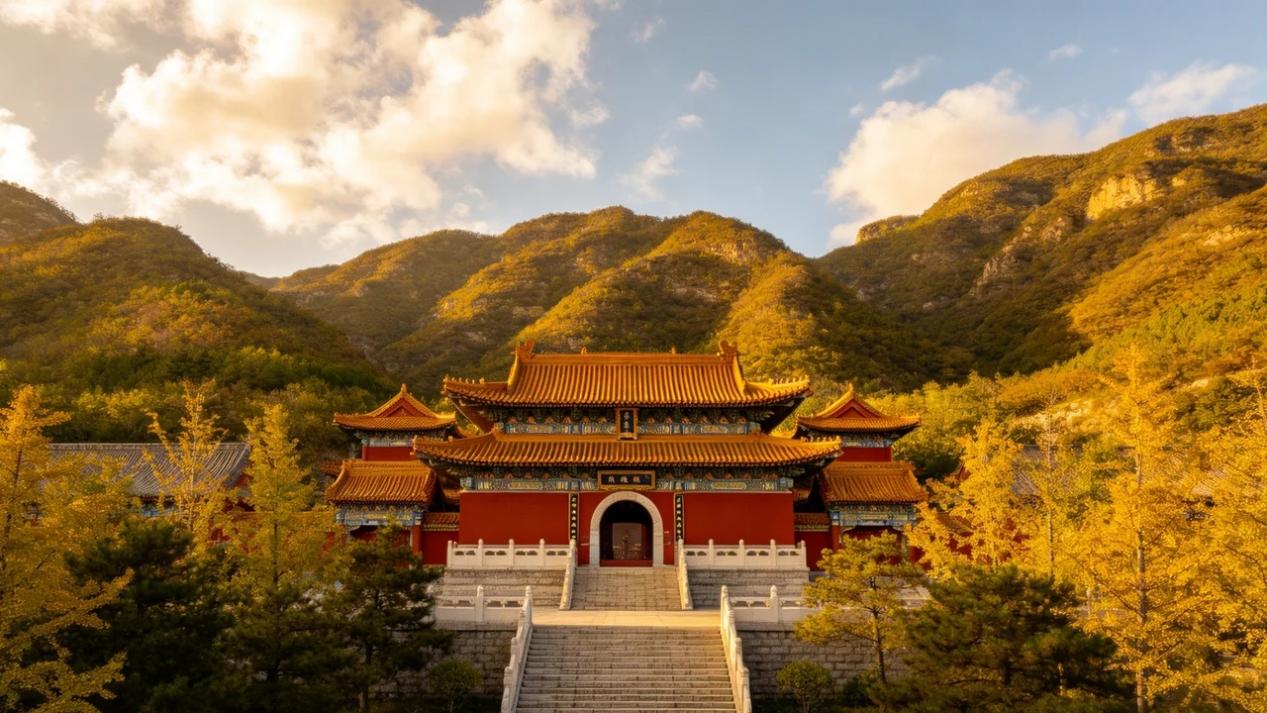
Nestled in the verdant embrace of Taihang Mountain's eastern foothills in Shijiazhuang's Luquan District, Longquan Temple stands as a mountain-adjacent ancient sanctuary. While lacking the grandeur of Zhengding's Longxing Temple or the renown of Zhaoxian's Bolin Chan Temple, this serene retreat has quietly flowed for over eight centuries along the North China Plain, sustained by a millennium-old spring. Just 14 kilometers from Shijiazhuang's urban core, it remains a sanctuary untouched by worldly clamor. Amidst the sprawling concrete jungle of modern cities, this temple hidden in the armchair-shaped valley of Taihang's residual ridges retains its unique charm as a "Mountain Temple". With its sweet spring, ancient pagodas, and emerald cypresses, it tells Eastern tales of time, faith, and nature to every visitor. Since its founding in the Jin Dynasty, Longquan's spring has flowed ceaselessly, witnessing dynastic changes and enduring incense offerings. In the age of globalization, it continues to quietly captivate distant gazes through its distinctive allure.

Origin and Development: A Longquan Spring Gorge Ancient Temple
The story of Longquan Temple traces its origins to a spring, a monk, and an imperial decree. According to the *Huo Lu County Annals*, in 1157 AD (the second year of the Jin Zhenglong era), the eminent Linji Zen monk Jingchen traveled to Siping Mountain (later renamed Longquan Mountain). Impressed by its rugged terrain and a clear spring gushing from the cliffs—resembling a dragon's head spewing water—he built a hermitage for spiritual practice and established a temple to propagate Buddhism. Five years later, in 1162 AD (the second year of the Jin Dading era), the temple underwent renovation and expansion, taking initial shape and being known as "Longquan Mountain Temple." That same year, Monk Jingchen petitioned the capital and was granted the title "Longquan Temple" by the Ministry of Rites, officially naming the temple. This name has been used ever since.
This spring, revered as the "Dragon Head Spring" by locals, has been inextricably linked to the temple's destiny. Emerging from fissures in the rock face, the water flows through stone-carved dragon heads into the Dragon Pool, then distributes throughout the temple grounds. It not only inspired the temple's name but also served as its lifeline. At its peak, the temple housed over a hundred monks, cultivated twenty hectares of mountain fields and three hundred acres of fertile land. The monks practiced both farming and meditation, achieving self-sufficiency – all sustained by the nourishing waters of the Dragon Spring.
Throughout the Yuan, Ming, and Qing dynasties, Longquan Temple underwent continuous renovations and expansions, with six major restoration projects documented in historical records. Renowned scholars like Yuan Haowen were drawn to its fame, immortalizing the verse: "All praise the Dragon Mountain's height, this Longquan's finest retreat." By the Republican era, the temple had declined, and by the founding of the People's Republic, it lay in ruins. In 1995, Venerable Master Chang Kai took charge, leading monks and disciples in a two-decade reconstruction that restored the ancient temple. Today, Longquan Temple comprises two sections: the historic section preserving relics like the Dragon King Hall, Dragon Well, and Dragon Claw Locust Tree, and the modern section featuring the Heavenly King Hall, Welcoming Hall, Mahavira Hall, and Lotus Sutra Pagoda. These elements form a harmonious architectural ensemble where temples, halls, shrines, and pavilions echo each other, while wells, springs, ponds, and steles create a unique and complete ancient complex.
Cultural Treasure: Symphony of Dragon, Spring and Pagoda
The soul of Longquan Temple is embodied in the character "dragon" and the flowing "spring" water. The Dragon King Hall, perched at the temple's northwest peak, enshrines the Dragon Mother, Four Sea Dragon Kings, and Thunder God and Lightning Mother. The most astonishing sight is the hexagonal Dragon Pool at the hall's center, where five colorful dragon sculptures—red, yellow, blue, white, and black—hang from beams and pillars. Their reflections shimmer in the water, creating a surreal spectacle where the dragons seem to swim, baring fangs and claws, forming one of the Eight Scenic Wonders of Longquan: "The Dragon Pool's Night Rain." In the dead of night, visitors reportedly hear a pitter-patter rain sound, only to find the sky filled with stars when they look up. The rain, they say, is the sound of dragons spitting from Longquan.
Nestled behind the Great Buddha Hall, Longjing Well (Dragon Well) is a remarkable water source. With a depth of approximately two meters and a surface level just over one meter from its opening, this well has maintained its water supply for centuries, remaining full during floods and brimming during droughts. For centuries, it has served as the lifeline for hundreds of monks and thousands of pilgrims. The water, crystal clear and refreshingly cool, remains warm in winter and cool in summer. As inscribed on a stele, Longjing water "changes color between seasons, with a sweet and refreshing taste that can cure ailments." In the early 1980s, water quality tests revealed sixteen trace elements in the water, including selenium—a mineral known for its cancer-preventive properties and benefits for cardiovascular and gastrointestinal health—scientifically validating a folk legend that has endured for millennia.
To the west of the well stands an ancient locust tree with a gnarled trunk and bark speckled like dragon scales, locally known as the "Dragon Claw Locust." A local legend tells how this giant tree was once possessed by a serpent spirit. When the Azure Dragon, enraged by the snake's presence, struck the tree with lightning and drove the serpent away, the ancient tree revived and took on the form of a dragon's claws. Together with the Dragon Well, Dragon Spring, and Dragon Pool, this ancient locust tree forms the unique "Dragon Culture" landscape of Longquan Temple.
On the southeastern valley terrace of Longquan Temple, five Jin Dynasty stupa-pilasters (sutra pillars) still stand solemnly. Built between 1161 and 1208 during the Dading to Taihe reigns of the Jin Dynasty, these bluestone pillars reach a maximum height of 3.7 meters with exquisite carvings. The "Inscription of the Jin Gong Shou Tower" contains 401 characters of historical records and a 160-character four-character poem, providing clear documentation of Longquan Temple's early history. Designated as a Hebei Provincial Cultural Heritage Site in 1993, these stupa-pilasters serve as vital physical evidence for studying Jin Dynasty architecture, sculpture, and Buddhist history.
International Vision: How the Valley of Clear Spring Flows to the World
Compared with those already renowned overseas Chinese temples, Longquan Temple has taken slow and cautious steps in its internationalization. However, in the tide of globalization and the integration of culture and tourism, this deep mountain spring is quietly attracting the world's attention in its unique way.
The "international visibility" of Longquan Temple primarily stems from academic research and cultural exploration. According to a 2008 sampling survey on religious tourism in Shijiazhuang, temples such as Berlin Chan Temple have already welcomed Russian tour groups and French couples. Although Longquan Temple is relatively small in scale, its unique "dragon culture" theme, therapeutic spring water, and the cultural value of its Jin Dynasty stone pillars are attracting increasing attention from cultural anthropologists, architectural historians, and "niche travel explorers." For international tourists fascinated by Eastern culture, Longquan Temple represents a "non-standard" experience of a China temple—free from excessive commercialization and crowded crowds, offering only authentic religious ambiance and tangible historical texture.
Secondly, the international dissemination of local culture is opening new horizons for Longquan Temple. In recent years, Luquan District has actively promoted the global outreach of cultural tourism. As one of the Eight Scenic Wonders of Luquan, Longquan Temple's imagery and stories have begun appearing in overseas Chinese media and travel blogs. The cultural resonance sparked by the 2025 Zizhong Puppet Show in Germany demonstrates that even an ancient town or temple can become a medium for cultural exchange when endowed with unique cultural symbols. The legends of Longquan Temple's Dragon Spring, the mystical Night Rain at Dragon Pool, and the myth of the Dragon Claw Locust Tree collectively form such cultural symbols. These stories require no translation, as the reverence for "water of life" and the imagination of the "dragon" as a mystical creature are universal cultural motifs shared by humanity.
Furthermore, the internet and social media are breaking down geographical barriers. On platforms like Ctrip, scattered international travelers have shared their impressions of Longquan Temple: "A thousand-year-old temple nestled against the mountains" and "A convenient spot for city visitors to climb and enjoy panoramic views." These simple yet heartfelt accounts, like drops of water merging into the ocean, are gradually shaping the initial image of Longquan Temple in the minds of global visitors.
Challenges and Future:Let the Longquan River Flow Forever
At the new era, Longquan Temple is also facing the eternal tension between the protection of cultural heritage and the development of modern tourism.
The foremost challenge lies in preserving and revitalizing cultural relics. Having endured over eight centuries of weathering, some inscriptions on Jin Dynasty stone pagodas have become illegible, while their carvings show severe weathering. The pressing task is to implement scientific conservation under the principle of "restoring the old as it was," while enabling these silent stone pillars to "speak" through digital scanning, multilingual interpretive plaques, and immersive VR experiences. These methods would allow international visitors to learn about the construction of Jingzhen Temple and the imperial decree granting its status during the Jin Dynasty. Zizhong County's 2025 investment of 10 million yuan in exhibition upgrades demonstrates that cultural relic preservation should not merely involve sealing away artifacts, but rather reviving their historical narratives.
The second challenge lies in balancing infrastructure development with cultural immersion. Longquan Temple currently offers a 45-minute tour, yet its tourism facilities remain underdeveloped. Moving forward, while preserving its authentic ancient charm, the temple should upgrade accessibility features, implement multilingual interpretation, and introduce smart audio guides. These enhancements would allow international visitors to explore the scientific mysteries of Longjing water and the cultural significance of Longchi's night rain. Crucially, commercialization must be carefully managed—vending cries at souvenir shops shouldn' t drown out the morning bells and evening drums, nor should they encroach on the contemplative space by Longchi Pond.
The third focus lies in developing cultural IPs for global appeal. Longquan Temple boasts unique resources: therapeutic springs (health and wellness), the mystical spectacle of five dragons' reflections (mystical experiences), Jin Dynasty stone pagodas (archaeological exploration), and the legend of the Dragon Claw Locust Tree (mythological narratives). By packaging these themes through internationally recognized formats like short documentaries, interactive websites, and cultural guides, the temple can attract more international tourists from niche markets.
Looking to the future, Longquan Temple should become a "living cultural vessel" —it must not only preserve the incense offerings in the Dragon King Hall, the crispness of the Dragon Well water, and the weathered steles, but also accommodate the daily spiritual practices of monks, the faith-based lives of surrounding villagers, and the spiritual dwelling of urban dwellers. For international tourists, the value of Longquan Temple lies not in its awe-inspiring visual spectacles, but in the authentic slice it provides, offering a glimpse into how a stream of spring water nourishes a temple, how a temple safeguards a stream of spring water, and how a tacit understanding and symbiosis spanning millennia have been achieved between humans and water, faith and nature.

As the sun dips below the horizon, its golden afterglow bathes the glazed tiles of the Dragon King Hall, deepening the reflection of the five dragons in the Dragon Pool. The Dragon Spring murmurs from the carved dragon's mouth, like an unbroken flow of time. In the distance, the silhouette of the Lotus Sutra Pagoda gradually merges into the twilight, while the city lights below the mountain rise in orderly succession. Longquan Temple, this serene sanctuary nestled in the Taihang Mountains' foothills, uses its eternal spring to cleanse the weariness of every visitor, conveying to the world the quiet yet resilient strength of Eastern civilization. As Yuan Haowen's poem laments: "Who understands the meaning of ascending? A lone wild goose's cry pierces the fading clouds" — perhaps this ineffable sentiment is the most beautiful gift Longquan Temple offers to the world.

